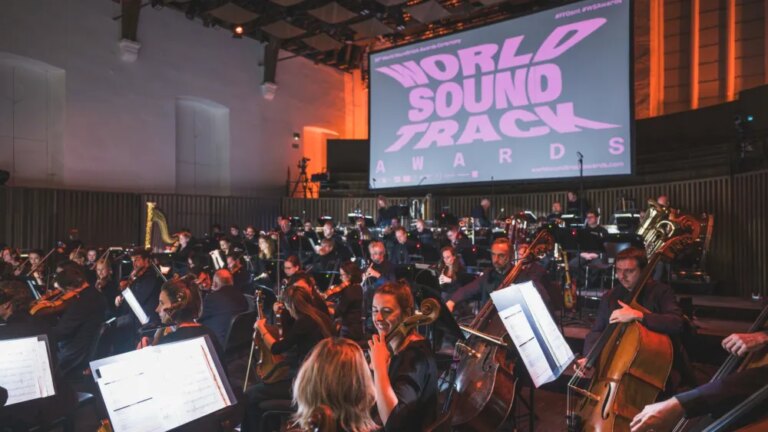
In the heart of Ghent, Belgium, a vital discussion unfolded during the recent World Soundtrack Awards (WSA) Film Music Days, specifically focused on the intersection of creativity and technology in modern music composition. At a panel featuring renowned composer Simon Franglen, who worked on “Avatar: Fire and Ash,” the conversation turned to an increasingly pressing concern: the impact of artificial intelligence on the art of music composition.
Franglen reflected on the irreplaceable essence of human creativity, stating, “We had hundreds of musicians in a room, pouring their emotion out in that precise second. How can that ever be replicated by AI?” This sentiment resonated deeply throughout the three-day event, which included discussions, roundtables, and networking opportunities for artists and industry professionals.
Strength in Numbers
One of the key themes discussed was the necessity for composers to unite in the face of challenges posed by legal restrictions in the U.S. and U.K. Unlike other creative roles, composers often face hurdles in unionizing and collective bargaining. The European Composer and Songwriter Alliance (ECSA) plays a pivotal role in bridging this gap, representing over 30,000 composers and songwriters across 57 member organizations. Their strong presence at the WSA included hosting a roundtable and receiving the prestigious WSA Industry Award.
ECSA president Helienne Lindvall emphasized the ongoing struggle for recognition, remarking, “There’s still a long way to go and a lot of work to do. But one thing is clear: We have become a voice to be reckoned with, giving composers and songwriters a seat at the table. Because, as someone once said, if you’re not sitting at the table, chances are you’re on the menu.”
Art vs. AI
In response to the rapid rise of generative AI, ECSA is actively campaigning to shape the EU’s forthcoming AI Act. Their proposals demand that AI companies obtain permission before using copyrighted music for training models, ensure fair compensation for creators, and increase transparency regarding the datasets and catalogs employed in AI development.
Lindvall was particularly adamant about the potential pitfalls of using AI tools, urging creators to “Read the terms of service.” She warned that uploading music to platforms could lead to unbounded commercial exploitation without proper credit or remuneration for the original artists.
Star Track: The Next Generation
As discussions evolved, several panelists highlighted a critical concern: the long-term ramifications of AI on the next generation of composers. Franglen noted that while AI might promise short-term savings, it risks displacing new talent by taking over entry-level opportunities. “Hans Zimmer wouldn’t be who he is today without [getting a gig on the 1980s British game show] ‘Going for Gold,’” he said, emphasizing the importance of providing pathways for emerging artists.
Darrell Alexander, from composer agency Cool Music, echoed this sentiment, suggesting that aspiring composers should seek opportunities to work as additional composers alongside established mentors. Similarly, Adiescar Chase, who garnered acclaim for her work on Netflix’s “Heartstopper,” actively promotes collaboration by integrating assistants into her projects, fostering a supportive environment for newcomers.
Looking forward, Martin Phipps (“The Crown”) asserted that, despite the looming presence of AI, human interaction and collaboration will remain integral to the creative process. “It’s a skill in itself to prompt an AI,” he remarked, highlighting the necessity for human oversight in AI-generated art.
Take It to the Bank
Beyond the anxieties surrounding AI, the WSA served as a platform for sharing innovative practices amongst professionals. Panelists particularly praised the utility of sound banks. For instance, composer Paris Hurley, while working on Kristen Stewart’s “The Chronology of Water,” opted to create and collect unique sounds instead of scoring to picture. By utilizing her body as an instrument and combining these bespoke sounds, Hurley was able to craft a tailored audio experience that aligned with the film’s distinct vision.
Daniel Pemberton, composer of “Slow Horses,” shared a similar approach. He stressed the importance of building a unique sonic identity for each project. “Creating your own sonic palette that’s unique to each project makes such a difference to a score,” he stated, underscoring the speed and distinctiveness that a well-developed sound bank can offer, particularly in fast-paced production environments.
Pemberton concluded, “The ‘Slow Horses’ sound bank took a long, long time to get working. But now I’ve built all these sounds that are very distinctive to the show. It’s like having a synthesizer with presets that no one else has.”