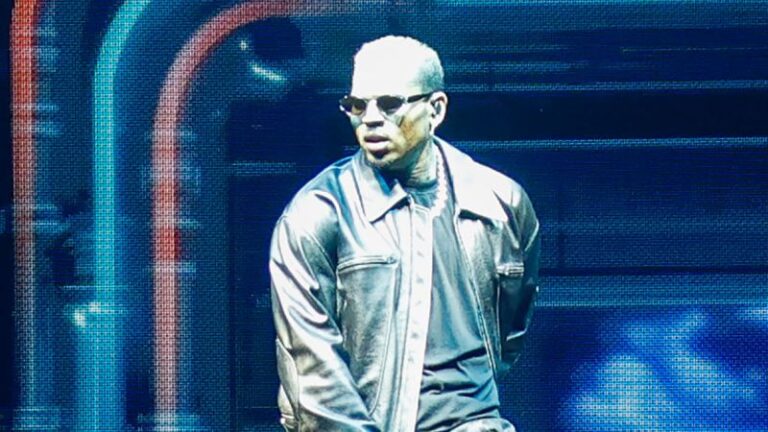
At a recent concert at AT&T Stadium in Texas, Rep. Jasmine Crockett electrified the audience, declaring, “Right now, we are experiencing Black joy to the highest level!” Her remarks came during the second night of the high-energy R&B Tour featuring Usher and Chris Brown, where two of the genre’s biggest stars captivated fans with their dynamic performances. The show was not just a musical extravaganza; it also embraced the spirit of celebration and community.
However, the exuberance was tempered by controversy when Crockett publicly pledged to enter Chris Brown’s name into the Congressional Record. “And I wanted to make sure we document that in the Congressional Record,” she added, emphasizing the significance of their gathering. This invitation for acknowledgment, paired with her appearance onstage alongside Brown, ignited passionate discussions both inside and outside the arena.
While many concertgoers reveled in the joyful atmosphere, outside the stadium, some—including Black women and public figures—expressed discontent. Democratic strategist Ameshia Cross labeled Crockett’s declaration “a ridiculous move,” arguing that lifting up a known abuser of women was “disgusting.” Writer Roxane Gay echoed similar sentiments, describing it as a “bizarre and unacceptable misstep.” The backlash centered on the broader implications of honoring a polarizing figure like Brown.
In the wake of the event, Texas State Rep. Venton Jones, who joined Crockett onstage, issued a public apology for his role, acknowledging that his actions hurt women, particularly within the Black community. Crockett, however, has remained silent on the controversy, with Brown and Usher also providing no comment.
Since the 2009 incident involving Rihanna, which left her with visible injuries and resulted in Brown’s legal repercussions, he has battled with his public image. The juxtaposition of his status as a beloved performer with his checkered past has created a cultural divide. While some view him as “The King of R&B,” others remember him as a notorious abuser. These contrasting perspectives were starkly illustrated when Crockett took the stage at the concert, stepping into an arena where joy and discomfort intersected.
The Complexity of Brown’s Legacy
Over the years, Chris Brown has faced accusations and allegations of violence, including a 2013 claim of assault in a nightclub, a 2016 incident where he reportedly brandished a gun, and a restraining order against him in 2017 from ex-girlfriend Karrueche Tran due to violent threats. Most notably, a lawsuit was filed against him in 2022, alleging drugging and rape, which was later dismissed. Each incident complicates his public persona and invites scrutiny.
Despite the claims against him, including a recent controversy involving a nightclub brawl in London, Brown continues to enjoy immense popularity. His fans—affectionately known as “Team Breezy”—remain fiercely loyal, often defending him against accusations and criticisms. This unwavering support partly stems from nostalgia, as many fans grew up with Brown’s music and talent during his rise to fame, beginning with his debut single “Run It!” in 2005.
The Trap of Loyalty
Sociologist Beth Richie has discussed the “trap of loyalty” often experienced by Black women, who may feel a responsibility to uplift Black men in the face of systemic racism. This dynamic can create a complex relationship between fans and artists like Brown, where enjoyment of their work conflicts with their perceived actions. The historical context surrounding wrongful convictions, particularly within the Black community, adds layers to this debate, fostering a sort of blind loyalty among fans, eager to protect their cultural icons despite troubling behaviors.
Musical recognition has followed Brown regardless of these controversies. He has released multiple platinum albums, achieved numerous awards, and conducted successful tours, showcasing his talent and drawing a wide array of collaborations with other artists, further cementing his status in the entertainment industry. Even after facing backlash, he has remained unapologetic, highlighting that he does not perceive his past actions as deserving of cancellation.
The Ambivalence of Fame
The reception of Brown’s music and influence continues to diverge among listeners. Some perceive him as a source of joy, while others view their engagement as overshadowed by his past. The intensity of Brown’s performances and the fantasy surrounding his persona can make it difficult for fans to reconcile their adoration with the negative narratives. This ambivalence illustrates how complex the relationship between artists and fans can be, especially when fame and character become irrevocably intertwined.
Ultimately, the question remains: How is Chris Brown still this popular? Despite the heavy weight of his allegations, a dedicated fanbase persists, finding solace in his music and fighting against negative perceptions. The cultural discourse surrounding him is ongoing, as society grapples with the actions of celebrated figures and the implications of fame amid moral scrutiny.