In a significant boost to the film industry, independent producer Uday Jhunjhunwala has launched a new fund aimed at promoting projects that address international human rights and children’s welfare. Sponsored by Desipina Productions, this initiative was unveiled during South Asian House’s programming at the Tribeca Festival, highlighting the urgent need for diverse storytelling in cinema.
Empowering Storytellers for Change
The newly established fund is one of several initiatives that gained traction as South Asian House wrapped up its third year at the festival. In collaboration with the Islamic Scholarship Fund (ISF) and the Arab Film and Media Institute (AFMI), this effort seeks to enhance authentic representation in film by supporting creators whose work reflects international human rights and children’s welfare.
Prominent Panels and Discussions
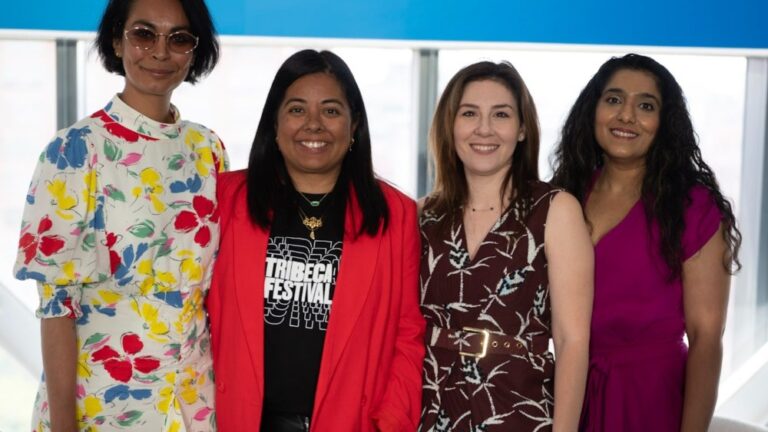
A key highlight at the AT&T Untold Stories Lounge was a panel curated by Rohi Mirza Pandya, founder of South Asian House/Box Office Guru Media. Moderated by Shruti Ganguly, the panel featured insights from Aizzah Fatima of ISF and Maya Labban from AFMI. A video message from Alana Hadid of Watermelon Pictures stressed the need to “free the narrative,” particularly focusing on underrepresented voices.
The discussion spotlighted the underrepresentation of Muslims in Hollywood, referencing a USC Annenberg study that revealed only 1.6% of characters in major films between 2017-2019 were Muslim, against a global population of 1.8 billion Muslims.
Spotlighting Filmmakers and Authentic Narratives
Beyond panels, South Asian House organized Tribeca Talks with ISF and hosted mixers with AFMI, fostering conversations around international human rights and offering industry access to aspiring filmmakers. Events like these are crucial for elevating diverse voices in the film industry.
A standout project, “Where the Light Enters You,” a documentary by Hemal Trivedi and Matt Alesevich, was also announced to have an Oscar-qualifying run, aiming to drive awareness on healthcare reform in rural India.
Celebrating Diversity in Film
The festival was a platform for filmmakers like Uttera Singh of “Pinch,” Akbar Hamid of “Poreless,” and the co-directors of “The Patel Motel Story,” exemplifying the breadth of stories under the umbrella of international human rights and children’s welfare.
Industry Talks and screenings featured voices from South Asian, Arab, and Muslim filmmakers, fostering discussions about representation. The array of curated films by ISF underscored the commitment to diverse storytelling.
“Our partnership with Tribeca Festival has been phenomenal,” said Gitesh Pandya. “The conversations we’ve fostered in such a vibrant setting have been a dream, and we are grateful for the support and the opportunity to highlight these critical narratives in film.”
Founded by Pandya and Monika Samtani, South Asian House provides a platform for South Asian voices at major festivals. ISF, founded in 2009, promotes Muslim storytelling in media, while AFMI endeavors to reshape Arab narratives, challenging global stereotypes and advancing international human rights and children’s welfare through film.