The Katy Perry Paradox
Katy Perry’s popularity continues to spark debates, revealing a complex paradox between her on-stage grandeur and off-stage struggles. The Katy Perry paradox highlights how societal perceptions can shift rapidly, especially through the lens of social media. While Perry remains a prominent figure in the music industry, fluctuating public opinions reflect the challenges she faces as both an artist and a public persona.
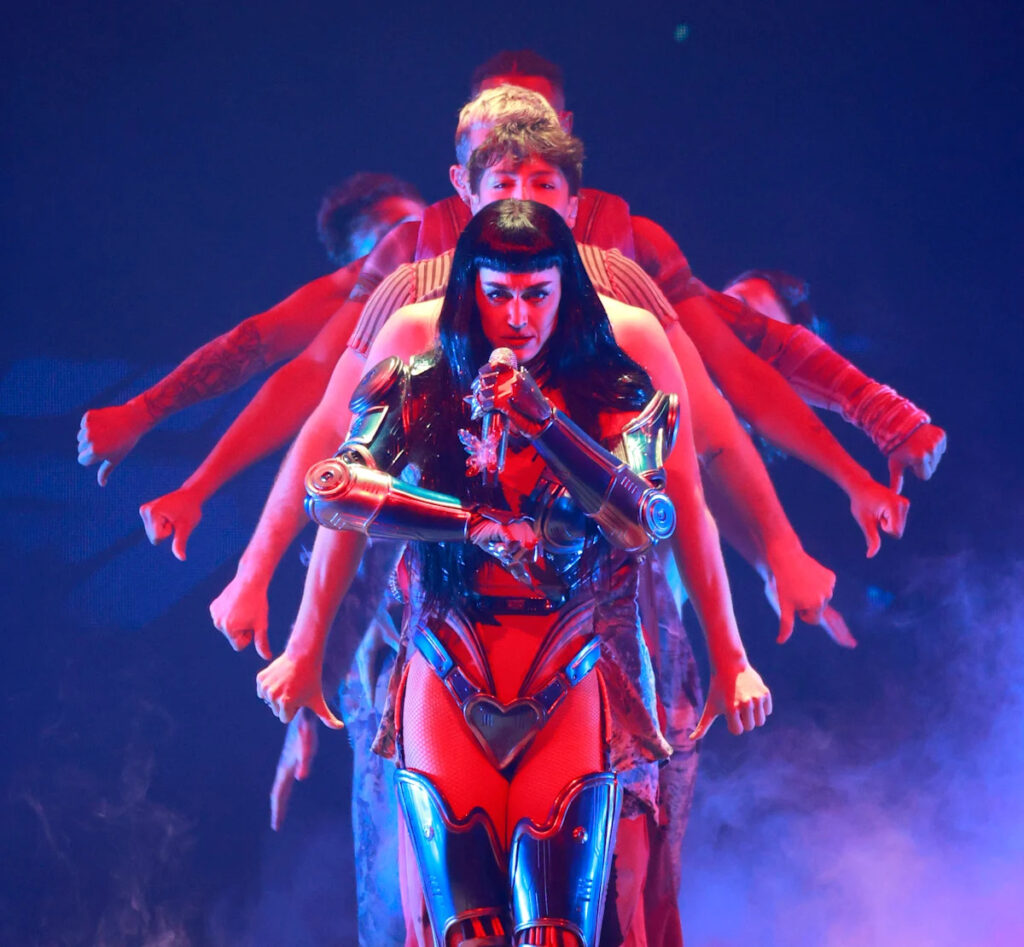
LOS ANGELES — Inside the Kia Forum in July, Katy Perry soared through the arena on wires, showcasing acrobatics while performing “Nirvana,” a song from her latest album. Amid the thrills, she flipped inside a metal sphere during “I Kissed a Girl” and took flight on an animatronic butterfly for her global hit anthem “Roar.” A striking visual display accompanied her rendition of “E.T.,” which saw her battling monster aliens (her backup dancers) in a sparkling bodysuit, brandishing a neon lightsaber. The narrative arc of the two-hour concert centered around Perry navigating a video game in which she combats an evil mastermind. The nearly 18,000 fans in attendance cheered enthusiastically, chanting, “Ka-ty! Ka-ty! Ka-ty!”
Outside the luxurious venue, the online reaction was notably different. During the launch of her Lifetime Tour in April, social media erupted with mockery. Headlines like, “Katy Perry’s ‘Cringe’ Concert Debut Roasted by Fans,” flooded various platforms, while Page Six quoted an anonymous critic questioning, “People are paying to see this?” TikTok users contributed to the chorus of dissent, with one video derisively commenting, “Hanging for dear life just like her career.” Yet, despite the negativity, Perry’s tour reports indicate robust health: she has grossed over $80 million and sold 1.1 million tickets, prompting her management to announce additional dates in France, Australia, and China. Following a break after the U.S. leg, the tour resumes in South America this weekend.
Navigating a Digital Landscape
The juxtaposition between Perry’s dynamic live performance and her often-criticized online persona serves as a stark reminder of the challenges faced by pop stars in 2025, where public perception is heavily swayed by social media. Perry’s recent journey exemplifies how quickly a celebrity’s reputation can fragment, unraveling a narrative that contrasts her performance allure with the public’s criticism.
Her Los Angeles concert took place merely a year after the ill-fated release of her single “Woman’s World,” which contributed to the lukewarm reception of her seventh studio album, “143.” Lines like, “Sexy, confident / So intelligent / She is heaven sent” received backlash, leading some fans to speculate whether the lyrics were penned by artificial intelligence. Many were confused by the accompanying music video, which was intended as a satirical take on the male gaze but instead drew criticism. Compounding her struggles, Perry faced scrutiny for collaborating with producer Dr. Luke, who has been accused of sexual assault, though Perry later clarified that he was merely one of many contributors to her project.
The Weight of Public Scrutiny
As Perry’s challenges piled up, from filming a music video in ecologically protected Spanish sand dunes to embroiling herself in legal battles over her Montecito estate, her celebrity status faced increasing strain. A spring appearance on the Blue Origin all-female spaceflight added to the criticism, viewed by many as a tone-deaf display of privilege. Earlier this year, her personal life also became a focal point, following her split from longtime fiancé Orlando Bloom.
Unlike many celebrities who prefer to sidestep negative feedback, Perry has opted for direct engagement with her critics. “Hold on, hold on, no, no, no … This is not what the internet says is going on!” she proclaimed joyously to her Los Angeles audience, which responded with overwhelming applause. “This is real life, is what it is.” At her Chicago concert, she echoed these sentiments, stating, “Well, I thought I was the most hated person on the internet. I think that’s false.”
The Impact of Cultural Shifts
Perry has always paid attention to public discourse. A 2010 profile in Rolling Stone illustrated her habit of checking her online reputation, actively debunking false rumors on social media. Journalist Vanessa Grigoriadis remarked that Perry’s need for immediate connection with her audience has been integral to her success. However, as cultural expectations evolve, Perry appears to struggle to adapt. “It’s a mismatch of where she was as a person and an artist, and where the culture is moving to,” Grigoriadis noted.
In today’s landscape, creating playful, humorous content is no longer enough for artists like Perry. With rising stars such as Sabrina Carpenter, Addison Rae, and Tate McRae solidifying their identities in the industry, established artists face heightened scrutiny. Notably, women in the spotlight, especially those who are aging, are often held to more rigorous standards. “Once the hate starts against you … it’s pretty hard to stop it,” Grigoriadis cautioned.
Perry’s humility surfaces as she recounts her modest beginnings in Santa Barbara, California. At her concert, she shared stories about couch-surfing in her early Los Angeles days, emphasizing her ambition amid financial struggles. “I didn’t care what people said about me back then, and I don’t care now,” she declared with fervor, to the cheers of her devoted fans.
The Resilience of a Pop Icon
Backlash is no stranger to Perry, who has long been subject to intense online criticism. Kristin Lieb, a notable author, expressed her disdain for the harsh treatment pop stars frequently endure. While acknowledging that celebrities can misstep, she argued that Perry has often responded defensively, leading to a public perception that has become a defining aspect of her persona.
Initially emerging as a Christian singer, Perry’s career skyrocketed with the controversial release of “I Kissed a Girl.” However, as she expanded her body of work, disputes over cultural appropriation and misguided public statements have overshadowed her achievements. Her missteps have heightened with her pivot toward “purposeful pop,” which critics deemed shallow amid a turbulent political climate. Perry’s journey has included her tenure as a judge on “American Idol,” where, despite genuine attempts to mentor contestants, negative headlines frequently clouded her image.
Even during challenging times, Perry’s loyal fanbase remains unwavering. Known as the Katy Cats, this dedicated group supported her through setbacks, even purchasing a billboard in Times Square to celebrate the kick-off of her tour. “When the ‘online’ world tries to make me a human Piñata, I take it with grace and send them love,” Perry reflected, acknowledging the complexities of online discourse. “What’s real is seeing your faces every night, singing in unison, reading your notes, feeling your warmth.”
At the Kia Forum, fans adorned in tour merchandise, cat headbands, and vibrant wigs showed up in droves. Perry endeavored to foster a genuine connection with her audience, inviting young attendees on stage for a poignant rendition of “The One That Got Away.” As she took a breath just before the closing number, she reiterated her gratitude to her fans: “Thank you for showing up, and showing me what’s real.”