In a world where language evolves constantly, the once shocking f-word has lost its edge. Saturated in politics, media, and pop culture, the word that was once reserved for moments of intense emotion is now part of everyday vocabulary. From presidential speeches to blockbuster movies, this linguistic shift reflects broader social changes. This article examines how the f-word, now officially boring, has transitioned from taboo to mundane.
And just like that, Donald Trump ruined something else.
To be fair, Democrats also played a role in the shift.
And if we’re being totally honest, the whole thing was on the verge of collapse anyway.
We’re talking about the f-word, of course.
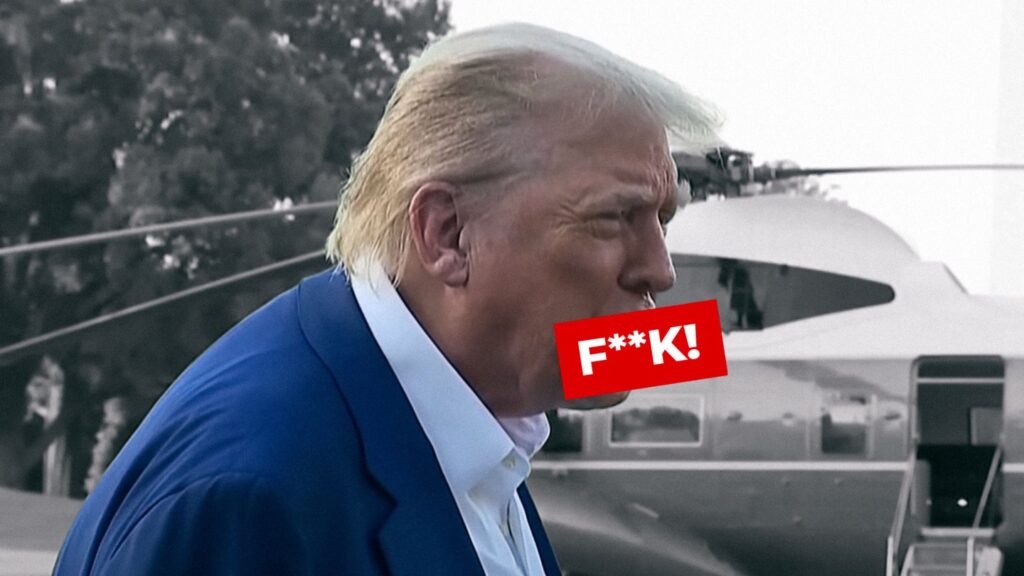
Trump furiously hurled it during a live interview on Tuesday about the Israel-Iran war, emphasizing his point with, “Do you understand that?”
The president’s casual use of the f-word generated pearl-clutching headlines around the globe (“Breaking Another Presidential Norm,” scolded NPR; “It’s Not Unheard Of,” defended The New York Post; “The Internet Is Losing It,” enthused BuzzFeed). The New York Times deemed the event significant enough to print the word fully, forgoing their usual substitutes that leave readers guessing the intended profanity.
Even before Trump’s viral interview, Democratic leaders had been publicly incorporating the f-word more often. Rep. Maxine Dexter (D-Ore.) once stated at a rally, “I don’t swear in public very well, but we have to fuck Trump,” showcasing the casual nature of political discourse today.
Our leaders’ candid language has signified the final step in the word’s journey towards being so commonplace that it has lost its impact and provocation.
The overuse on social media could be blamed for this change—studies reveal “fuck” as the most commonly tweeted curse word. Streaming services also contribute, with their adult content overshadowing traditional networks. Furthermore, research suggests swearing offers health benefits by boosting pain tolerance.
The mainstream media’s evolving standards have also played a part. The Hollywood Reporter, for instance, has featured celebrity interviews with unapologetic language, titles like “Harrison Ford: ‘I Know Who the F**k I Am’” adding to the normalization. Publications often insert asterisks to avoid offending Google’s algorithms rather than readers.
Essays lamenting “the coarsening of our language” are nothing new. But in 2024, the second highest-grossing film, Deadpool & Wolverine, included 116 uses of the word—distributed by Disney no less. Meanwhile, Snow White’s lack of profanity didn’t help its box office performance. Had Rachel Zegler’s character expressed frustration with a well-placed f-word, things might have been different.
Now, it takes exceptional scenarios, like Disney’s Snow White swearing, to imbue the word with shock value. Our culture is so saturated with the f-word that it no longer shocks or inflames. We’ve reached a point where the f-word, once surrounded by controversy, has simply become boring. Our world is full of it, rendering it mundane. We no longer have any f-words left to care about.