At this year’s International Film Festival of India (IFFI) in Goa, Spain, the designated Country of Honor, is actively engaging Indian filmmakers by showcasing its diverse filming incentives, stunning locales, and skilled crews. The aim is to foster stronger co-production relationships between the two nations.
Spain’s Strategic Pitch at WAVES Film Bazaar
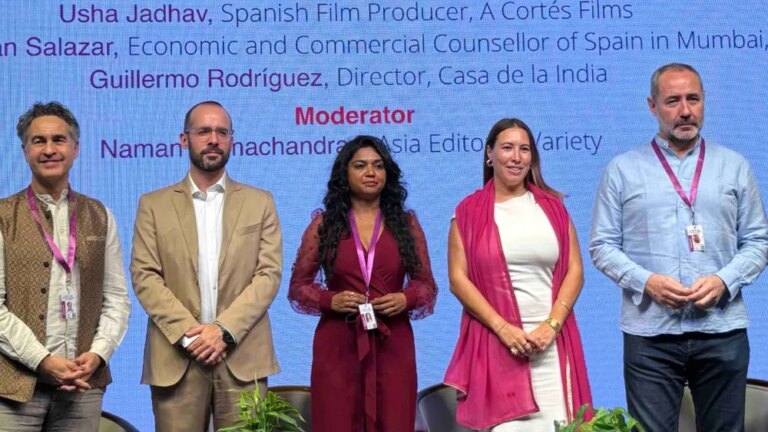
During the panel discussion titled “Spain: Where Stories Find Their Stage – Incentives, Locations & Co-production Opportunities,” part of the Knowledge Series at the market running from November 20-24, prominent voices in the Spanish film industry articulated the benefits of collaboration. The session was moderated by Naman Ramachandran, Asia editor for Variety.
Fostering Co-production and Cultural Exchange
Camilo Vázquez, the deputy director of the Institute of Cinematography and Audiovisual Arts (ICAA) in Spain, emphasized the importance of co-production as a strategic tool for both countries. He highlighted the advantages of better financing options, cultural exchanges, and the potential for storytelling that resonates with audiences in both Spain and India, noting that the current climate is especially favorable for such partnerships.
Diverse Locations, Talented Crews, and Practical Benefits
For Indian producers deliberating over Spain as a filming destination, the allure extends beyond the picturesque vistas. Usha Jadhav, a National Award-winning actor and producer with ACortes Films, underscored Spain’s proven track record with international productions. She cited the country’s varied landscapes, impressive architecture, and proficient crews familiar with both high-budget and indie projects. Additionally, Jadhav pointed out practical advantages such as eight-hour shooting shifts and quieter environments, particularly beneficial for sync-sound productions.
Encouraging Creative Collaborations
Jadhav advocates for a relationship that transcends mere service work, emphasizing the importance of creative collaboration. “Language is not a barrier, because cinema itself is a universal language,” she stated. “We need human stories.”
Tax Incentives and Market Dynamics
Lara Molina, general coordinator of the Spain Film Commission, detailed the various tax incentives offered to international productions. Miguel Fabián Salazar, Spain’s economic and commercial counselor in Mumbai, explained how both India and Spain bring unique strengths to the table: India provides production scale and a vast consumer market, while Spain contributes experienced talent and access to broader European and Latin American markets. He noted that the interplay of these elements could enhance opportunities for co-production, financing, distribution, and more.
Building Lasting Partnerships
ICEX, the trade and investment agency in Spain, is active in Mumbai to assist producers and distributors with market access, local partnerships, and business setup. Guillermo Rodríguez, director of Casa de la India, reiterated the importance of building connections and trust for successful projects. He revealed that the existing audiovisual co-production agreement between India and Spain, signed in 2012, is undergoing updates to provide clearer guidelines for collaboration.
Showcasing Spanish Projects Seeking Indian Collaborators
The session culminated in a showcase of five Spanish projects actively seeking Indian collaborators. Highlights included “My Parents Grand Bazaar,” the debut feature from Andalusian filmmaker Rakesh Narwani; “Serendipia,” a collaborative romance between India, Mexico, and Spain; “The Dragon Letter,” directed by Ladakh-born Stanzin Jigmet; and an animated project titled “Mumu.”
Global Perspectives and Future Collaborations
Rodríguez lamented that both countries have primarily engaged with familiar markets, with Spain traditionally looking toward Europe and Latin America, while India targets English-speaking territories. He envisions a powerful opportunity in merging the global Indian film industry with the Spanish-speaking world, which encompasses more than 500 million people. “Imagine the potential if we can bring those two cultural superpowers together,” he remarked, envisioning a rich future of collaboration.