Meghan Markle’s Show Returns for Another Season of Carefully Curated Inauthenticity
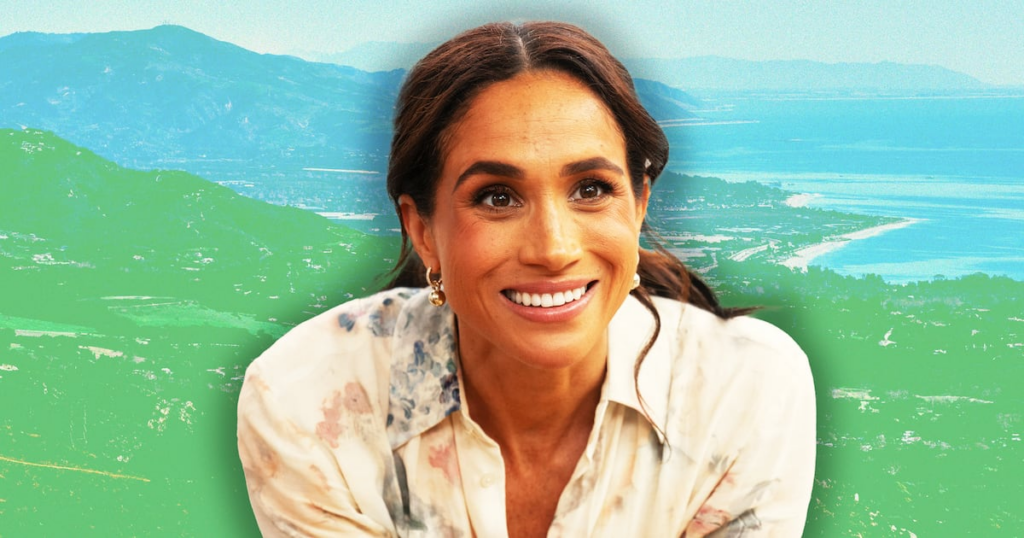
Meghan Markle’s popular show, “With Love, Meghan,” is back for a second season, yet audiences are poised to encounter a familiar blend of staged charm and elusive authenticity. Dubbed as another opportunity to glimpse the royal’s life and cooking adventures, this new installment continues the theme of carefully curated inauthenticity that has defined the series since its inception. As viewers dive into the much-anticipated episodes, they will find themselves wrestling with the ongoing tension between carefully crafted narratives and genuine connection.
The Familiar Premise Redux
If you enjoyed the first season of “With Love, Meghan,” then you’ll likely find the second season engaging, albeit in the same formulaic style. Those who were less than enthusiastic about the initial run may discover even more elements to critique. The latest series, which premieres on Netflix on Tuesday, is not entirely fresh material; instead, it capitalizes on previously filmed footage, making it a continuation rather than a transformational reimagining.
The structure of the show remains consistent: viewers are invited into Meghan Markle’s imagined world, complete with elaborate culinary displays and hosting rituals. However, what many may overlook is how the production team constructs a set that only mimics a lived-in atmosphere, as numerous production notes confirm that the filming takes place in a location that isn’t Meghan’s actual home. This artificiality fosters a juxtaposition that underscores the central issue afflicting the show: authenticity is notably lacking.
The Supporting Cast Dynamics
Once again, Meghan is joined by her longtime friend and makeup artist, Daniel Martin, who holds the role of her devoted sous-chef throughout the series. While Martin is an affable presence, he often seems tasked solely with echoing Meghan’s sentiments—responding with phrases like, “That’s a good plan,” or “That’s awesome,” appearing as though he is more attuned to cosmetics than culinary creations. His character would benefit from more depth; otherwise, he risks being perceived as merely a supporting player in a tightly controlled narrative.
In stark contrast to breakout personalities like Kaleb Cooper from “Clarkson’s Farm,” whose on-screen charisma blossomed organically, Martin’s demeanor feels strategically placed in an effort to replicate that success. Unfortunately, his role fails to enhance the series, instead revealing the lack of spontaneity within the show.
A Harsh Reality Check
The individual episodes navigate between mediocrity and confusion. In one notable gathering, chaos reigns during a cooking session, with erratic editing making it difficult for viewers to grasp what is being prepared. Amidst scattered food and incoherent commentary about venturing out of comfort zones, any semblance of culinary purpose evaporates by the time artisanal s’mores are being toasted.
In a revealing moment, Meghan expresses her distaste for baking, describing it as “too directional,” and suggests reinventing the craft to be “more spontaneous.” However, her approach comes off as awkward and disingenuous; one cannot mask a messy cooking experience with soft-focus cinematography.
Contrived Connections and Missed Opportunities
The fourth episode introduces Tan France from Netflix’s “Queer Eye,” yet the chemistry feels forced. Meghan greets him with an extravagant gift of children’s books and an elaborate breakfast spread, which plays less as a thoughtful gesture and more as a staged moment. Upon meeting, they exchange polite niceties that crumble the illusion of genuine friendship; the phenomenon of simulated intimacy for the audience becomes glaringly evident.
Yet, amid this calculated narrative, a standout moment occurs in the finale featuring chef José Andrés. His presence brings a real sense of warmth to the show, facilitating conversations that feel genuine rather than crafted. However, a sudden transition to a stark, documentary-style scene of preparing sea urchins disrupts this mood, making it challenging to discern the show’s intended tone and character.
Viewer Reactions and Future Prospects
The viewership statistics paint a sobering picture. When “With Love, Meghan” launched, it racked up 12.6 million hours watched in its first week, briefly earning a spot in Netflix’s global top 10. However, its rating plummeted to 383rd among all shows within a month, with only 5.3 million total views to its name. While these figures technically placed it in the upper echelons of Netflix content, they reveal a disappointing trajectory for the series and for Meghan herself.
The once-promising $100 million deal between Meghan and Prince Harry and Netflix has been restructured into a much smaller “first-look” agreement, signaling inadequate performance and prompting questions about the future of their collaborations. A holiday special is likely on the horizon, further drawing from the existing footage, signaling that the impetus to repackage content for momentum may define the upcoming seasons.
The overarching narrative remains clear: efforts to position Meghan as a leading lifestyle guru alongside figures like Martha Stewart have faltered. Where genuine warmth is hoped for, audiences are instead met with an all-too-obvious disparity between the curated image of Meghan on screen and the realities of her life off-camera. What began as a dazzling opportunity has instead morphed into another example of Netflix filler, leaving many to ponder whether a third season is even conceivable.