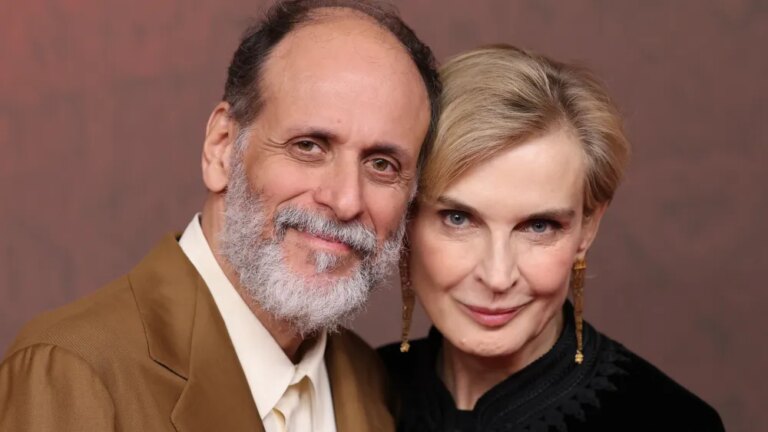
In a year marked by geopolitical tensions impacting film festivals in the Middle East, Marrakech has emerged as a beacon of international cinema. The festival attracted a host of renowned artists, including Luca Guadagnino, John Turturro, James Gray, Jeff Goldblum, Tilda Swinton, Monica Bellucci, and Arthur Harari. This edition not only highlighted Oscar contenders but also showcased a vibrant new generation of filmmakers from across the Arab world and Africa.
Challenges and Triumphs of the Marrakech Film Festival
Melita Toscan du Plantier, a key figure in enhancing the festival’s international reputation, discussed these dynamics with Variety on the festival’s closing day. She addressed the challenges of this year’s event, such as the withdrawal of a Palestinian film from the competition and the emergence of a flourishing cohort of young Moroccan filmmakers, particularly women.
“I regret that a film could be pulled against the wishes of its director and creative team after everything had been organized for over three months,” said Toscan du Plantier, expressing sadness over the withdrawal of Abdallah Al-Khatib’s “Chronicles From the Siege.” The film, which had garnered acclaim at Berlin, was pulled by its Algerian rights holder, citing Morocco’s ties with Israel.
Marrakech’s Growing Influence on Awards Season
Toscan du Plantier noted that the festival is increasingly influential during awards season, with 11 films submitted for the international feature category this year. High-profile entries included Cristian Mungiu’s Cannes Palme d’Or winner “Fjord” and Morocco’s Laïla Marrakchi’s “Strawberries,” which was featured at Cannes’ Un Certain Regard. Various esteemed filmmakers presented their works, including Jesse Eisenberg’s “The Debut,” which opened the festival, and Guadagnino’s upcoming Sam Altman film, “Artificial.”
“There are frequently many Academy voters here,” Toscan du Plantier noted, adding that the festival attracted significant press coverage despite a slight decline in American attendance this year, attributed in part to the current geopolitical climate.
A Festival of Accessibility and Young Talent
Despite the challenges, cancellation was never an option for the Marrakech Film Festival. Toscan du Plantier emphasized its founding purpose: to showcase a welcoming image of the Muslim world. “His Majesty King Mohammed VI wished to highlight that we could host individuals from all backgrounds and faiths to discuss culture,” she said.
One of the standout features of this year’s festival was the enthusiasm of young attendees, many of whom waited in long lines to engage with filmmakers and stars. Marrakech’s commitment to accessibility—with free screenings and masterclasses—drew not only local film students but also young people from Europe and other parts of Africa. “Every year, we see more young people coming from all over Morocco, the Maghreb, and beyond,” Toscan du Plantier remarked, noting a significant increase in female attendance as well.
Celebrating Local Growth and Future Prospects
The festival’s 23rd edition showcased an impressive array of 76 films from 39 countries, including 10 world premieres and 12 Moroccan entries. Of the 106 screenings, 88 included presentations or discussions, providing an interactive platform for audiences and creators alike. Toscan du Plantier highlighted that filmmakers appreciate the warmth of the Marrakech audience, which offers genuine enthusiasm often lacking at larger festivals.
As Morocco’s film industry has evolved—growing from producing just four films a year at the festival’s inception in 2001 to approximately 30 today—Marrakech has simultaneously become a vital space for discovering emerging Arab and African filmmakers through initiatives like the Atlas Workshops. Launched in 2018 by artistic director Rémi Bonhomme, these workshops have seen significant success with films supported here attending major festivals like Cannes and Venice.
Toscan du Plantier pointed to Moroccan director Asmae El Moudir as a success story, whose hybrid documentary “The Mother of All Lies” garnered multiple awards, including Marrakech’s Golden Star, after being supported by the workshops. “What fascinates me is seeing all these young women from Morocco and Africa,” she said, highlighting how the workshops inspire young filmmakers to pursue their ambitions regardless of financial constraints.
Looking ahead, Toscan du Plantier is co-producing upcoming projects, including the sophomore feature of French Senegalese director Ramata-Toulaye Sy, as well as a documentary by Alexandra Gray. With creativity thriving in Morocco, the future of the film industry appears bright.