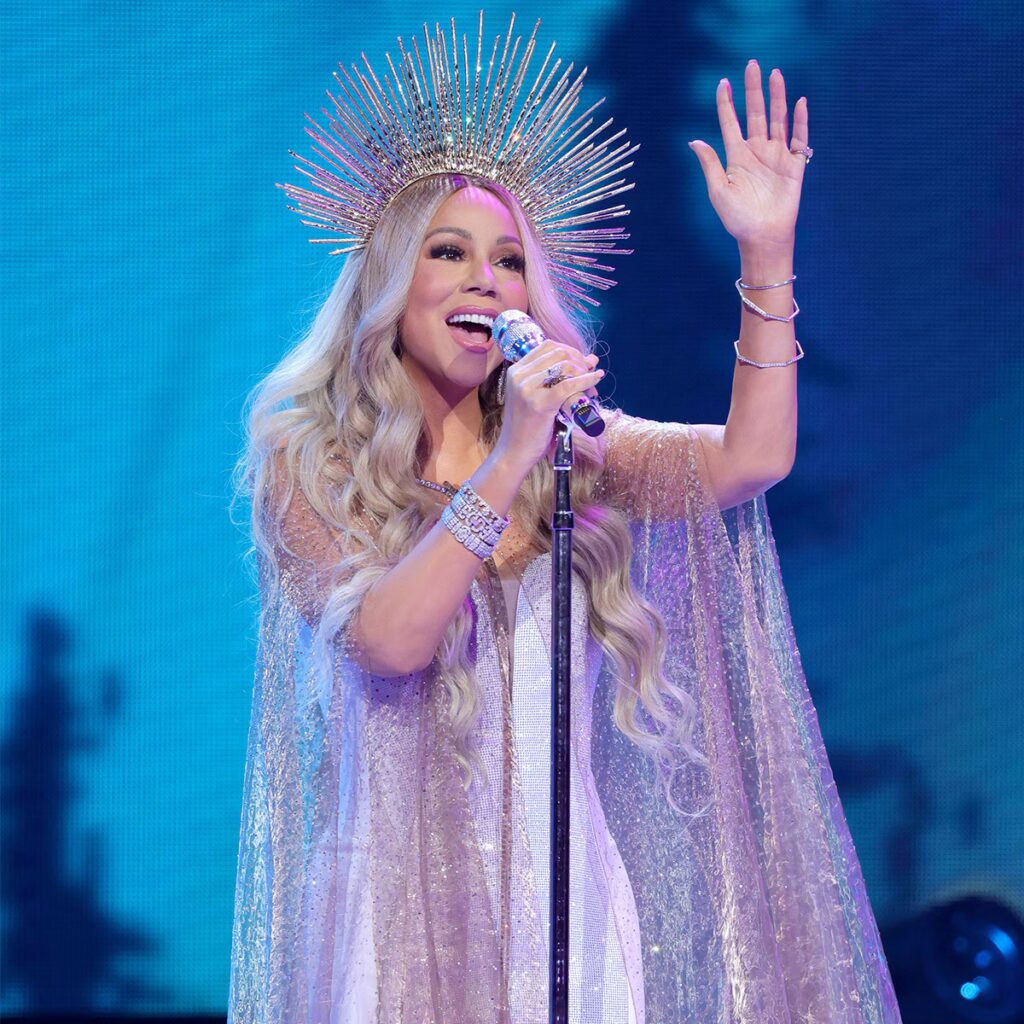
Mariah Carey has faced her share of challenges throughout her illustrious career, including a highly publicized mental health struggle. In a candid revelation that surfaced years later, she shared details about a difficult period in her life that began in 2001. Following a bizarre appearance on TRL, where she unexpectedly arrived with an ice cream cart and stripped down, Carey experienced a significant breakdown. She spent two weeks at a mental health facility in Connecticut, citing extreme exhaustion as the reason for her collapse.
Embracing Mental Health Advocacy
It wasn’t until 2018 that Carey disclosed her diagnosis of bipolar II disorder, a condition she had kept private for years. In an interview with People, she expressed her comfort in discussing her struggles and her hope for a future where the stigma around mental health is diminished. “I’m just in a really good place right now, where I’m comfortable discussing my struggles with bipolar II disorder,” she stated. “I’m hopeful we can get to a place where the stigma is lifted from people going through anything alone. It can be incredibly isolating. It does not have to define you and I refuse to allow it to define me or control me.”
Career Resilience and New Beginnings
Just months following her recovery, Carey released the film and soundtrack for Glitter. However, the project was met with poor reviews and disappointing box office returns, leading to Virgin Records buying her out of her contract for a staggering $50 million. This setback did not deter Carey; she rebounded by signing with Island Records in early 2002 and establishing her own record label, MonarC.
Acting Ventures
Despite the tumultuous period surrounding Glitter, Carey continued to explore her talents beyond music. She garnered critical acclaim for her performance as a social worker in the award-winning 2009 film Precious, directed by her friend Lee Daniels. Furthermore, she appeared in Daniels’ 2013 film The Butler, portraying Hattie Pearl, the mother of the main character, Cecil Gaines, played by Forest Whitaker.
Mariah Carey’s journey underscores her resilience and determination to overcome mental health struggles while continuing to thrive in the entertainment industry.