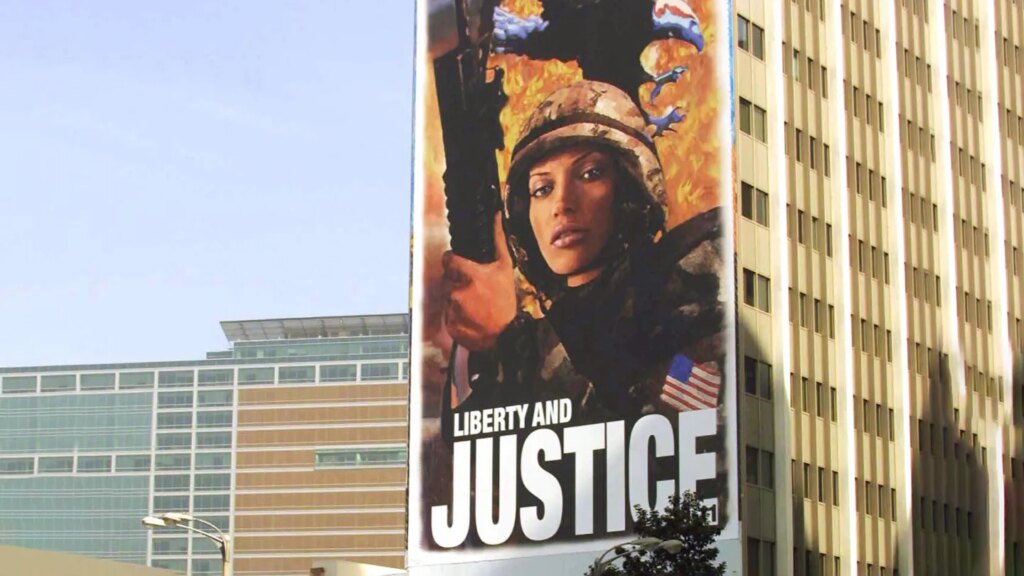
In the wake of the tragic events of September 11, 2001, Los Angeles found itself in a state of heightened anxiety and apprehension. A month after the attacks, the city awoke to a striking new landmark that would encapsulate the complex emotions of the time: a giant 60-foot soldier in full combat fatigues, cradling an M-16, prominently displayed on the side of a 12-story building at the intersection of Wilshire and Westwood. This striking figure, reminiscent of a Victoria’s Secret model who had strayed into a war zone, evoked feelings of beauty, fear, and absurdity—yet, at that moment, her presence resonated with L.A.’s spirit of defiance.
Hollywood’s Fortress Mentality
The aftermath of 9/11 left Hollywood grappling with its own sense of vulnerability. Studios transformed into fortified locations: Warner Bros. instituted concrete barriers, Fox constructed a cement maze, and Paramount utilized mirrors for thorough checks of vehicles, scanning for potential threats. Trunk inspections, ID verifications, and canceled tours became commonplace as the fear of a potential attack on the entertainment capital loomed large. The idea that al-Qaida could target Hollywood created an atmosphere of palpable tension.
Shift in Entertainment Landscape
In this climate of fear, the content that Hollywood had produced took on a new, horrifying context. Several films scheduled for release were suddenly deemed inappropriate. Big Trouble, a comedy about nuclear smuggling, had been set to debut just days after the attacks but was delayed until April. Similarly, Bad Company, featuring Chris Rock and Anthony Hopkins as agents halting a suitcase bomb, was pushed from a Christmas release to June. Even a film like Collateral Damage, starring Arnold Schwarzenegger as a firefighter driven by personal tragedy resulting from terrorism, saw its release postponed from October to February. What was once a routine entertainment landscape was now scrutinized through a lens of fear and dread.
The Symbolism of the Giant Soldier
Amidst this cacophony of anxieties, the towering figure of the soldier became an emblem of the era. Created by renegade billboard artist Mike McNeilly, the unauthorized installation prompted a clash with City Hall over its removal, invoking themes of free speech amidst fear. The soldier encapsulated the city’s conflicting emotions: terrified yet resolute, patriotic yet tinged with an unmistakable sense of the absurd. With the world seemingly unraveling, she stood as a bold representation of Los Angeles—optimistic in its aesthetic while clutching a weapon of war.
This story appeared in the Sept. 9 issue of The Hollywood Reporter magazine. Click here to subscribe.