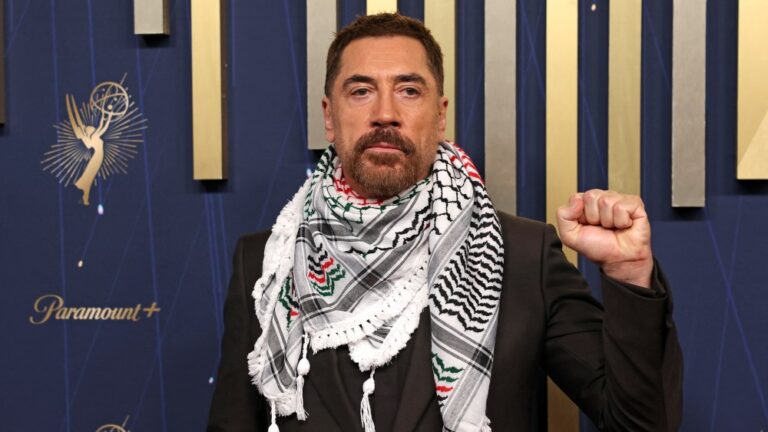
Javier Bardem has recently voiced support for the Film Workers for Palestine initiative, highlighting that its boycott of Israeli film institutions does not target individuals but rather holds global companies and institutions accountable. This approach, he argues, seeks to address complicity in actions against the Palestinian people. Bardem’s stance has drawn attention within the entertainment industry, sparking discussions on the ethical responsibilities of filmmakers and studios worldwide.
Support for Film Workers for Palestine
Javier Bardem has clarified his support for the Film Workers for Palestine pledge, emphasizing its focus on targeting institutional complicity rather than individual discrimination. In a statement to CNN, Bardem reiterated the importance of accountability for companies involved in actions against Palestinians, specifically in Gaza and the West Bank. “We do not discriminate against any person based on their nationality, race, religion, or gender. We support holding companies and institutions accountable,” he stated.
Industry-Wide Response
Earlier in September, the pledge gained momentum with over 3,900 industry leaders signing on against Israeli film institutions implicated in what they describe as genocide and apartheid against Palestinians. Names like Yorgos Lanthimos, Ava DuVernay, and Emma Stone joined Bardem in this movement, underscoring a collective call for corporate responsibility.
Legal and Corporate Challenges
The boycott has not gone without opposition. U.K. Lawyers for Israel warned major studios such as Netflix and Disney that the boycott might infringe upon the U.K.’s Equality Act. The act protects against racism and discrimination, and the lawyers argue that participation in the boycott could lead to breaches of this legislation, creating a potentially dangerous precedent.
Studio Reactions
Studios like Warner Bros. have responded by standing firmly against the boycott, emphasizing their commitment to inclusivity and non-discrimination. In a statement reported by Variety, Warner Bros. declared that such a boycott would likely violate their policies against discrimination. “Our policies prohibit discrimination of any kind,” the studio stated, affirming the importance of aligning business practices with legal and ethical standards.
Javier Bardem remains one of the most vocal figures in Hollywood on this issue. During a recent event, he reaffirmed his position by citing the International Association of Genocide Scholars’ declaration, urging for a blockade and sanctions to address the ongoing conflict. His words continue to resonate within an industry increasingly engaged in global ethical conversations.