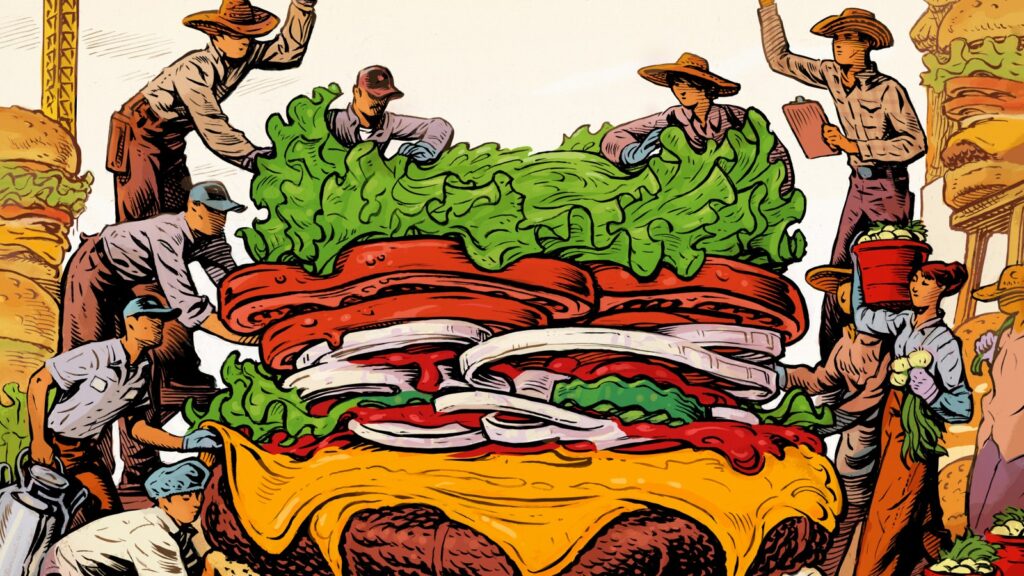
Immigrants and their vital contributions to the American food industry often go unnoticed, yet they are the backbone of one of its most iconic symbols: the cheeseburger. This article explores the diverse immigrant workforce that makes each cheeseburger possible, from the farms to the fast-food chains, highlighting the essential role of immigrant labor in agriculture and food production.
Immigrant Labor in American Agriculture
The cheeseburger, an emblem of American culture, is consumed in staggering numbers — an estimated 50 billion each year. This beloved food requires a vast network of operations supported by millions of immigrant workers. Every ingredient, from Idaho onions to Wisconsin cheese, traces back to the labor of immigrants, showcasing how deeply American agriculture relies on them.
James O’Neill from the American Business Immigration Coalition notes, “There is no area of agriculture that is currently not touched by the labor shortage.” With nearly seven in ten crop workers born outside the United States, immigrant labor is indispensable. Yet, immigration policies threaten the delicate balance of this system.
The People Behind the Ingredients
Shay Myers of Owyhee Produce in Idaho encapsulates the reality of onion farming: “We don’t grow food in this country without immigrants. Period.” Myers’ operation relies on a predominantly immigrant workforce, revealing the challenges these workers face amidst uncertain immigration statuses. Veronica, an immigrant who has worked on Myers’ farm for over a decade, embodies this struggle, stating that mass deportations would devastate the food system: “There just won’t be enough people willing to do the work.”
In Wisconsin, dairy farms tell a similar story. Antonio, who manages daily operations, entered the U.S. seeking a better life for his family. Today, he oversees a predominantly immigrant crew, emphasizing that most workers share his background. “The rest are like me — people trying to survive.” This reliance on immigrant labor echoes throughout the dairy industry, where 70% of workers are undocumented.
The Wider Impact of Immigration Policies
At Kansas feedlots, immigrant workers are vital to beef production. Jeff George’s operation demonstrates this, with 44 out of 52 employees being immigrants. Furthermore, the interconnectedness of labor across industries in the state underscores the urgency for sensible immigration policies, as noted by Matt Teagarden of the Kansas Livestock Association: “The consequences of mass deportation or visa restrictions would be swift and far-reaching.”
In Arizona, Kristen Smith Eshaya’s romaine farm depends on skilled Latino workers, many on temporary visas. She expresses concern over potential enforcement raids that could cripple operations: “If raids start happening, and people stop showing up for work, we can’t replace them.”
The Future of American Farming
The bun and tomato sections of the hamburger equation are no less reliant on immigrant labor. Commercial bakeries and tomato farms, like Briana Giampaoli’s in California, illustrate the broader implications. Giampaoli stresses that without immigration reform, the survival of family farms remains uncertain.
This exploration into the journey of a cheeseburger illustrates the indispensable contributions of immigrants to American agriculture and food production. While the cheeseburger is a symbol of abundance and patriotism, it is, at its core, a product brought to life by the hard work and dedication of immigrants.