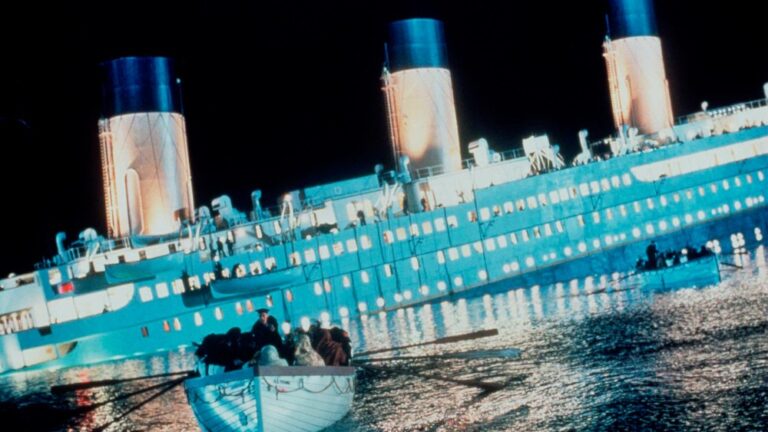
When “Titanic” was looming on the horizon, many in Hollywood predicted James Cameron‘s ambitious epic would sink under its own weight. However, a pivotal four-minute-and-two-second trailer turned the tides, reshaping its destiny from looming disaster to blockbuster triumph. This trailer changed perceptions and played a key role in the film’s massive success, demonstrating the power of strategic marketing in the film industry.
The Importance of the First Trailer
For any film, the first trailer is crucial. It’s the primary opportunity to capture an audience’s attention and convey the essence of the movie within a short time. In the case of “Titanic,” this challenge was even greater, as compressing a sprawling three-hour-and-fourteen-minute saga into this format required creativity and strategy. As with many aspects of the production, this trailer became a battleground of ideas.
The Battle of the Trailers
Condensing “Titanic” into a concise format was no easy task. The team produced a four-minute-and-two-second version and sent it to the studios, Fox and Paramount, for approval. However, the initial feedback was discouraging. Rob Friedman, head of distribution and marketing at Paramount, famously described his reaction as, “I’m throwing up all over my shoes.”
Paramount created an alternative, shorter trailer, characterized by rapid cuts and intense music, which misrepresented “Titanic” as an action film set on a doomed ship. This version clashed with the film’s true spirit, leading to heated discussions until they convinced Sherry Lansing, Paramount’s chairperson and CEO, to test their original version at ShoWest, the National Association of Theatre Owners conference in Las Vegas.
A Turning Point at ShoWest
The extended trailer was crucial, given it was the first glimpse of “Titanic” for many outside the production. Anxiety was palpable in Las Vegas, with years of effort and a $200 million budget at stake. Critics were poised for the movie’s failure, with Time magazine’s infamous cover hinting at impending doom.
During the ShoWest event, the response was unexpectedly positive. Kurt Russell, present at the Paramount table, quipped, “I’d pay ten dollars just to see that trailer again,” signaling the first shift in perception. This reaction led to a special allowance from the Motion Picture Association, enabling the widespread release of the extended trailer, which played a significant role in altering the film’s narrative in the public eye.
A Strategic Victory
After the trailer’s debut, negativity towards “Titanic” began to dissipate. Critiques softened, and the overall sentiment shifted. People started to believe that the movie might indeed deliver something extraordinary, which it ultimately did. This pivotal moment reaffirmed the power of a well-crafted trailer, demonstrating its capability to transform potential failure into undeniable success.