Stealing Pulp Fiction Review: Navigating Overloaded References in a Heist Comedy
“Stealing Pulp Fiction” attempts to weave a humorous tale of misguided ambition and cinephile obsession but falters under the weight of its own aspirations. Although energized by the nostalgia of Quentin Tarantino’s iconic 1994 film, the movie struggles to find its footing, relying heavily on references that overshadow rather than enhance its comedic narrative. Throughout the film, first-time director Danny Turkiewicz delivers a chaotic yet affectionate homage-cum-heist, ultimately raising questions about its cinematic language and intent.
Plot Struggles to Match Its Enthusiasm
The premise is intriguing: two best friends, Jonathan and Steve, plot to steal Quentin Tarantino’s 35mm film print of “Pulp Fiction.” However, what could have been a clever exploration of cinephilia turns into a “malformed” comedy. Opening with a nod to “Pulp Fiction”’s diner scene, Jonathan and Steve’s adventure quickly drifts from its initial inspiration. Despite their shared love for the film, their quest becomes about financial gain, an ambition poorly tied to the essence of the original narrative.
Homage Over Substance
The film’s score, echoing the “Pulp Fiction” soundtrack and other cinematic tunes, is rich with musical nods. Yet, it seldom transcends beyond being an audio-visual playlist, leaving the viewer wanting more from its meta-textual approach. Despite their potential, these in-jokes fail to weave a cohesive story, rendering the film a patchwork of disconnected references.
Character Dynamics and Comedic Hurdles
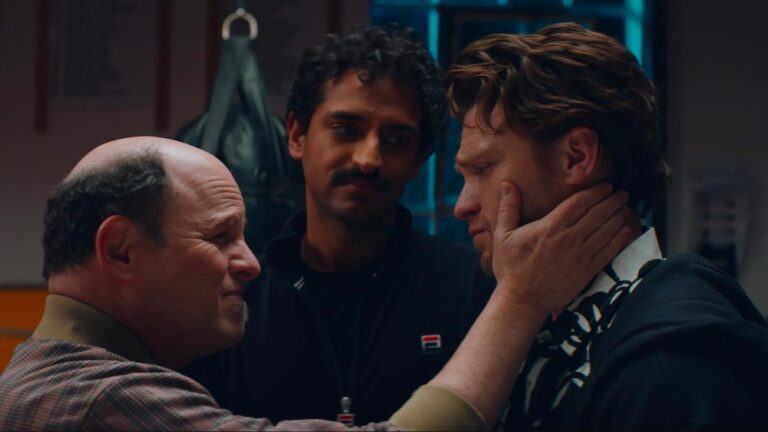
Jon Rudnitsky and Karan Soni exhibit genuine chemistry, bringing life to Jonathan and Steve’s friendship. However, their dynamic isn’t enough to anchor the film amidst its erratic shifts in focus and humor. Attempted comedic moments often stumble, marred by jarring transitions and an abrupt musical score. Even when the narrative strays into secondary plots, such as Jonathan’s infatuation with a therapist’s patient, it lacks coherence, leaving many plot threads unresolved.
Misplaced Cinematic Focus
As the heist unfolds in Tarantino’s cinema, the anticipated excitement fizzles out. By the time the characters navigate the projection booth, it becomes evident that the film might have been better off emulating the intensity of “Inglourious Basterds” rather than “Pulp Fiction.” The fleeting reference to Tarantino’s wartime epic feels disconnected, like the rest of the misplaced cinematic homages.
“Stealing Pulp Fiction” aspired to blend the allure of Tarantino’s work with a modern twist, yet the result is a mix that lacks cohesion. Its continual shift in theme and scattered focus rob it of potential impact, leaving audiences longing for the wit and finesse its title promises.