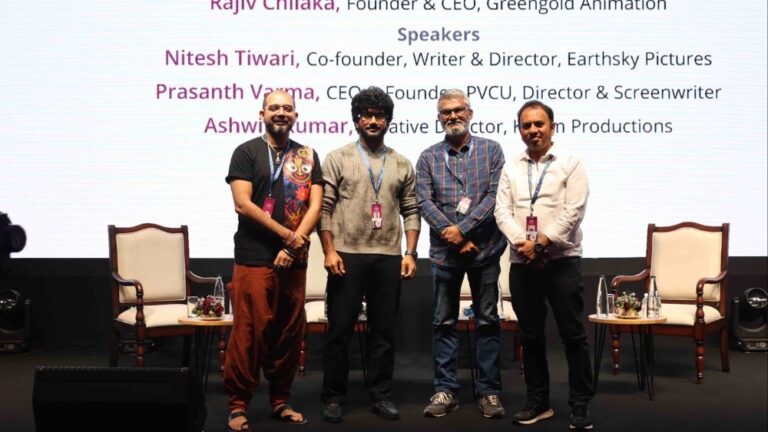
In a groundbreaking move for Indian cinema, director Nitesh Tiwari is set to establish a new global benchmark in visual effects with his upcoming film “Ramayana.” This highly anticipated project, described as India’s most expensive film, was unveiled at the WAVES Film Bazaar with Tiwari emphasizing the need for a visually stunning execution that rivals the world’s best VFX productions. The event brought together leading filmmakers to discuss the evolving role of technology in storytelling, showcasing India’s growing prowess in visual effects.
Reimagining the Epic
Nitesh Tiwari shared insights into the ambitious nature of “Ramayana” and the responsibility that comes with transforming this legendary tale into a VFX spectacle. Tiwari remarked, “Ramayana deserves to be told in the grandeur it deserves… something visually so stunning that it becomes a benchmark for the whole world.” His collaboration with Prime Focus, a leading VFX studio, reflects a five-year journey of innovation in virtual production, motion capture, and world-building.
This extensive process has been both “scary and liberating,” Tiwari admitted, highlighting the challenges of managing such a vast project. Despite the hurdles, Tiwari has grown comfortable with the scale and complexity, with the film’s first part set for release in a year.
The Role of Storytelling
The conversation at WAVES Film Bazaar pivoted to the importance of narrative in film. Filmmaker Prasanth Varma, known for the success of his Telugu superhero film “HanuMan,” stressed that technology should serve the story. “Films work because of stories. All other crafts, including VFX, help in telling that story in a grand way,” Varma explained. Drawing from his own experiences, Varma emphasized that time and creativity can substitute for financial constraints.
Meanwhile, Ashwin Kumar, who gained recognition for his animated hit “Mahavatar Narsimha,” spoke on the potential of AI in accelerating the filmmaking process. He posited that the next five years could see an AI-driven film that moves audiences, underlining the exciting future of cinematic technology.
India’s Changing Cinema Landscape
The panel discussion underscored how ambition and innovation are driving India forward in the realm of visual effects. The filmmakers reiterated that while VFX technology should not be the starting point, it can crucially enable storytelling.
At WAVES Film Bazaar, part of the International Film Festival of India in Goa, the spotlight was firmly on this vision of the future. The gathering of creative minds highlighted India’s burgeoning capacity in visual storytelling and its readiness to compete on the global stage.