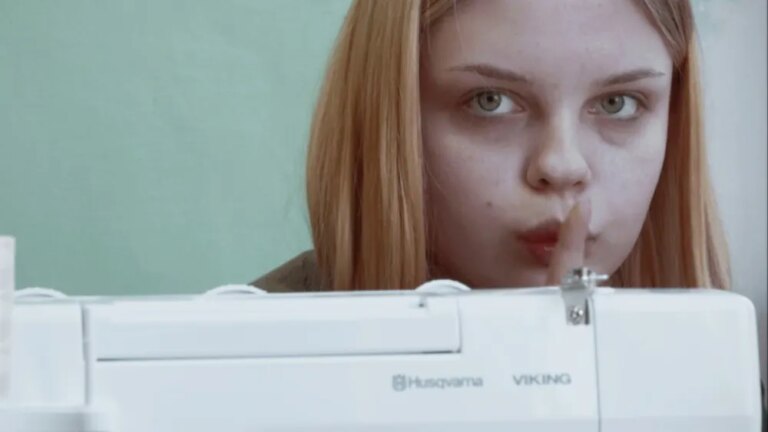
In a remarkable journey capturing the lives of young girls in a Polish correctional center, director Ania Winiarska faced her own struggles while producing “Good Girls.” Initially overwhelmed, she almost abandoned the project after six months of filming. “I felt like I’d hit a wall. I’ve never had this problem before,” Winiarska shared in an interview with Variety.
Winiarska’s documentary premieres at the Ji.hlava International Documentary Film Festival, providing an intimate view of girls residing in a correctional facility. Various reasons lead them there—from escaping abusive situations to minor infractions like skipping school or drinking. Within these walls, they confront a regimented environment marked by discipline and constant oversight.
Reflecting on her time in the institution, Winiarska remarked, “I was just another adult in a very strict institution where they had to obey all the rules and regulations. I think they viewed me as an outsider, but also as someone who was part of the system.”
After two years and much perseverance, Winiarska gained the girls’ trust. “Once they accepted me, we never had any issues. They would tell all the new girls: ‘She’s good. She’s not a snitch.’” International rights for “Good Girls” are being sold by Stranger Film Sales, with production by Story, Film i Väst, and Tekele Productions.
Outdated Systems and Misunderstood Needs
Winiarska, who is Polish and resides in Sweden, was dismayed to find a system that seems to have remained stagnant for decades. “Most of these people mean well. They try to help the girls, but it’s complicated because this system is so outdated. Rather than trying to catch up with the 21st century, the girls are taught how to cook and sew,” she noted, adding that while religious classes were compulsory during her filming, they are no longer a requirement.
The stigmas surrounding “good girls” and “bad girls” remain strong in Polish society. Winiarska explained, “In some countries, and that includes Poland, good girls are quiet and obedient. Certain prejudices are very much alive.” She lamented the lack of open discussion around growth and identity, stating, “We don’t talk to our children about growing up, puberty or sex education.”
The True Profiles of the Girls
Many of the girls in the center do not fit the criteria for being there. “Most of these girls shouldn’t even be there. This place is meant for the resocialization of people who have committed crimes or are on the edge of doing so,” Winiarska observed. Instead, their circumstances often stem from issues like skipping school, unwanted pregnancies, or substance use.
Some of the girls struggle with mental health challenges that their families are unable or unwilling to address. Winiarska highlighted a poignant example: “One of the girls suffered from depression that wasn’t properly diagnosed. She was lying in bed for three weeks, and her mom, who has similar issues, couldn’t help her. Neither did her school. Instead, the police came and handcuffed her in her pajamas.”
Complex Realities and Long-Term Consequences
Winiarska detailed the complexities of mental health care within the institution, noting that many staff members lack psychological training. “When you’re not well mentally and you’re locked up and punished for it, it damages you even more,” she said. During her time, she encountered girls aged 10 to 18, a reflection that brought her personal fears to the surface. “My daughter is 10. It’s scary to think about,” she confessed.
Despite the harsh environment, some girls find solace in the structure provided by the center. “Many of them come from neglectful backgrounds and have experienced all sorts of abuse. At least over there they have regular meals, they go to school, and if they feel bad, there’s someone to talk to,” Winiarska explained. However, this temporary stability poses its own challenges; the restrictions can leave them unprepared for reintegration into society.
“They leave at 18 with a small amount of money. What are they going to do with it? Some party it away or get pregnant over summer breaks. It’s a vicious circle,” she warned. This reality is compounded by the lack of understanding from society towards these vulnerable girls. “These girls are strong. They’re funny. But at that age, you don’t understand the world, and the world doesn’t understand you.”
If Winiarska’s film could spark any change, she hopes it would raise awareness and foster compassion towards these young girls. “If this film could change something in our society, it would be so wonderful,” she concluded.