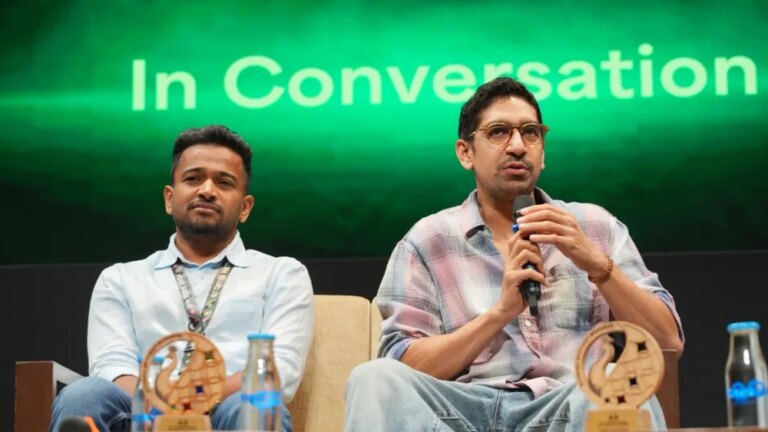
Ayan Mukerji, the visionary director behind the fantasy epic “Brahmastra: Part One – Shiva,” recently revealed exciting plans for the film’s sequel, “Brahmastra 2,” during a discussion at the 57th International Film Festival of India (IFFI) held in Goa. Mukerji expressed his ambition to infuse the sequel with even more elements of Indian culture and mythology.
Drawing from Indian Mythology
“I hope that we can make ‘Brahmastra 2’ even more Indian,” Mukerji shared, emphasizing his desire to delve deeper into India’s rich mythological traditions. The director elaborated on the uniqueness of Indian narratives, particularly in contrast to Western superhero storytelling, during a panel discussion titled “The Epic Genres – Mythologies, Superheroes & New Worlds,” alongside Malayalam filmmaker Basil Joseph, known for his work on “Minnal Murali.”
The Essence of Indian Fantasy
Joseph highlighted the distinction of Indian fantasy, noting, “We have our own heroes which we call gods.” He drew parallels between Indian gods and Western comic book superheroes, suggesting that the latter often encapsulate a sense of hope. Mukerji reinforced this notion, emphasizing that storytelling rooted in Indian culture has always been prevalent, although much of it remains unexplored on the silver screen.
Embracing Innovation in Filmmaking
Both directors acknowledged the critical role of technology in modern filmmaking, with Mukerji crediting advancements in visual effects (VFX) for making large-scale fantasy productions more achievable. In contrast, Joseph expressed skepticism about the use of artificial intelligence in creative processes, asserting, “AI is not creating anything new; it’s reproducing” and predicting a future centered around originality.
Reflections on ‘Brahmastra’
Mukerji reflected on his journey with “Brahmastra,” which transitioned from a more intimate coming-of-age narrative titled “Dragon” to the expansive fantasy seen in theaters. He acknowledged mixed reactions from audiences, stating, “Some people liked the film, some people didn’t. But the audience is very smart and you have to respect their reaction even if it doesn’t go in your favor.” Mukerji later admitted that over-editing during post-production affected the film’s theatrical release but opted to restore some elements for its streaming debut, recognizing that “overthinking is not always improving.”
Innovating within Constraints
Joseph, on the other hand, shared insights on making “Minnal Murali,” which was crafted within the budget constraints of a Malayalam-language production. He drew inspiration from the local setting of Kurukkanmoola, employing creative solutions like a scarecrow disguise for the antagonist. “The restrictions made the film more innovative,” he explained, underscoring the importance of a strong script over reliance on heavy visual effects.
Advice for Aspiring Filmmakers
Joseph cautioned that filmmakers venturing into new fantasy realms can sometimes become overly ambitious, advising, “keep it simple, be original and don’t try too hard to look cool.” He also noted that while “Minnal Murali” was intended for theatrical release, the pandemic redirected its launch to Netflix, a shift he considered fortuitous.
A Collaborative Spirit
During a Q&A session, Mukerji was humorously asked to choose between Ranbir Kapoor’s portrayals of Shiva in “Brahmastra” and Rama in “Ramayana,” and he chose Rama. The session concluded on a note of camaraderie, with Mukerji jokingly offering Joseph his next script for input, prompting Joseph to reciprocate the gesture.