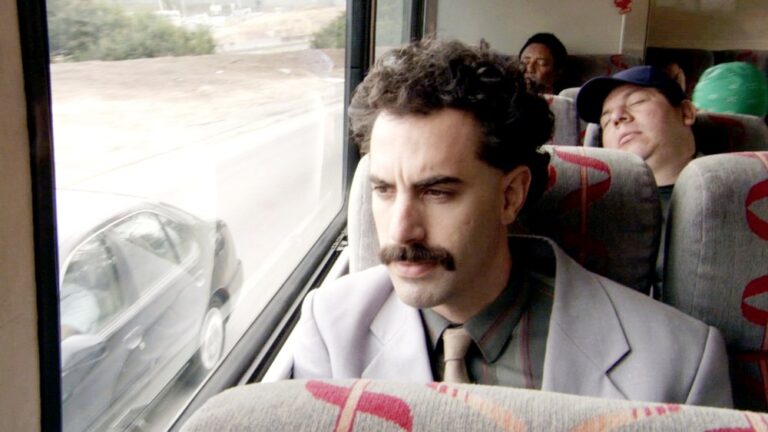
In the realm of comedy, the partnership between “Borat” director Larry Charles and Sacha Baron Cohen seemed impenetrable. Their collaboration brought to life some of the most daring comedic moments in film history. However, as Charles recently revealed, their once-strong relationship faltered when Cohen began drifting towards a more conventional Hollywood persona, distancing himself from the subversive humor that originally defined his career.
Transition from Subversive to Mainstream
Larry Charles, known for his edgy comedic style, recently shared insights into this transformation during an interview with the Daily Beast. Initially, Charles held Sacha Baron Cohen in high esteem, likening his comedic brilliance to icons such as Charlie Chaplin and Peter Sellers. Yet, during the development of their 2012 film, “The Dictator,” Cohen started steering away from his hallmark subversive humor. Charles speculated this shift was driven by Cohen’s desire to become a more traditional movie star.
Influence of Hollywood
Charles noted that Cohen began surrounding himself with traditional Hollywood influencers, which, in his view, detracted from Cohen’s rebellious comedic sensibilities. “He was getting advice from them, and I don’t think it was good for his rebel nature,” Charles observed. This change, Charles believes, contributed to the gradual disintegration of their creative partnership. Despite the humor embedded in “The Dictator,” he felt it failed to reach its full potential, a sentiment shared by others involved in the project.
Challenges in Creating “The Dictator”
The production of “The Dictator” was fraught with challenges from its inception. Charles envisioned it as a “classic political satire” akin to films like “Dr. Strangelove” rather than the earlier works like “Borat” and “Brüno.” However, the vision was diluted by excessive input from various external sources and Cohen’s wavering focus on what originally drove his success.
Charles expressed his attempts to encourage Cohen to trust his instincts, a crucial element for any creator. “I would try to get [Cohen] to trust himself,” said Charles, reflecting on the importance of internal intuition over external voices. Unfortunately, this reliance on outside perspectives led to a tangled production process, with unnecessary issues complicating the project.
A Shift in Path
While “The Dictator” may not have achieved the same level of acclaim as Cohen’s previous films, it marked a significant turning point in his career. The journey from subversive comedy to a more mainstream image clearly impacted the dynamics between him and Charles. As Cohen continues to evolve within Hollywood’s landscape, the once-magical collaboration with Charles serves as a poignant reminder of their shared creative brilliance and the contrasting paths they’ve taken since.