“Way of the Warrior Kid” attempts to convey multiple messages within its narrative, yet ultimately falls short in delivering a satisfying experience. This film adaptation of Jocko Willink’s book, featuring Chris Pratt as a wounded veteran and Jude Hill as his bullied nephew, intertwines their stories across a summer in San Diego. Despite director McG incorporating some clever flourishes, the film leans heavily on familiar coming-of-age clichés, leaving the audience wanting more than the military-themed platitudes it offers.
Two Journeys Collide
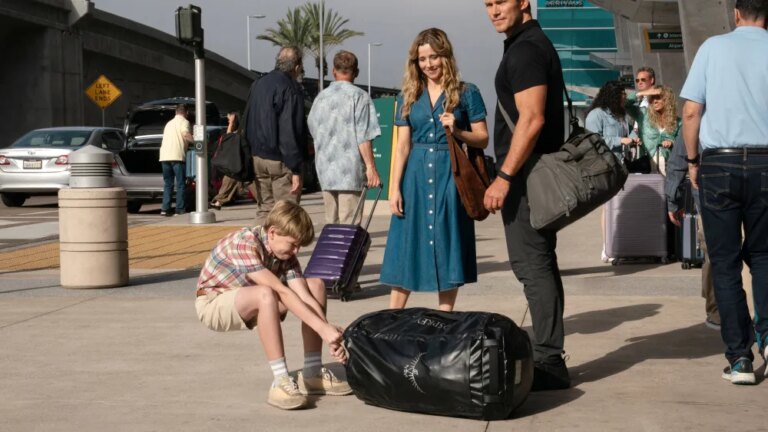
Pratt portrays Jake, a decorated Navy SEAL grappling with the psychological and physical ramifications of an injury sustained during a botched mission to rescue children from militants overseas. Now recuperating at his sister Sarah’s (Linda Cardellini) home, Jake is eager to return to duty but also faces an unexpected request from his nephew Marc, who seeks training to confront a bullying classmate named Kenny (Levi McConaughey). With a focus on developing not just physical strength but also character, Jake agrees to mentor Marc with the caveat that he learns to avoid conflict whenever possible.
The Challenge of Growth
At the outset, Marc struggles with his self-identity, feeling more comfortable in his gaming world than in real-life interactions. The film effectively uses visual storytelling to embody Marc’s empowerment through his video game experiences, specifically his love for a fictional game called Band Jam. However, Jake’s military mindset often fails to resonate with this young gamer, as he emphasizes traditional warrior values without bridging the gap to Marc’s gaming interests.
Missed Connections
While the narrative focuses on the relationship between Jake and Marc, the script struggles to balance its appeal toward both children and adults. Marc’s personal trauma—a result of losing his father—is depicted in a manner that tries to motivate growth, yet it lacks the subtlety and depth that could engage a wider adolescent audience. Instead of imparting deeper life lessons, the film operates at a surface level, leaving many of its themes feeling overly literal.
Character Dynamics
Pratt’s portrayal raises questions about his evolving career, wavering between delivering seriousness and injecting his signature humor. The result is a disconnect, as this character demands a gravitas that Pratt’s comedic style struggles to meet. At the same time, Hill demonstrates potential as Marc but appears constrained by direction, resulting in a performance that lacks authenticity in portraying adolescence. Cardellini’s role as the well-meaning mother is also somewhat sidelined under the film’s focus on the male-centric storyline.
Reality vs. Fantasy
Willink’s existing body of work indicates a demand for narratives that blend family-friendly storytelling with military themes. However, the film’s pacing stretches a simple story into a lengthy 106 minutes, often straying into implausible scenarios similar to those found in children’s adventure films. There are sporadic moments of emotional authenticity, particularly in scenes where the camera captures Marc’s nervousness as he navigates adolescent relationships, but these instances are overshadowed by the overall lack of focus.
Final Thoughts
Ultimately, “Way of the Warrior Kid” struggles under the weight of its own ambitions, falling victim to a muddled narrative that prioritizes Pratt’s star power over fully developing Marc’s coming-of-age journey. The film attempts to resonate on various levels but ends up providing a superficial understanding of complex themes, resulting in little more than a fleeting sense of satisfaction. In the end, it leaves viewers with the lingering sentiment of, “Okay, that happened,” without offering the deeper insight or humor that could have made it a genuine family film.