In the realm of history’s forgotten legacies, the tale of the Schicht family stands out—a story intricately woven into the rise and fall of a Bohemian dynasty. Documentarian Tatana Markova breathes life into this saga with her project, “Kingdom of Soap Bubbles,” tracing how a formidable industrial empire once synonymous with cleanliness could, like a soap bubble, vanish into thin air. Focusing on the Schicht dynasty, this captivating narrative uncovers the poignant transition from a flourishing industrial era to near obscurity.
Rediscovering the Schicht Legacy
Czech filmmaker Tatana Markova became captivated by this narrative after an encounter with Constantin Werner, a U.S.-based director and producer linked to the Schicht lineage. His family stories piqued her interest, ultimately leading her to explore the once-glorious Schicht family, a significant name during the twilight of the Habsburg Empire.
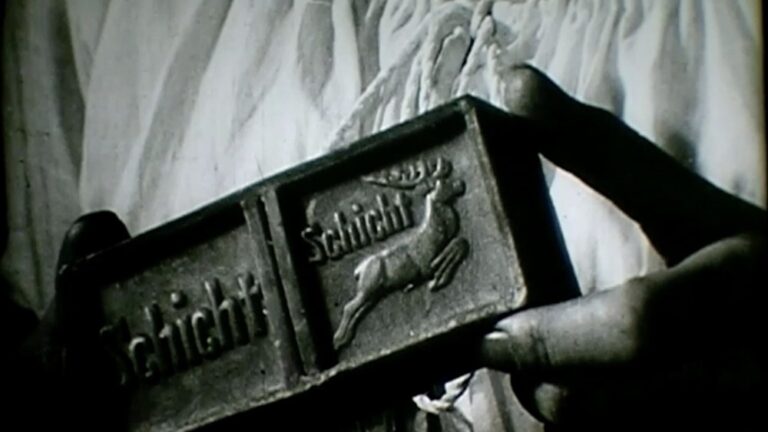
The Schicht dynasty, spearheaded by entrepreneur Georg Schicht, gained fame for revolutionary products like Elida cosmetics and Kalodont toothpaste. Their flagship item, the “soap with the stag,” was as ubiquitous in its time as modern-day brands like Apple or Starbucks.
The Rise and Fall
Today, what remains of the family’s industrial reign is a mere shadow in the Czech city of Usti nad Labem, previously Aussig. Markova’s film delves into these remnants, capturing footage of their deserted mansion and factories. Her work commenced in 2019, amidst the constraints of the COVID-19 lockdowns, proving challenging due to the global dispersion and busy lives of the Schicht descendants.
The downfall of the Schichts was catalyzed by geopolitical upheaval. Post-World War I, the founding of Czechoslovakia shifted language dynamics, marking the Schicht legacy as foreign. Despite merging with Unilever and sustaining international ventures, the looming specter of World War II and enforced racial policies under the Third Reich led to dire straits for the family.
Echoes of the Past
Despite the adversity, Markova notes the openness of the Schicht heirs in discussing their turbulent past. After World War II, ethnic Germans, including the Schichts, faced expulsion, and their assets were seized, a fate sealed by the Benes decrees that voided restitution for property lost post-war.
Miraculously, the Schicht lineage regained its footing internationally, branching into ventures across London, Zurich, and Brazil. They recently reacquired their ancestral home with plans to open it to the public—a testament to their enduring connection to the region they once invigorated with philanthropy and innovation.
An Enduring Influence
In Usti nad Labem, the memory of the “Soap King” Johann Schicht endures, celebrated for his community-minded initiatives. “A once-famous name can fall into oblivion, a big industrial empire can burst like a bubble, but something from the non-material values, such as social responsibility and philanthropy, can be passed down through generations,” Markova observes.
The Schicht saga, as explored in “Kingdom of Soap Bubbles,” reflects on how legacies of past greatness echo through the corridors of time, offering lessons in resilience, adaptability, and the timeless value of social responsibility.