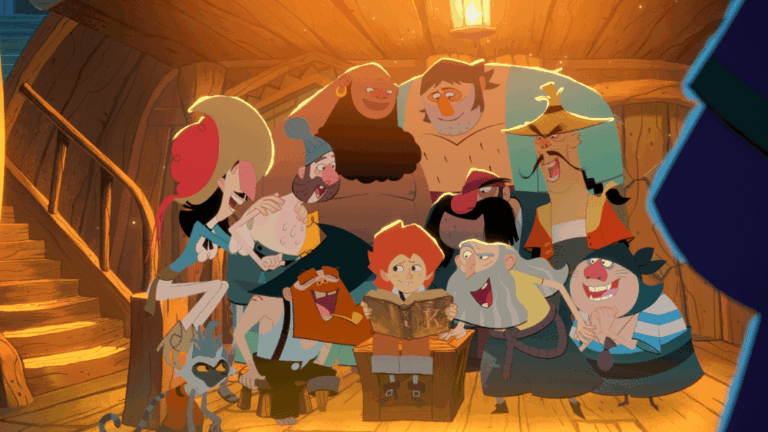
After a nearly two-decade hiatus from the world of animation, Goya-winning director Adrià García triumphantly returns with his latest film, “The Treasure of Barracuda.” Premiering at the San Sebastián Film Festival, this animated feature marks García’s first since the beloved “Nocturna.” Adapted from Llanos Campos’ book, the film tells the tale of a young orphan who unexpectedly finds herself aboard a pirate ship led by the enigmatic Captain Barracuda.
The Journey Back to Animation
Adrià García’s return to animation wasn’t an overnight decision. Speaking with Variety ahead of the festival, García noted the challenges of animating such a complex project. The idea began with producer Valérie Delpierre of Inicia Films during the pandemic, providing García the opportunity to delve into the story’s potential. “Even if the original idea came from Valérie, it was a good opportunity for me to dive in,” García shares.
Although initially conceived as live-action, García and his team decided that animation was the natural choice. The book’s illustrations inspired García and allowed him to capture the essence of the fairytale pirates and whimsical world. He explains, “It made sense to make it an animation,” given the rich visual world already present in the source material.
The Power of Storytelling
In “The Treasure of Barracuda,” the treasure can only be uncovered by understanding a book’s instructions. The narrative introduces Sparkie, a literate young orphan who educates the illiterate pirates, forging connections through the power of reading. This beautifully animated film explores themes of understanding and chosen families, creating an endearing pirate adventure.
García was captivated by how the pirates’ interactions with children are depicted uniquely in this story. “These are not realistic pirates; they are not doing real pirate things,” he explains. The film showcases a world where everyone finds a way to connect through learning and literature.
Creative Collaboration
Assembling a diverse creative team was crucial for García, who sought talent outside traditional animation circles. He enlisted art director Enrique Fernández, a comic book designer, to inject a fresh perspective into the project. García highlights, “I wanted to meet people whom I could learn from,” emphasizing the collaborative spirit that drove the film’s creation.
García reflects on the evolution of animation, especially in Europe, over the past two decades. “When I started working in animation, there were only the big American studios like Disney,” he remarks. Today, European animation offers a wealth of opportunities and diverse storytelling possibilities.
The Future of Animated Adventures
Will Adrià García take another lengthy hiatus before his next animated film? He hopes not, but currently, he relishes in the success of “The Treasure of Barracuda.” For García, the joy lies in sharing his work with audiences and basking in the film’s reception. “I want to enjoy the moment,” he states, underscoring the unpredictable nature of filmmaking.
Produced by Valérie Delpierre at Inicia Films and co-produced with Álvaro García and Raphaële Ingberg, “The Treasure of Barracuda” is a testament to García’s steadfast dedication and creativity. His return not only reaffirms his passion for animation but also enriches a genre that continues to evolve with the times.