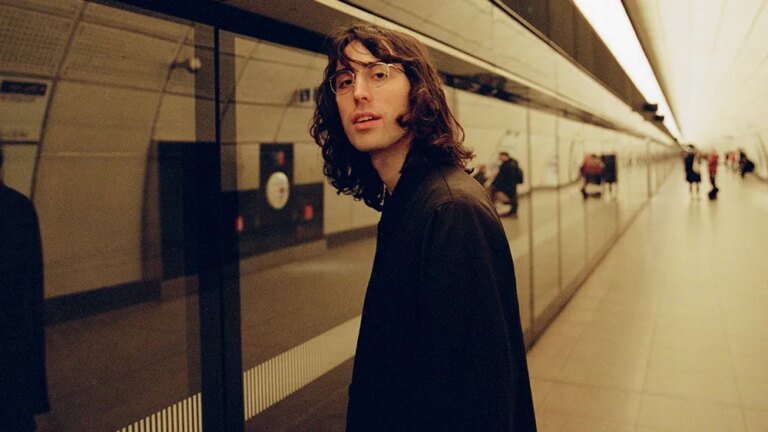
A. G. Cook, known for his long-standing collaboration with Charli XCX, has taken on the intriguing challenge of scoring the pop star’s mockumentary, “The Moment.” As the creative mastermind behind Charli’s landmark 2024 album “Brat,” Cook brings a unique perspective to the film, which explores the tension between artistic integrity and commercial pressure. His approach not only draws from the “Brat” sonic palette but also reflects inspiration from David Lynch’s “Mulholland Drive.” This article delves into Cook’s thoughts on this project, as well as his experience with film scoring.
Creating a Soundtrack for “The Moment”
When the opportunity arose to score Charli XCX’s film “The Moment,” A. G. Cook was a natural fit. As both a close collaborator and a friend, Cook’s deep understanding of Charli’s artistry made him the ideal choice to compose the music for this mockumentary. “The Moment,” premiered at the Sundance Film Festival, presents an alternate reality where Charli must decide whether to remain true to her music or commercialize it, overseen by a menacing director portrayed by Alexander Skarsgård. Instead of heavily featuring tracks from “Brat,” Cook crafted a riveting score that captures the album’s atmosphere without directly using its tunes.
“I’ve been working with Charli for so long that, reading the script and seeing the fly-on-the-wall situations with venues, managers, tours — that feels very funny and also real and vivid to me,” Cook shared. The challenge was less about integrating “Brat” directly and more about echoing its spirit to serve the narrative effectively.
The Influence of “Mulholland Drive”
The film’s score owes a debt to the stylistic influence of David Lynch’s “Mulholland Drive.” During the collaboration, Lynch’s complex soundscapes served as notable inspiration. “I was rewatching some Lynch stuff, especially ‘Mulholland Drive,’ which thematically felt like it was some relation to ‘The Moment,’” Cook explained. He was drawn to the ambiguous emotional tones that Lynch’s scores often embody — a quality he sought to infuse into “The Moment.”
The music conjures this ambiguity, leaving emotions intentionally undefined, a technique Cook admired in Angelo Badalamenti’s compositions. The film’s dynamic score mirrors the ebb and flow of emotion, subtly highlighting Cook’s creative range and adaptive use of the “Brat” elements.
Strategic Use of “Brat” and Iconic Needle Drops
Though Cook used “Brat” themes sparingly, one standout piece, “Dread,” threads through integral film sequences, echoing moments at Coachella and Glastonbury. In speaking on the soundtrack’s construction, Cook noted, “I set up all these rules for myself. I was like, OK, I don’t want any of Charli’s vocal in the score unless it’s shown on screen.” This conservative approach highlighted crucial moments, preserving their impact.
A significant musical moment in “The Moment” is the singular needle drop of The Verve’s “Bitter Sweet Symphony.” Cook described this choice as “blowing the budget on one big sync,” emphasizing its narrative and emotional importance. The decision to integrate it seamlessly with the score without overshadowing songs from “Brat” showcases Cook’s finesse in balancing iconic music cues with original compositions.
A Future in Film Scoring
While the project marked Cook’s debut in feature film scoring, he embraced the challenge enthusiastically. His extensive work alongside Charli XCX and his growing reputation with longform tracks prepared him for such innovative endeavors. “I think definitely, as long as the project is something that feels fresh. I’m almost certain that I will,” Cook mentioned regarding future scoring opportunities.
A. G. Cook’s venture into film scoring with “The Moment” highlights his versatility as a musician and his ability to expand the creative universe of Charli XCX beyond the conventional confines of pop music. His distinctive touch not only enhances the film’s narrative but also illustrates the potential of music as a storytelling device.