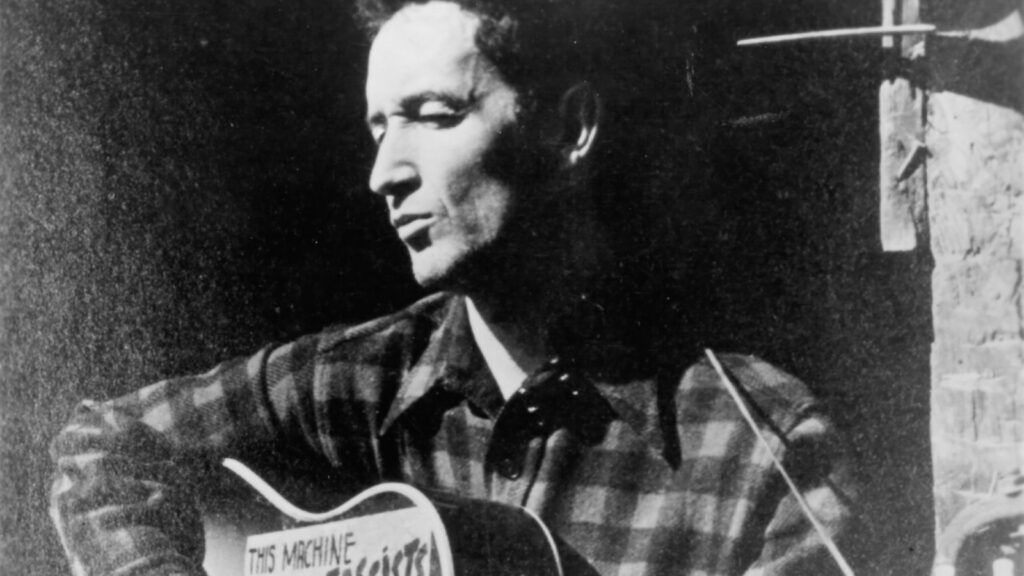
Woody Guthrie’s poignant “Deportee,” a powerful tribute to deported workers, resonates today more than ever. This significant piece, stemming from a tragic 1948 incident, underscores ongoing immigration issues. Guthrie’s “Deportee” reminds us of the human stories often overshadowed by statistics, a narrative that remains crucial in contemporary discourse.
For those attuned to current events, the narrative feels all too familiar: migrant workers detained by immigration agents, leading to deportation. This heart-wrenching tale, however, unfolded in 1948 in Fresno County, California, when a plane crash took the lives of all onboard, including 28 workers.
A month later, Woody Guthrie crafted a rudimentary version of a song that would evolve into “Deportee (Plane Wreck at Los Gatos)” in the late Fifties, thanks to Colorado folksinger Martin Hoffman. The song has since been interpreted by legends like Pete Seeger, Bruce Springsteen, Dolly Parton, and many others, infusing it with timeless relevance.
Although Guthrie’s original rendition seemed lost to time, it has now been rediscovered.
“Deportee (Woody’s Home Tape)” has been unveiled as part of Woody at Home — Volumes 1 + 2, featuring previously unheard recordings, set for release on Aug. 14.
Drawing inspiration from media reports, “Deportee” highlights the harsh realities faced by migrant workers. Living on Long Island, Guthrie learned of the tragedy through radio or newsprint. The New York Times mentioned some victims as having “entered the United States illegally” or overstaying visas, yet only the crew members were named. The workers were reduced to “Mexican deportees,” dehumanized in death and buried in anonymity.
The following month, Guthrie’s frustration and empathy moved him to pen “Deportee.” His granddaughter, Anna Canoni, noted, “After reading the article, which only named the four Americans that perished, Woody wrote this song in — I don’t want to say anger or frustration, but perhaps in observation of the 28 Mexican nationals who were not named in the article, and moreover, an observation of how the U.S. treats foreigners.”
In Guthrie’s home recording, his heartfelt delivery of the lyrics over simple fingerpicking strikes a resonant chord, capturing an unvarnished emotional truth. This version uses a first-person narrative, making the story even more intimate and impactful.
“Deportee (Plane Wreck at Los Gatos)” stands out as one of Guthrie’s most notable songs, which he never fully recorded. Created in the family home in Brooklyn, Guthrie was facing early symptoms of Huntington’s disease. His later hospital stay in New Jersey became a touchstone moment for a young Bob Dylan, immortalized in the recent biopic A Complete Unknown.
The new collection boasts nearly two dozen unheard recordings, including fresh takes on “This Land Is Your Land” and home versions of “Pastures of Plenty” and “Jesus Christ.” Yet, “Deportee” remains the most poignant, tapping into themes that endure. As Canoni remarked, “My grandfather wrote, ‘A song ain’t nothing but a conversation you can have again and again.’ It keeps this conversation in the narrative. … And unfortunately, it needs to be had again and again and again.”