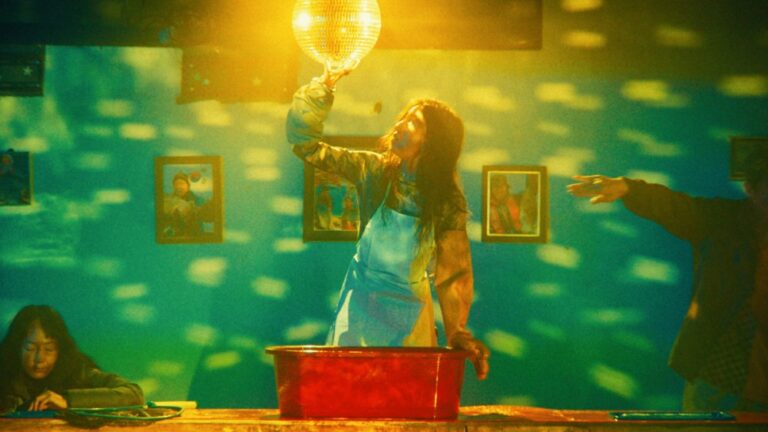
Syeyoung Park’s latest cinematic venture, “The Fin,” unfurls on the grand stage of the Locarno Film Festival, offering a mesmerizing exploration of a dystopian world. This film stands as a testament to Park’s unique vision that aims to “pollute the screen with colorful textures,” challenging conventional depictions of post-apocalyptic environments. Through bold visual storytelling, “The Fin” subverts expectations, transforming the mundane into a vibrant tapestry of hues, while provoking thought on societal divisions.
The Dystopian Canvas of “The Fin”
The film is set in a unified post-war Korea, depicted through a strikingly red sky and sea, providing the vivid backdrop for a complex narrative. In this imagined world, Park introduces the Omegas, a group of mutated outcasts who find themselves subjugated as cheap labor by government forces. This stark portrayal serves as a reflection on the nature of exploitation and segregation, wrapped in a visually stunning package.
An Alternative Vision of Reality
Park, disenchanted with the corporate imagery that dominates contemporary Korea, has crafted a universe stripped of cars, cell phones, and capitalist logos in “The Fin.” Instead, he offers a setting rich with color contrasts, particularly notable in a serene fishing pond amidst the decay, serving as a metaphorical and literal pause in the narrative’s tension. Here, vibrant hues explode against the monochrome cityscape, asserting Park’s intent to “pollute the screen with colorful textures.”
Innovation in Visual Storytelling
Drawing inspiration from Harmony Korine’s “Julien Donkey-Boy,” Park infuses his film with digital noise and an array of textures, layering them to create a ghostly, ethereal quality. This deliberate choice marks a departure from clean visuals, delivering a sensory experience that aligns with the unsettling themes of the film. By doing so, he invites audiences to immerse themselves in a world where every frame pulses with dynamic energy.
Reflecting on Human Connections
Park’s narrative also draws parallels with the global COVID-19 pandemic, encapsulating themes of isolation and the innate human desire for connection. The film artfully captures the uneasy divide between the Omegas and humans, mirroring the pandemic’s impact on social interactions. Through this lens, “The Fin” becomes a meditative piece on the nature of belonging and alienation.
In pushing viewers to question societal constructs and the arbitrary divisions that define us, “The Fin” extends beyond its dystopian setting. Park successfully crafts a narrative that challenges the audience to reconsider the boundaries of identity and humanity, all while immersing them in a kaleidoscope of colors and textures. As “The Fin” debuts at the Locarno Film Festival, it promises to leave an indelible mark, both visually and thematically.