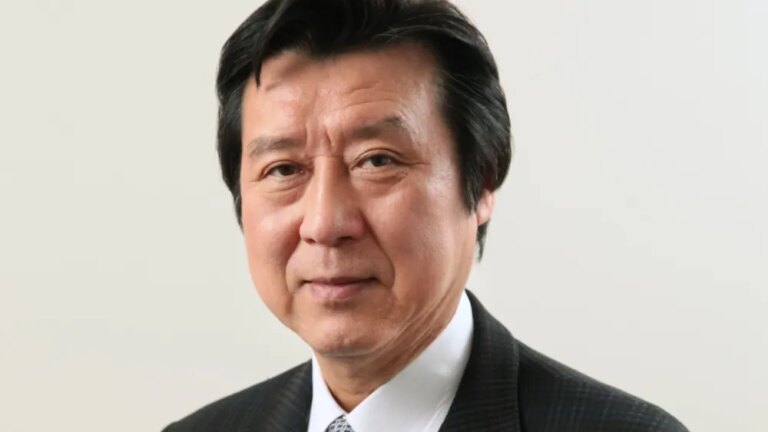
As the Tokyo International Film Festival (TIFF) approaches its 40th anniversary next year, festival director Hisamatsu Takeo has announced plans to reassess the event’s position on the international film circuit. Hisamatsu shared insights about the festival’s future direction in a recent interview with Variety.
Evaluating the Festival’s Future
Once this year’s 39th edition concludes, Hisamatsu emphasized the importance of reviewing its successes and challenges. “I believe the direction we establish through that process will also help define TIFF’s course for the next decade, leading up to its 50th edition,” he stated.
Growth and Competition
The festival has expanded this year, showcasing 204 films, an increase from 184 in 2022. Hisamatsu acknowledged the competitive relationship with the Busan International Film Festival due to their geographical proximity and similar scheduling. “I think the time has come to re-examine where TIFF should position itself, both within Asia and within the world,” he said.
Showcasing Tokyo’s Unique Appeal
He pointed out that festivals in cities like Cannes and Venice are deeply tied to their cultural contexts, and he believes that Tokyo offers a distinctive appeal. “Tokyo is a vibrant, multifaceted city where tradition and modernity coexist, and mainstream culture intersects with subculture. These are qualities we should do more to showcase to the world,” Hisamatsu remarked.
Improving Support for Japanese Films
TIFF is organized by UniJapan, which also manages the TIFFCOM market and various international promotion initiatives. Hisamatsu, who also serves as UniJapan’s executive director, expressed a desire for stronger collaboration among these sectors to benefit filmmakers and producers. Despite the challenges of film rights, he aims to enhance support for Japanese films that screen and win awards at the festival, helping them secure distribution opportunities abroad.
New Initiatives and Global Strategy
Two new initiatives aim to elevate Japanese cinema: the Nippon Cinema Now section will become competitive for the first time this year, with the inclusion of two new awards. Additionally, the TIFF Work-in-Progress program (TIFF-WIP) will connect films still in production with international festivals and industry figures, thus raising their profile globally.
Balancing Local and International Talent
Hisamatsu articulated the delicate balance festivals must maintain: bringing international films to local audiences while promoting local films abroad. He highlighted the momentum for Japanese cinema, noting Japan’s designation as Country of Honor at this year’s Cannes Film Market and the participation of over 30 Japanese films at the Busan International Film Festival. With ongoing government support for the content industry, Hisamatsu believes this is an opportune time to push Japanese titles internationally.
Embracing a ‘Glocal’ Perspective
Reflecting on the nature of film festivals, Hisamatsu noted that even those branded as international are often rooted in their unique cultural contexts. “A purely global orientation would strip them of that character. That’s why I think the ‘glocal’ perspective will matter more and more,” he said.
A Shift in Festival Programming
This year’s festival lineup includes notable mainstream films, marking a slight shift from the traditionally arthouse programming associated with TIFF. Zeze Takahisa’s “Sukiyaki” will open the festival, while Yamazaki Takashi’s “Godzilla Minus Zero” serves as the centerpiece. The festival will conclude with “Colony,” directed by Yeon Sang-ho of “Train to Busan” fame. Hisamatsu clarified that these selections were made based on individual merit, and not as part of a strategic identity shift for the festival.