In his latest cinematic endeavor, Richard Linklater has navigated the complexities of language barriers to craft “Nouvelle Vague,” a heartfelt homage to Jean-Luc Godard’s revolutionary film-making. This new project highlights Linklater’s perseverance as he brings to life the vivid world of Godard, all while embracing the challenges of directing a film predominantly in French. The charming paradox of viewing French cinema through the lens of English subtitles is central to this tribute, as the American director delves into a pivotal era that forever changed the film industry.
Recreating a Cinematic Legend
When Richard Linklater embarked on directing “Nouvelle Vague,” he aimed to meticulously recreate the essence of Jean-Luc Godard’s iconic 1959 film, “Breathless.” This project unfolds in a black-and-white landscape reminiscent of the classic’s Parisian charm, infused with the spirited interactions between its leads. Zoey Deutch, Aubry Dullin, and Guillaume Marbeck step into the roles made famous by Jean Seberg, Jean-Paul Belmondo, and Godard, delivering performances that bring this vibrant era back to life.
Reimagining the Nouvelle Vague
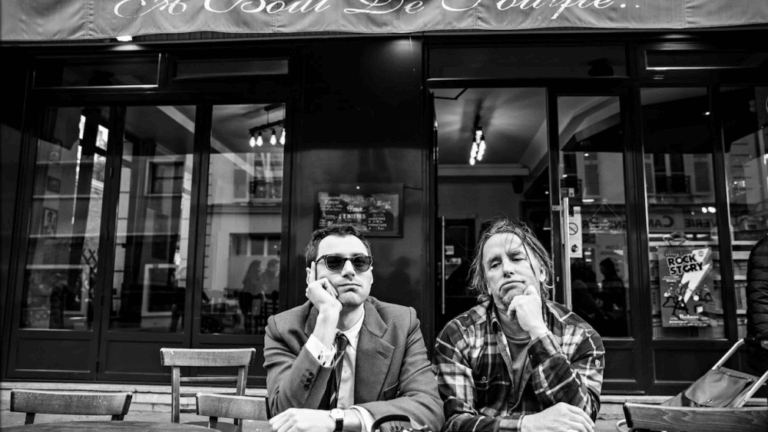
During the Biarritz Nouvelle Vague Festival, Linklater, along with producer Michele Halberstadt, recounted the painstaking research and commitment involved in crafting this homage. The film’s premiere was met with enthusiastic applause at Cannes, partly due to the authentic depiction of the New Wave. Halberstadt, with her in-depth knowledge and ties to Godard, played a crucial role in ensuring that the film resonated with historical authenticity.
Navigating the Language Barrier
Despite his storied career and multiple Oscar nominations, Linklater faced a fresh challenge with “Nouvelle Vague”: directing in French, a language he doesn’t speak. This undertaking required a “system in place,” where trust and collaboration with Halberstadt and the crew were paramount. The director noted his reliance on the ensemble to ensure the authenticity of performances, frequently seeking feedback from the actors themselves.
“I love the Nouvelle Vague, and Godard was so unusual,” Linklater shared in Biarritz, underscoring his passion for capturing the New Wave spirit through French dialogue augmented by English subtitles. According to Linklater, “The sound of cinema to me is French language with English subtitles.” These subtitles are not just translations but a bridge that connects audiences with the universal language of film.
Commitment to Authenticity
Linklater was determined to avoid modern cinematic techniques, opting instead for methods from Godard’s era. By dismissing modern advancements like Steadicams and crane shots, he achieved an authenticity that reflected the filmmaking constraints of the 1960s. The process became “a bit simple” and yet incredibly rewarding.
“Nouvelle Vague” captures Godard’s visionary spontaneity, often working without a predefined script. Lucie Saada’s accompanying short film, “Le Making of de Nouvelle Vague,” illustrates Linklater’s intricate approach, showing his commitment to perfecting each scene of “Breathless” with multiple takes.
A Bright Future
The film not only revitalizes the past but also brings fresh talent into the spotlight. Newcomers like Guillaume Marbeck have flourished under Linklater’s guidance, embracing roles with depth and authenticity. Marbeck’s portrayal of Godard, praised for its precision and nuance, speaks to Linklater’s ability to mentor emerging artists.
With “Nouvelle Vague” now acquired by Netflix and in contention for France’s official Oscar submission, Linklater’s multilingual adventure showcases a remarkable fusion of cultural storytelling that could well earn further critical acclaim.