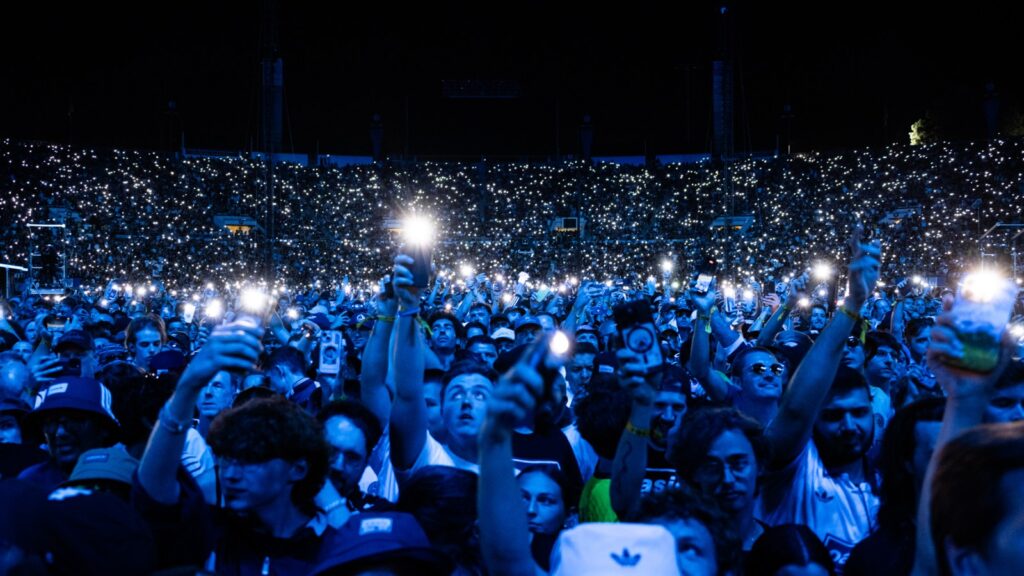
The reunion tour of Oasis has become a powerful emblem of positive masculinity, bringing together fans of all ages in a celebration of music, friendship, and camaraderie. This heartwarming spectacle, which kicked off in Cardiff and traveled through major cities like Chicago and Pasadena, stands as a testament to how music can transcend generations and mend social divides.
Jeff Jarrett, a passionate Oasis fan, ventured from St. Louis to witness the opening concert of the Oasis Live ’25 tour in Cardiff, later attending a show in Chicago and ending in Pasadena. Despite attending several performances, the highlight for him was sharing the experience with his six-year-old son, Wolf. Jarrett, a booking agent and artist manager, fondly recalls the joy of seeing his son actively engage with the crowd, receiving high-fives and joining in song. “When Wolf was singing ‘Acquiesce,’ I couldn’t help but feel the connection that music had fostered between us,” he shares.
The tour was filled with scenes of fathers and sons, group friendships, and family outings, all embracing the joy of positive masculinity. Over Labor Day weekend at MetLife Stadium, the atmosphere was charged with sensitivity, respect, and camaraderie. Men of all ages were seen hugging, laughing, and sharing moments, showing that rock concerts could be both exhilarating and emotionally uplifting.
Bob Ferguson, a New Jersey native, attended the MetLife show and noted the abundance of solo dads with their children singing along, transforming the stadium into a space of shared joy. “I’ve never seen so much emotional expression among men at a concert,” he remarked, further illustrating the impact of positive masculinity in a typically high-octane setting.
Historically, the Gallagher brothers were known for their brash behavior, often making headlines for their outspoken remarks and onstage antics. Yet, the reunion tour marked a departure from their infamous past. Walking out arm in arm before each show, Noel and Liam Gallagher appeared to embody a newfound maturity and reconciliation, silencing years of public feuds and personal jabs. As Paul Adams from Manchester explains, this reconciliation was perhaps inevitable. “Northern men are deeply passionate, and grudges become part of who you are. But the longing for reconciliation was always there; they just needed the right moment.”
Fans, too, needed this moment of unity. Jason Singer, better known as Michigander, noted how the concerts transported audiences back to a time less clouded by polarization. The music of Oasis, with its themes of hope and friendship, offered a sense of togetherness at a time when it was most needed.
At the MetLife show, the sense of community was palpable. Strangers became fast friends as they bonded over shared musical memories. One fan recounted his experience with his brother, whom he had traveled with to the U.K. to see the band live. The reunion brought back memories of their youth and the important role Oasis played in their brotherhood. “We’re brothers, just like Liam and Noel,” he said, emphasizing the connection fostered by their shared history with the band.
The Oasis reunion tour has achieved more than just musical success; it has revived a sense of hope and positive masculinity that resonates with a wide audience. Whether it was through the heartfelt songs, the joyful tears, or the bonding among fans, the tour reminded everyone of the beauty in unity and the power of music to bring people together. As Paul Adams succinctly puts it, “No band has ever re-formed to this level of success. It’s a reminder that even amidst chaos, if you hold onto hope, friendship, and a song, everything might just turn out okay.”