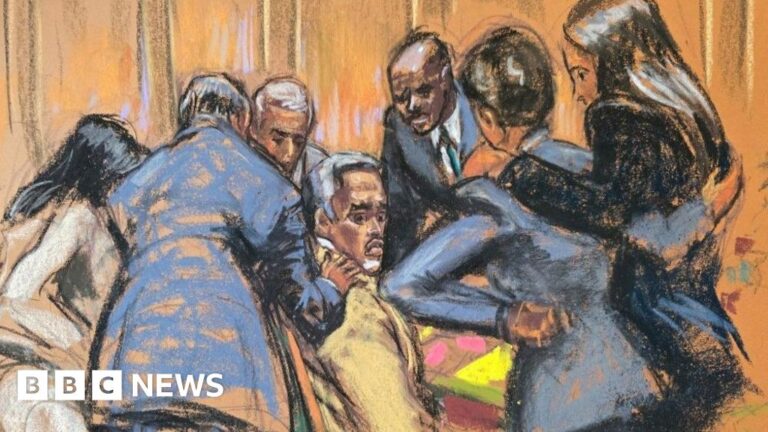
The jury in the high-profile trial of Sean “Diddy” Combs will continue their deliberations after reaching a partial verdict, with a stalemate on the most serious charge against the hip-hop mogul. This situation, where jurors are urged to keep deliberating after reaching a deadlock, highlights the complexities of the legal process and the weight of the accusations presented. With public interest mounted around the proceedings, the jury’s struggle over the racketeering charge underscores the serious implications hanging over Mr. Combs as deliberations unfold.
Partial Verdicts Announced
At the federal courthouse in New York, the jury, composed of 12 members, reported that they had reached unanimous decisions on four of the five charges against Mr. Combs. However, they found themselves unable to reach a consensus on the racketeering charge, which could result in a life sentence. The specific verdicts on the other counts have yet to be disclosed.
Charges Against Sean Combs
Sean Combs, age 55, has pleaded not guilty to all charges leveled against him, which include two counts of sex trafficking and two counts pertaining to transportation for prostitution, along with the significant racketeering charge. Judge Arun Subramanian encouraged the jury to persist in their discussions to reach a unanimous verdict on the unresolved charge. After two days of deliberation, the jury was reportedly divided, with arguments from both sides proving intractable.
Legal Implications of Deadlock
The tense atmosphere in the courtroom on Tuesday saw Mr. Combs listening intently, occasionally receiving support from his legal team. Judge Subramanian considered the prosecution’s request for an Allen charge, which is designed to motivate juries that cannot agree to reevaluate their positions. However, such charges are controversial and can sometimes exert undue pressure on jurors, potentially compromising their individual judgments.
Future Deliberations and Potential Outcomes
As deliberations are set to resume on Wednesday morning, the jurors may also have the opportunity to continue their discussions on July 3, even though the court is usually closed for the July 4 holiday. Legal experts, including Robert Mintz, a seasoned criminal defense attorney, pointed out that the jury’s ability to agree on most counts in a short timeframe might signal a favorable outcome for the prosecution. Nevertheless, proving the racketeering charge remains a formidable challenge for prosecutors, who must demonstrate a criminal enterprise involving Mr. Combs and at least one accomplice over an extended period.
If the jury finds Mr. Combs guilty of the racketeering charge, he could face severe penalties, including up to life in prison. The potential for 15 years on sex trafficking charges and a maximum of 10 years for the transportation charge further complicates the stakes for the music mogul, known professionally by many names including Puff Daddy and P Diddy. His influence in the entertainment industry spans a successful clothing line and multiple reality television shows, making the outcome of this trial particularly significant.