In a bold mix of music, time travel, and narrative exploration, João Nicolau brings to life an adaptation of Robert Louis Stevenson’s tale in his film “Providence and the Guitar,” featuring Portuguese Eurovision star Salvador Sobral. Premiering at the International Film Festival Rotterdam, Nicolau’s creation weaves together past and present in a journey that captures the struggles and triumphs of its artistic characters.
### A Unique Artistic Vision
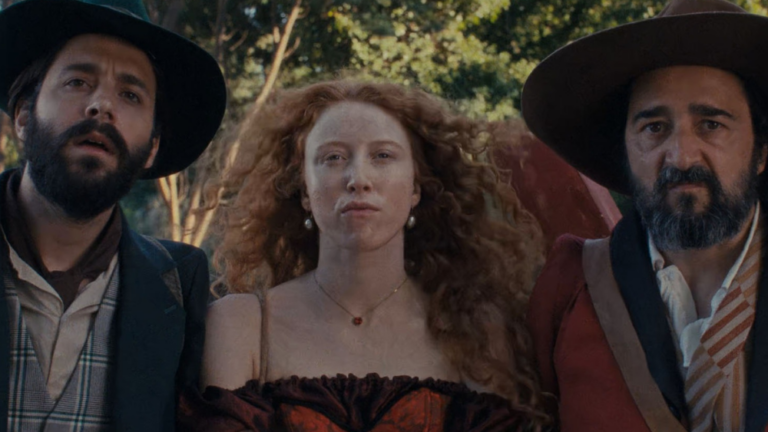
“Providence and the Guitar” will unfold simultaneously in multiple screening rooms across Rotterdam, marking an impressive debut for Nicolau. The Portuguese filmmaker views this prestigious opening as both an honor and a challenge. He says, “It’s an immense joy” to be featured in such a notable slot. The film traces musicians León and Elvira as they navigate their artistic pursuits, intercut with glimpses of their future selves in a punk rock band, still striving to sustain their passion.
### Inspiration and Adaptation
Nicolau’s adaptation of the original short story serves as a rich foundation for the film. He explains, “I fell in love with the tone of the narrative and the characters.” While respecting the source material, Nicolau introduces innovative elements, such as time-hopping sequences that explore contemporary relevance. This choice not only adds depth but highlights themes that resonate with modern audiences.
### Musical Roots and Collaborations
Music is integral to Nicolau’s storytelling, with the film featuring original compositions by the director and João Lobo. Salvador Sobral’s involvement adds another layer of authenticity and charm, though his role is more about presence than performances. Nicolau reveals, “The process of casting Salvador went very well…his nature as a musician is present in all of his scenes.” The simplicity of the film’s musical arrangements reflects the constraints and creativity shaped by its historical setting.
### Overcoming Challenges
Despite financial limitations and the inability to secure international co-production partners, Nicolau embraces the all-Portuguese production, supported by ICA. These constraints pushed him creatively, leading to a timeless visual style. “We couldn’t spend a lot on production design…so I decided to create an indefinite past,” he notes. This creative decision captures a sense of universality and timelessness.
### Cultural and Linguistic Essence
Crafting the film in Portuguese was a deliberate choice, allowing Nicolau to savor the language’s nuances. “I fell in love with the Portuguese translation. That was my starting point for all the dialogue,” he shares. This choice enriches the film’s texture, connecting intimately with its cultural roots.
“Providence and the Guitar,” produced by Luís Urbano and Sandro Aguilar, and represented internationally by Shellac, stands as a testament to Nicolau’s artistic vision and storytelling prowess, seamlessly intertwining history, music, and language into a gripping cinematic experience.