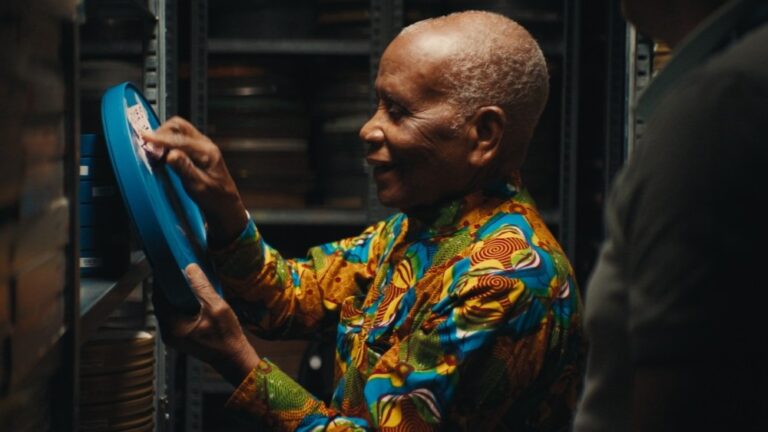
In a remarkable testament to the enduring political power of cinema, the film “The Eyes of Ghana” has captured global attention. This documentary delves into the often-overlooked history of Ghanaian cinema, showcasing the work of 93-year-old filmmaker Chris Hesse, who documented key moments in African history, including the rise and fall of Ghana’s first president, Kwame Nkrumah. With “The Eyes of Ghana,” filmmakers highlight how cinema serves as a potent tool for preserving truth and inspiring future generations.
Rediscovering a Hidden Legacy
Chris Hesse, the personal cinematographer to Kwame Nkrumah, witnessed Ghana’s transition from colonial rule to independence. Through his lens, he recorded pivotal events such as Nkrumah’s overthrow, capturing a raw narrative of political change. Much of this footage faced destruction during political unrest, but Hesse secretly safeguarded the content, preserving it for posterity.
Inspired by Hesse’s commitment, Canadian filmmaker Ben Proudfoot teamed up with Barack and Michelle Obama‘s Higher Ground Productions to amplify the importance of cinema as a historical record. Proudfoot remarked, “We really wanted to write a love letter to the power of cinema. That is at the core of what this movie is.” The film serves as both an homage and a rallying call for preserving cinematic history.
Passing the Baton
Hesse’s legacy finds new life through the next generation, particularly Ghanaian filmmaker Anita Afonu. Known for her work “Perished Diamonds,” which documents the decline of Ghanaian cinema archives, Afonu collaborates with Hesse to promote historical preservation. Her involvement emphasizes the significance of archival accessibility to inspire current and future filmmakers in Ghana.
Afonu expressed the profound importance of accessing these films, saying, “We need to be able to see what was done. We need inspiration for our own filmmakers in Ghana.” This collaboration not only resurrects a forgotten cinematic era but also urges the Ghanaian government to prioritize digitization and preservation.
A Global Mission
Through “The Eyes of Ghana,” the filmmakers aim to unlock over 300 hours of unseen footage, giving audiences a glimpse into pivotal moments in Ghana’s history. Proudfoot stressed the documentary’s broader mission, emphasizing its role in rallying support for digitization efforts and cinema restoration, with significant support from the Obamas and Higher Ground.
Reactions to the documentary have sparked discussions on the role of cinema in shaping cultural narratives. Afonu hopes that screening the film in Ghana will inspire a renewed interest in the country’s rich history and its once-thriving film industry, while encouraging international audiences to appreciate Ghana’s contributions to global cinema culture.
The Torch of Truth
Against a backdrop of global unrest and historical revisionism, Proudfoot champions the filmmaker’s responsibility to preserve the truth. He stated, “Now’s the time to be courageous. Now is the time to be brave.” Hesse’s life’s work stands as a testament to this ethos, demonstrating that cinema has the power to maintain historical integrity even in turbulent times.
Hesse himself, overwhelmed by the resurgence of interest in his work, is celebrated by the film’s team. Proudfoot reflected on their collaboration, highlighting the collective effort to fulfill Hesse’s vision and ensure his contributions to cinema and history are recognized worldwide.
As “The Eyes of Ghana” receives international acclaim, it underscores cinema’s role in preserving culture and history, ensuring that the torch of truth remains alight for future generations.