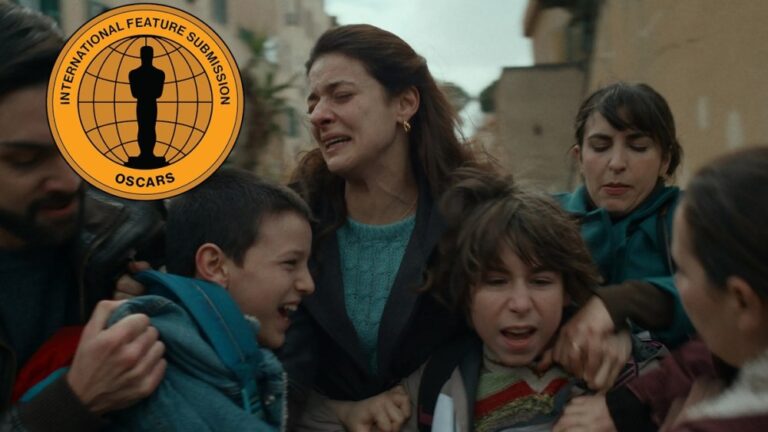
Francesco Costabile’s “Familia” delicately navigates the complexities of familial ties and the impact of domestic violence, presenting a gripping melodrama that oscillates between themes of vulnerability and aggression. The film, based on Luigi Celeste’s memoir “Non sarà sempre così” (It Won’t Always Be Like This), offers a poignant exploration of a family trapped in a cycle of violence, rooted in a father’s oppressive control. Combining powerful performances and a keen directorial vision, “Familia” is an evocative portrayal of a family’s struggle for liberation and identity.
The Celeste Family’s Fractured Portrait
Upon introduction, the Celeste family appears to be a typical household, with Franco (Francesco Di Leva) and Licia (Barbara Ronchi) navigating daily life alongside their sons, Luigi (Francesco De Lucia) and Alessandro (Stefano Valentini). Beneath their veneer of normality, however, lies the turmoil inflicted by Franco’s tyrannical behavior. He embodies a contradictory blend of affection and violence, a father whose love is expressed through fear and control. This duality serves as the foundation for the film’s exploration of familial bonds, making “Familia” a compelling study of domestic power dynamics.
A Shattered Illusion
The facade of the Celeste family crumbles when Licia courageously confronts Franco, involving authorities in an attempt to escape his grip. This pivotal event displaces Franco and propels the family into a new chapter marked by separation and bureaucratic challenges. Years later, the scars of their past remain vivid, affecting both Licia and her now-grown sons. Luigi (Francesco Gheghi) must confront the shadows of his father’s influence, a turbulent journey that shapes much of the narrative’s tension.
Luigi’s Turbulent Path
Costabile focuses intently on Luigi, who drifts towards a group of neo-Nazi friends, attempting to reconcile his inner turmoil. His struggle with identity and inherited trauma is captured through layered performances, emphasizing his internal conflict and the lingering impact of paternal dominance. This exploration of character borders on becoming a simplified tale of violence breeding violence, but Gheghi’s nuanced portrayal adds depth and complexity.
A Visual and Emotional Journey
The film’s aesthetic choices, such as its restrained camera work and the tension-filled dinner scene, contribute to its immersive storytelling. These moments reflect the characters’ psychological states and heighten the dramatic impact of their interactions. Barbara Ronchi’s portrayal of Licia stands out, embodying quiet strength and resilience in the face of inescapable fear, offering a counterbalance to the more overt expressions of pain and anger.
Italy’s submission for the Oscar international feature category blends melodrama with elements of a psychological thriller. This genre fusion reflects the chaotic nature of Luigi’s experiences, mirroring the unpredictable shifts in his life. Despite this, “Familia” thrives on its vulnerable portrayals and the director’s documentary-inspired approach, ultimately providing a glimmer of hope amidst the bleakness. The film resonantly captures the essence of its memoir’s title — a promise of change and the enduring possibility of a different future.