An eye-opening report has revealed a series of racist and antisemitic text messages exchanged among members of Young Republicans across the nation. These messages have sparked widespread outrage, drawing attention to the rhetoric among the next generation of GOP leaders when they think no one is looking. The controversy highlights a concerning cultural issue within some conservative circles.
Unveiling the Messages
Messages in the chat included shockingly offensive statements such as, “Can we fix the showers? Gas chambers don’t fit the Hitler aesthetic,” and “I’d go to the zoo if I wanted to watch monkey play ball.” The texts, discovered through a Politico investigation, contained numerous slurs, including 251 uses of derogatory terms targeting minorities and religious groups.
The individuals involved belonged to Young Republicans chapters in states like New York, Kansas, and Vermont. Notably, some have established careers in politics, such as Vermont state Senator Samuel Douglass and former Trump administration employee Michael Bartels.
Conservative Defense
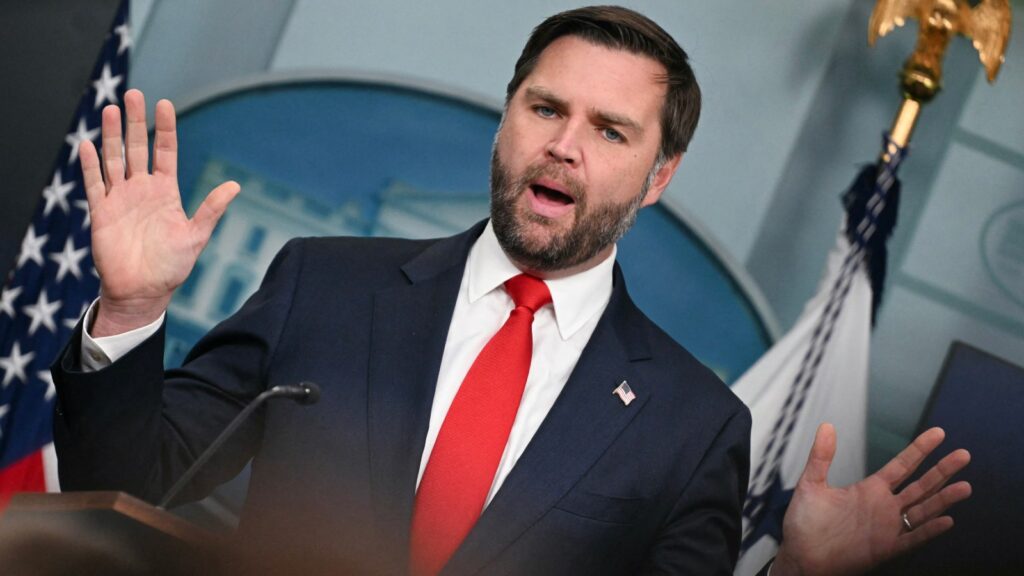
Amid the backlash, several conservative figures have come forward to defend those involved. Vice President J.D. Vance minimized the messages by comparing them to a controversial statement made by Democrat Jay Jones. Vance wrote on social media, “This is far worse than anything said in a college group chat, and the guy who said it could become the AG of Virginia.”
Vance continued to defend the Young Republicans during an appearance on The Charlie Kirk Show, urging people to focus on “real issues” rather than the messages of “kids in group chats.” He suggested that the person who leaked the messages was a “scumbag” and downplayed the incident as youthful folly.
Cultural Context and Consequences
The report sheds light on how this behavior reflects a broader conservative culture that at times embraces bigotry. In the aftermath, several of the individuals involved have already faced repercussions, stepping down from their roles in Republican politics. For instance, Peter Giunta, former Chair of the New York State Young Republicans, has resigned from his position, and Joseph Maligno has left his role within the New York State Unified Court System.
The Young Republicans issued a statement condemning the language used and calling for those involved to resign. However, the incident underscores the challenges posed by a faction of the conservative movement that seems to tolerate or even encourage such views.
A Reflective Moment
The publication of these texts, alongside the subsequent defenses by some right-wing figures, reveals a deeper issue within sections of the Republican Party. It serves as a reflection of a political climate where incendiary rhetoric has at times become normalized, and where some leaders double down rather than denounce.
This situation resonates with broader concerns over the GOP’s handling of racial and religious inclusivity, raising questions about the values being embraced and promoted by emerging conservative figures.