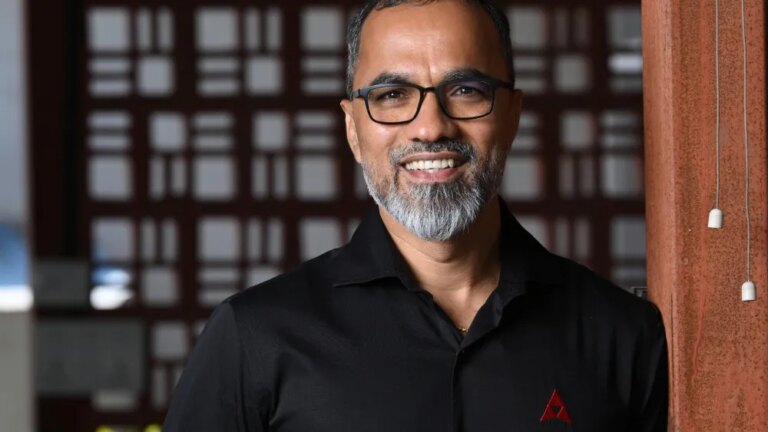
C.V. Rao, a pivotal figure in the technological advancements of renowned Indian films such as S.S. Rajamouli’s “Baahubali” series and “RRR,” has recently made history by becoming the first technologist from South India to be named a Fellow of the Society of Motion Picture and Television Engineers (SMPTE). This recognition underscores his significant contributions to the field and the growing technical capabilities found within the Indian film industry.
Honoring Technical Excellence
As the Chief Technology Officer at Hyderabad-based Annapurna Studios, Rao expresses that this honor comes with both a sense of responsibility and an opportunity to learn from distinguished professionals within the global SMPTE community. “It also reflects the tremendous technical talent available in India,” he stated in a conversation with Variety. “We have developed strong capabilities in adopting and implementing advanced filmmaking technologies, and we believe the next opportunity is to contribute more actively to innovation, technology development, and international standards.”
The Impact of “Baahubali” and “RRR”
The production of “Baahubali” introduced challenges that exceeded the studio’s initial expectations. The monumental scale of the project necessitated significant enhancements in various areas, including color grading, processing power, storage, bandwidth, and the expansion of technical staff. For the sequel, “Baahubali 2,” the team innovatively established a dedicated peer-to-peer connection between Hyderabad and Los Angeles, facilitating the direct transfer of substantial material for Imax screening. This journey led to the establishment of ANR Sound & Vision, a comprehensive post-production facility that oversees everything from data management and editing to visual effects, sound, grading, and final mastering.
Advancements in Cinema Technology
The Dolby Cinema version of “RRR” originated from a demonstration in Las Vegas, which prompted discussions with cinematographer K.K. Senthil Kumar, who subsequently pitched the concept to Rajamouli. Rao reflects on the necessity for Indian filmmakers to cultivate such capabilities domestically, citing the experience of traveling to Germany for Dolby Cinema processing of “RRR.” “That experience became a major motivation for establishing Dolby Cinema processing capabilities at Annapurna Studios,” he reveals.
Rao emphasizes that while India had proficient VFX artists and capable post-production houses even before these films, the scale and complexity brought by Rajamouli’s projects compelled studios to hone their skills, collaborate more effectively, and innovate. He notes that the confidence instilled by these projects has encouraged heightened investment in India’s technical ecosystem.
Navigating Technological Change
Beginning his career as a graphic designer and 3D artist, Rao gradually transitioned through various roles in documentary and feature editing, scanning, lab work, visual effects, and color grading. This diverse experience informs his approach to workflow optimization at Annapurna, where he focuses on addressing inefficiencies in production processes. “We have always believed that understanding the filmmaker’s requirements is just as important as understanding the technology itself,” he notes.
Annapurna has invested in cutting-edge technologies such as virtual production and one of India’s largest motion-capture stages. Despite growing interest, the adoption of virtual production techniques has not met initial expectations due to the intense preparation required. “In our industry, approvals and shooting schedules often get finalized very late,” Rao explains. “Even when filmmakers are interested, there may not be enough time to prepare everything properly.”
Motion capture technology is becoming increasingly utilized for complex action scenes and performance-driven VFX. Rao believes that once productions gain more practical experience with these technologies, they will become standard tools in the industry.
Strengthening India’s Film Infrastructure
Rao asserts that Indian facilities are competitive with established international hubs and can acquire most advanced technologies. Many major Indian productions are now able to conduct significant portions of their post work domestically. However, he identifies a gap in research and development, which is critical for sustaining growth. “Mature markets benefit from collaboration among studios, technology firms, research institutions, and creatives,” he states. “India needs to spend more on homegrown technology and testing new workflows.”
He emphasizes that infrastructure alone cannot guarantee quality; it is the knowledge, experience, and creativity of the professionals that make a meaningful difference. Annapurna is also enhancing its capabilities with Dolby Vision and Dolby Atmos mastering facilities, recognizing the growing demand for premium formats in high-budget productions.
The Future of Film Technology and Education
As interest in premium theatrical formats grows, Rao foresees the need for better alignment between mastering capabilities and screening infrastructures. With streaming and high-quality televisions becoming commonplace, he believes that premium formats can incentivize audiences to return to theaters. “However, there needs to be better alignment between mastering capabilities and theatrical exhibition infrastructure,” he notes.
Artificial Intelligence (AI) is already enhancing various pre-production and post-production processes, such as storyboarding, restoration, and repetitive VFX tasks. But Rao insists that the essence of storytelling—performances, emotional expression, and final artistic decisions—must remain in human hands. “We believe smaller productions can benefit from shared facilities and specialized technology services rather than investing in expensive infrastructure independently,” he adds.
Addressing Industry Challenges
Rao has managed the technical pipelines for over 500 feature films and identifies inadequate planning as a prominent source of post-production difficulties. He suggests that post teams should be integrated early in the process to account for VFX, sound, grading, and delivery specifications. Late-stage creative changes often cause stress and can compromise overall quality. “Teams may need to work extended hours, repeat completed tasks, and rush critical processes to meet deadlines,” he explains.
For India to attract high-end international productions, Rao advocates for a more conducive business environment characterized by consistent government policies, competitive incentives, and streamlined approval processes. He envisions India as not merely a low-cost outsourcing destination but as a creative and technical partner capable of executing full projects to international standards.
Training future talent is fundamental to this ambition. Rao calls for studios to establish structured internships and mentorship programs, while educational institutions need to revise their curricula in tandem with industry professionals. Greater governmental support for specialized training centers and research initiatives is critical.
As an SMPTE Fellow, Rao aims to contribute to technical discussions, helping to share India’s experiences in digital cinema, post-production, and data management. He hopes to foster a two-way exchange of ideas between India and global engineers and researchers, enriching both communities.
Looking forward five years, Rao anticipates significant shifts in filmmaking brought about by the convergence of AI, real-time rendering, virtual production, and motion capture. At Annapurna, he plans to continue upgrading infrastructure and exploring new workflows, making decisions based on their practical benefits to filmmaking rather than technological trends alone. “Ultimately, we believe technology investments should be driven by the value they bring to filmmaking, not simply by technological advancement itself,” he concludes.