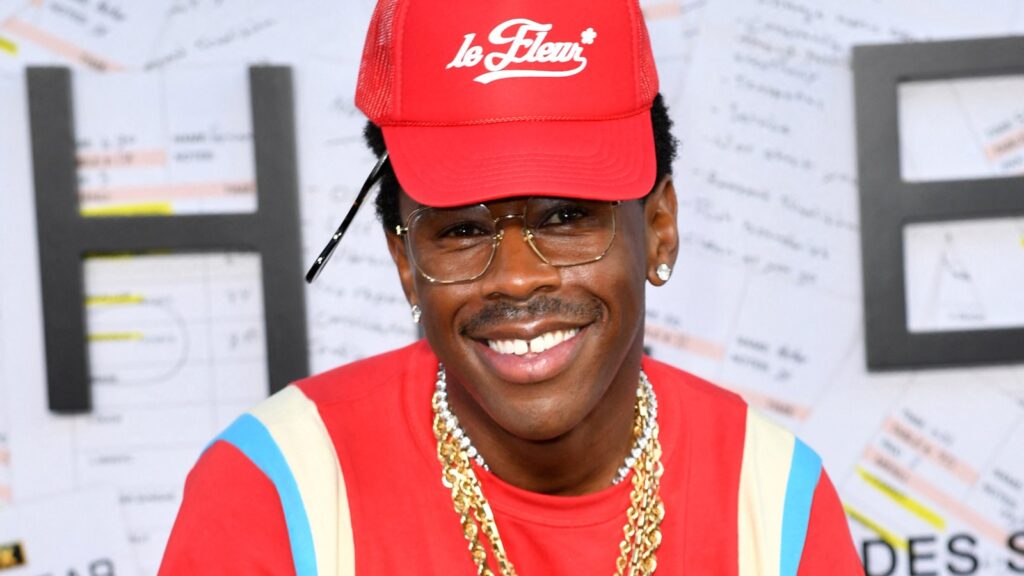
Exploring the ever-evolving world of hip-hop, Tyler, the Creator continually stands out as an innovator who gives fans exactly what they crave while grappling with his own artistic needs. With the release of Don’t Tap the Glass, his second album in a year, Tyler once again captivates audiences by blending trademark bravado with introspective musings. As the album unfolds, it becomes clear that Tyler is on a journey, delivering what fans desire while seeking a deeper understanding of his own artistry.
A Fresh Yet Familiar Sound
Don’t Tap the Glass clocks in at 28 minutes, a more concise offering compared to his previous album, Chromakopia. Yet, every piece of Tyler’s unique flair is present: from bold bravado to seamless shifts between rapping and off-key singing, creating a dynamic listening experience. His work showcases an ever-present youthful confidence mixed with a disarming sensitivity familiar to long-time fans. The depth and variety in his sound continue to captivate, even as he navigates his ongoing creative exploration.
Concepts and Collaborations
The themes in Don’t Tap the Glass aim to peel back the layers between Tyler’s public persona and his true self. The album’s tracks highlight his penchant for turning studio sessions into conceptual journeys. For instance, “Big Poe” is a vibrant track featuring Pharrell Williams, echoing the early 2000s vibe with notable samples. Tyler also infuses tracks with playful lyricism, such as on “Stop Playing with Me,” while the title track emphasizes his unyielding uniqueness.
Vulnerability and Dualities
Tyler’s dual nature—both bold and vulnerable—plays a significant role in the album. While projecting confidence through tales of wealth and luxury, his anxious vocals reveal a softer side. This complexity is exemplified in tracks like “Don’t You Worry Baby,” where Tyler duets with Madison McFerrin. His exploration of themes such as sexuality and identity remains refreshingly contemporary yet deeply rooted in a tradition of performers concealing aspects of their personal lives.
Consistency and Innovation
While Don’t Tap the Glass may not break new ground, it delivers Tyler’s signature sound, drawing from influences like Kanye West and OutKast. Despite its consistency, the album’s charm lies in Tyler’s ability to spin familiar elements into captivating new forms, as seen in “Don’t Worry, Baby,” with its R&B-infused melodies. Many wonder if this collection of tracks is part of Tyler’s ongoing quest to redefine his artistic journey by balancing what fans love with his desire to innovate. His refusal to stray far from his established sound raises intriguing questions about what he might explore next.