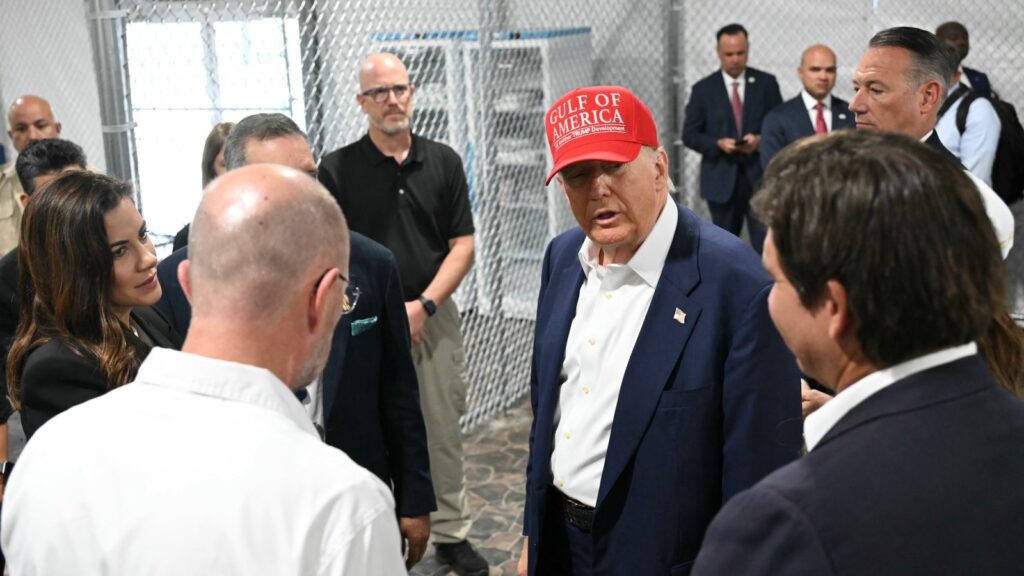
Dubbed “Alligator Alcatraz” by Donald Trump, a new immigrant detention facility in Florida was promised to house the “most menacing migrants” in the country. However, recent reports indicate that the portrayal of these detainees as dangerous criminals is largely unfounded. A significant number of those held have no criminal convictions, challenging the narrative presented by the former president.
The Reality Behind “Alligator Alcatraz”
During a livestream event on July 1, Trump described the Florida facility as a place for housing “some of the most vicious people on the planet.” Yet, records from The Miami Herald reveal that only about one-third of the nearly 900 immigrants detained there have criminal convictions. While offenses range from minor violations to serious crimes, approximately 250 detainees are held solely for immigration violations.
According to a Syracuse University analysis, nearly half of the individuals in ICE custody lack criminal charges, with many being asylum seekers. These findings question the facility’s intended role as a holding site for dangerous criminals.
Conditions at the Facility Under Scrutiny
Democratic lawmakers who visited Alligator Alcatraz reported dire conditions. Representative Debbie Wasserman Schultz described the center as akin to an “internment camp,” where immigrants endure overcrowded cells made of chain-link fencing. The conditions, she argued, are inhumane, with inadequate food provision and poor living standards.
“They are essentially packed into cages, wall-to-wall humans, 32 detainees per cage,” Wasserman Schultz noted, highlighting the stark contrast in treatment between guards and detainees regarding meal quality.
Government Response and Criticism
Despite criticism, Homeland Security Secretary Kristi Noem defended the standards of federal detention centers, claiming they exceed those of local and state facilities. In an NBC interview, she emphasized that the areas where detainees are held should not be compared to jail cells, describing them as secure facilities rather than prisons.
Nevertheless, firsthand accounts from detainees’ families, like a Guatemalan woman speaking to CNN, paint a grim picture of unsanitary conditions and insufficient resources. Her husband reported going days without a shower and insufficient medical attention.
Environmental and Accessibility Concerns
Beyond inadequate conditions, the location of Alligator Alcatraz poses significant risks. Situated in an area prone to flooding and hurricanes, the facility’s temporary structures are vulnerable to environmental hazards. Renata Bozzetto from the Florida Immigrant Coalition highlighted the center’s remote and isolated position, which complicates access for lawyers and family, while also emphasizing the ecological fragility of the area.
Representative Maxwell Frost, following a visit to the site, expressed his disappointment over barred access to the actual living quarters of detainees, raising concerns over transparency and accountability.
“It is something everyone, whether you’re Democrat, Republican, or anything, should be deeply ashamed of,” Frost asserted, advocating for more humane treatment of immigrants, whom he termed the “blood of this nation.”