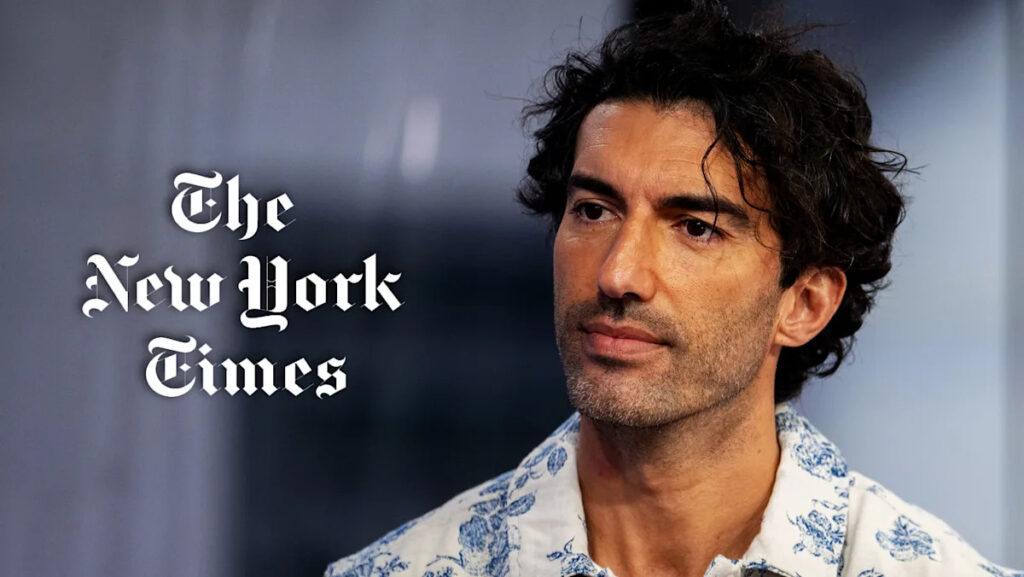
In a recent development that has caught the attention of both Hollywood and media circles, the New York Times has filed a legal action against Justin Baldoni, seeking reimbursement for attorney’s fees related to his previously dismissed $400 million defamation suit involving Blake Lively and others. Dubbed “The Gray Lady Strikes Back!”, this legal move emphasizes the significance of protecting journalistic integrity in the face of high-stakes lawsuits. The claim seeks approximately $150,000, a substantial sum intended to cover legal expenses and other associated costs.
Background on the Defamation Suit
More than three months have passed since Justin Baldoni’s ambitious legal battle against Lively, Ryan Reynolds, and the New York Times was tossed out of court. The suit, initially seeking $250 million, was part of a broader legal narrative involving Baldoni’s production company, Wayfarer Studios, and allegations stemming from Lively’s reported experiences of sexual harassment and retaliation. The filing with the California Civil Rights Department, which surfaced just before New Year’s Eve, ultimately spurred the Times to publish an informative article on December 21, highlighting the serious nature of the claims made by Lively.
Legal Implications and Court Findings
According to a September 30 filing by the New York Times, the District Court concluded that Wayfarer and its affiliates had pursued their lawsuit against the newspaper without a “substantial basis in fact and law.” The court’s findings hinged on the publication’s adherence to New York’s fair report privilege, which protects journalistic endeavors involving public interest stories. As stated by the Times, the district court found that “any statements in the article and video reporting on the alleged sexual misconduct experienced by Lively were not actionable.” These findings underscored the importance of foundational journalistic practices in covering sensitive public matters.
The Times Advocates for Journalistic Integrity
In the wake of this legal contention, the New York Times made it clear that their suit against Baldoni and Wayfarer Studios is not solely about recovering legal costs but also about defending journalistic ethics. Danielle Rhoades Ha, the company’s Communications SVP, articulated the organization’s position, stating, “New York law allows publishers to recover their fees when they are targeted by suits designed to silence them.” Their assertion highlights the broader implications of this case, emphasizing the need for media companies to safeguard their rights against perceived attempts to stifle journalistic endeavors.
Responses from Baldoni’s Camp
On the opposite side, Baldoni’s legal team has expressed their intent to challenge the implications of this suit. Bryan Freedman, the lead attorney representing Baldoni and Wayfarer Studios, asserted the importance of standing firm against powerful entities, stating, “Win, lose, or draw, we refuse to cave to power brokers even in the face of seemingly impossible odds.” This perspective raises questions about the balance between media freedom and the pursuit of accountability, suggesting a potential shift in how such legal battles are approached going forward.
As the legal drama continues, with depositions and discovery processes underway, it’s clear that “The Gray Lady Strikes Back!” resonates on multiple levels, influencing not just Hollywood but the media landscape as a whole. With a trial set to commence in March 2026, all eyes are on how this saga will unfold, particularly given its implications for both journalistic integrity and the boundaries of legal recourse.