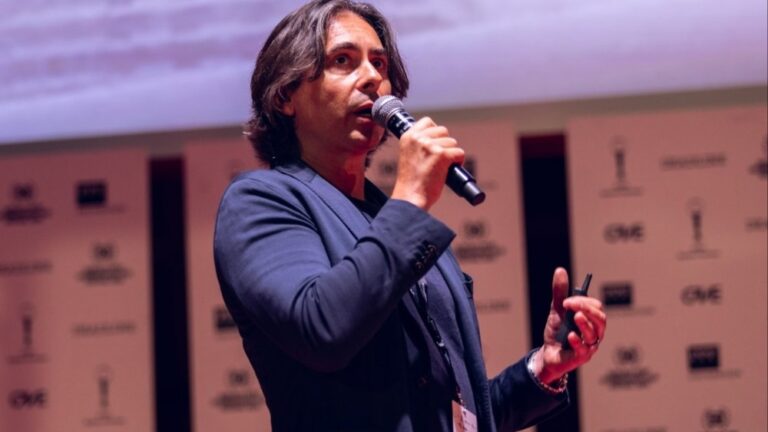
At the heart of a growing debate over artistic freedom, the former head of the Slovak National Theater, Matej Drlička, has issued a compelling call to the European Union. Drlička, dismissed by Slovakia’s far-right government, spoke passionately at the Karlovy Vary Film Festival, urging the EU to defend cultural and artistic freedom from the clutches of autocrats. This situation highlights the critical intersection of politics and the arts, as leaders and cultural figures across Europe rally to protect their creative autonomy.
The Alarming State of Slovakia’s Cultural Landscape
Since Robert Fico’s return to power in 2023, Slovakia has experienced a concerning shift in its approach to cultural policy. Matej Drlička voiced his unease, stating that the nation is facing “democratic backsliding,” with artistic expression under threat. He emphasized the need for political awareness, stressing the importance of safeguarding artistic freedom not only within Slovakia but throughout Europe.
“Every democracy has its ups and downs, and unfortunately, Slovakia is going steeply down,” Drlička warned. He drew parallels with Hungary, where Prime Minister Viktor Orbán’s government has exerted extensive control over cultural outlets. Drlička fears similar “Normalization” processes are unfolding in Slovakia, referring to the period of Soviet influence that stifled creative freedom.
A Fortress Under Siege
The Slovak National Theater has long been a bastion of free expression, but Drlička found himself in a precarious position amid rising homophobia and xenophobia. His dismissal last August, with no official reasoning provided, was a flashpoint that led to significant public protests. When Alexandra Kusa, director of the National Gallery, spoke against this action, she was also removed from her position.
In response, Drlička helped establish Open Culture, a civic organization dedicated to resisting governmental pressures on the arts. In May, they convened a major conference in Bratislava, bringing together European cultural leaders to assess and strategize against these authoritarian trends.
The Bratislava Declaration: A Plea for Action
The Bratislava Declaration emerged from the conference, calling for robust support from the European Union to preserve artistic freedom. This document underscores the urgent need to combat governmental intrusions in the cultural sector, advocating for legal frameworks to protect creative expression.
Key points in the declaration include a call for the EU to acknowledge the crisis threatening artistic freedom, fortify the independence of cultural institutions, and ensure fair funding processes, free from political influence. The message is clear: “Now is the time to act to prevent irreversible damage to Europe’s democratic cultural structures.”
Towards a European Artistic Freedom Act
Drlička and his peers aspire for the creation of a European Artistic Freedom Act, modeled after the European Media Freedom Act, to safeguard creativity across member states. By urging legislative action, they seek to establish consistent rights protection for artists and cultural workers throughout the EU.
Ending his address with a call to action, Drlička appealed to the film community: “This is a call to action. My visit here is a call to action. If you want the business to go on as usual, if you want to produce movies, books, festivals, we need to prepare for the worst, and it is very important for all of you and your colleagues to step up and join.”