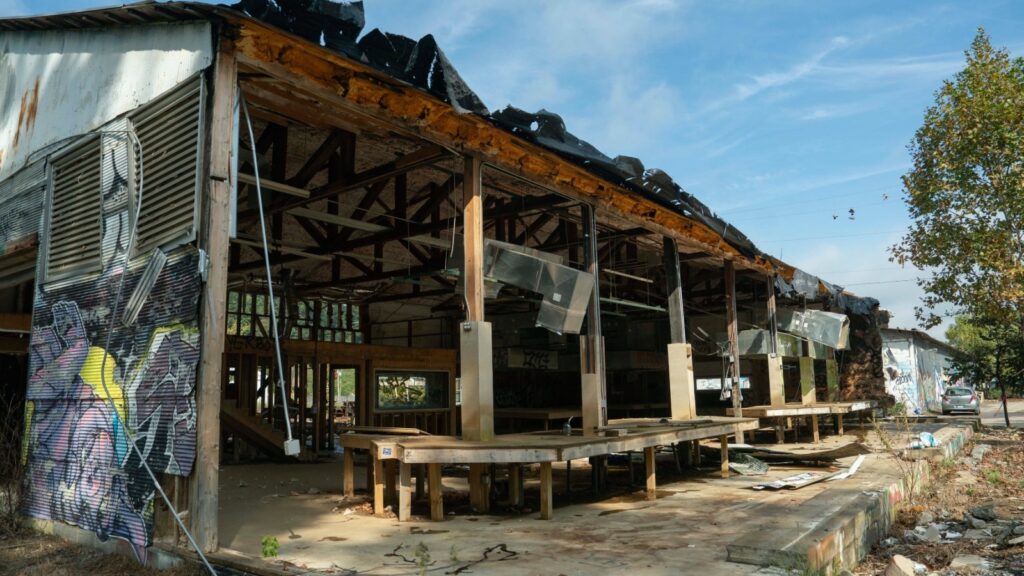
Asheville’s Regional Arts Community One Year After Hurricane Helene: ‘We Are Not OK’
The vibrant arts community in Asheville, known for its resilience and creativity, faced unprecedented challenges following Hurricane Helene. A year has passed, and while the determination remains strong, the region is still grappling with the aftermath. This article delves into the ongoing struggles and triumphs of Asheville’s regional arts community as they strive to rebuild and recover from the devastation.
### Reflecting on the Day of Disaster
On the morning of Sept. 27, a few rainstorms hinted at the ordeal faced by the Blue Ridge Mountains one year ago. The sun now shines on the peaks and valleys, a stark contrast to the chaos unleashed by Hurricane Helene.
“This morning, I felt fragile,” recalls Lance Mills, a local singer-songwriter. “A year ago, our whole existence was nearly swept away by the flood.” His words capture the ongoing emotional impact of the disaster.
On Sept. 27, 2024, Mills awoke to alarming news: the Swannanoa River was overflowing. Within hours, his home in Swannanoa was submerged. Many parts of Asheville, including the River Arts District, bore similar fates.
### The Toll of Hurricane Helene
Hurricane Helene left a significant mark, with over 30 inches of rain causing untold destruction. The storm resulted in 108 casualties and $60 billion in damages. Astonishingly, only nine percent of requested funds from Congress have been disbursed. State leaders continue to lobby for necessary financial aid.
Darren Nicholson, a noted musician, remembers clearing debris and performing at benefit concerts to aid recovery efforts. “We are stronger together,” he emphasizes, encapsulating the community spirit that emerged during these challenging times.
### Artistic Response and Resilience
Asheville’s arts scene has played a pivotal role in the healing process. Events like Rising Appalachia’s concerts have bolstered relief efforts, showcasing both unity and resilience. Initiatives such as ReString Appalachia have sought to replace musicians’ lost instruments, a powerful symbol of cultural rebirth.
Founder Nicholas Edward Williams notes, “Music provides mental wellness, especially in a disaster’s wake.” His nonprofit has aided hundreds, underscoring the vital role of arts in recovery.
### Community and Culture Redefined
Organizations like WNC Long Haul continue to drive recovery, looking beyond immediate needs to long-term rebuilding. Rachel Dudasik, a native of Marshall, remains a steadfast advocate. Her town, hit hard by Helene, symbolizes both the tragedy and the perseverance of Asheville’s regional arts community.
Marshall recently celebrated the reopening of its downtown, a testament to its ongoing recovery. Businesses, some completely rebuilt, others still operating in uncertainty, demonstrate the community’s tenacity.
Connie Molland, co-owner of Flow Gallery, shares, “Ribbon cuttings are new beginnings.” Her sentiment echoes throughout the region, as locals rebuild lives and livelihoods.
### A Lasting Impact
Lance Mills and Rachel Dudasik continue to reflect on progress and the road ahead. Mills has found solace in his new home, while Dudasik remains focused on cultural and political recovery.
“We need to harness the hope and compassion shown during the aftermath,” Dudasik insists. Her words serve as a reminder of the endurance and spirit defining Asheville’s arts community in this ongoing recovery journey.