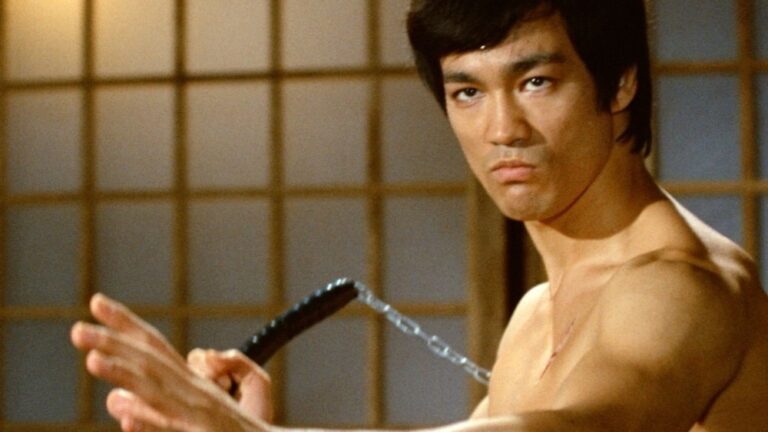
In a groundbreaking move, the legendary figures of Bruce Lee, Jackie Chan, and Jet Li might once again grace the global screens thanks to advanced AI technologies. At the 27th Shanghai International Film Festival, a bold plan emerged, combining the magic of martial arts with the power of artificial intelligence. The initiative, known as the Kung Fu Film Heritage Project, seeks to digitally resurrect classic kung fu films while introducing the world’s first fully AI-produced animated feature, “A Better Tomorrow: Cyber Border.” This marks a significant step forward in the fusion of tradition with cutting-edge innovation.
Reviving Legends Through AI
The Kung Fu Film Heritage Project aims to breathe new life into 100 iconic kung fu movies, using artificial intelligence to enhance image and sound quality while preserving the original essence. This ambitious restoration project underscores a commitment to protecting and promoting the rich cultural tapestry of Chinese martial arts cinema.
“From Bruce Lee to Jackie Chan, from ‘Crouching Tiger, Hidden Dragon’ to ‘Wolf Warrior,’ these films have shown the world the vitality and spirit of the Chinese people,” stated China Film Foundation chair Zhang Qilin. This initiative not only highlights the historical significance of these films but also elevates their artistic value for contemporary audiences.
Notable films set for AI restoration include classics like “Fist of Fury” and “Drunken Master.” With an investment of RMB100 million ($13.9 million), Canxing Media chair Tian Ming revealed that the first phase will prioritize ten films, inviting global collaboration for this cultural renaissance. “AI is the brush, but creativity is the soul,” he emphasized.
Introducing a Futuristic Vision
Alongside restoration efforts, the festival premiered “A Better Tomorrow: Cyber Border,” a cyberpunk reimagining of a John Woo classic produced by Quantum Animation. This groundbreaking film showcases how AI technology can reshape the creative process, reducing production time significantly.
“This entire animated feature was made by just 30 people,” explained producer Zhang Qing. This film serves as a testament to AI’s potential in storytelling, blending martial arts with futuristic aesthetics.
Zhang further encouraged expanding Chinese cultural content into interactive media like competitive global fighting games. “Why are the world’s biggest fighting games not Chinese, when they all borrow Chinese moves?” he challenged, advocating for original Chinese IPs to lead the charge.
AI as a New Cultural Infrastructure
The festival underscored the regulatory frameworks enabling these initiatives. He Tao from the National Radio and Television Administration highlighted AI’s role as a transformative force in media, shifting industry norms from screenwriting to distribution.
A newly launched Industry-Academia-Research Center in Shanghai will drive talent development and research, part of a network including Xi’an, Wuhan, and Xiamen. Official support is robust, with national render farms drastically reducing visual effects processing times.
The event honored industry veterans for their contributions to this innovative journey. “Kung fu films are about growth, spirit, and dignity. With AI, we’re not erasing the past—we’re giving it a second wind,” declared screenwriter Zhang Tan, encapsulating the project’s vision of blending history with technology.