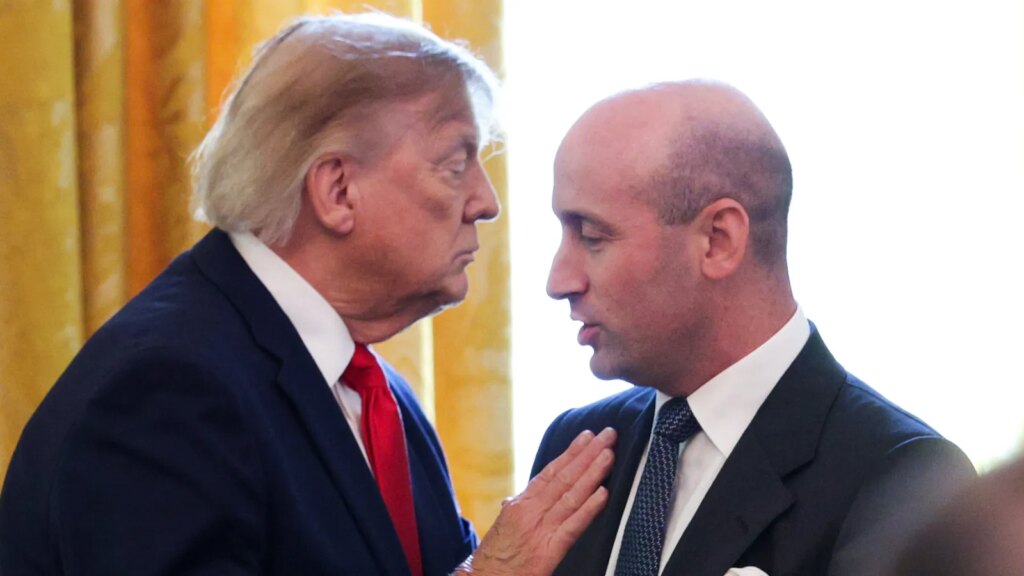
In a bold and controversial move following the Republican Party’s severe losses in the 2026 midterm elections, former President Donald Trump has announced the promotion of Stephen Miller to the position of White House Chief of Staff. This decision comes as a surprise, given the palpable discontent expressed by voters across the nation regarding Trump’s administration and policies.
Stephen Miller Takes the Helm
In his announcement made on Truth Social, Trump stated, “I am pleased to announce that Mr. Stephen Miller, the current Deputy Chief of Staff of the Trump Administration, and one of my most trusted advisors, will become the Chief of Staff starting Monday, November 9, 2026.” The outgoing Chief of Staff, Susie Wiles, who had served in the role since Trump’s return to office last year, will transition to the “Trump Political Operation.” Wiles expressed gratitude for her time in the position, affirming her dedication to the President and the mission moving forward.
Wiles, a seasoned political consultant credited with devising much of Trump’s 2024 campaign strategy, had recently announced her successful treatment for early-stage breast cancer. Meanwhile, Miller’s promotion raises eyebrows due to his controversial history and association with some of the most extreme aspects of the MAGA movement.
Miller’s Controversial Background
Stephen Miller has long been recognized as a key architect of many of the Trump administration’s most criticized policies, including the family separation policy and various crackdowns on immigration. His rhetoric often aligns with white nationalist sentiments, and he has been a vocal supporter of strict immigration reforms and policies targeting communities of color.
Previously, Miller’s influence extended to the setting of stringent quotas for migrant arrests and deportations, as well as efforts to revoke judicial protections for detainees. His appointment as Chief of Staff raises concerns about the potential for further exacerbating division and conflict in an already polarized political climate.
Implications of the Appointment
As the nation grapples with the implications of the recent midterm elections, where voters made it clear they are dissatisfied with the current administration’s direction, one would expect a course correction from Trump. However, instead of seeking a path to reconciliation or moderation, the former President seems poised to empower one of his most polarizing advisors. Observers are left wondering how this decision will affect both the Republican Party’s standing and the broader national discourse.
With Miller at the forefront of Trump’s inner circle, it appears that America may continue to face challenges stemming from divisive rhetoric and contentious policies, leaving many to ponder the future of the GOP and the administration’s ability to address the needs of the electorate.