As Los Angeles gears up for the upcoming “No Kings” protests, the city has become a focal point in a broader national discourse. Responding to these planned demonstrations, President Donald Trump has dispatched 700 Marines to Los Angeles, escalating tensions and raising questions about the role of military forces in domestic situations. This move marks a significant phase in the administration’s strategy towards immigration enforcement and protest management.
Military Presence and First Detainment
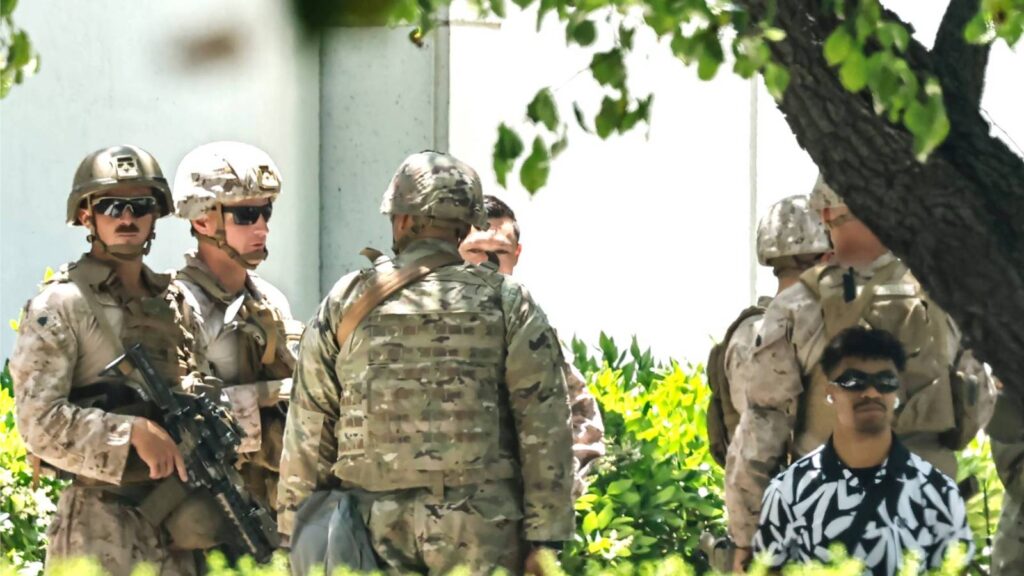
The arrival of 200 Marines in Los Angeles on Friday highlights the president’s commitment to a militarized approach. Stationing troops at the Wilshire Federal Building, the action has already led to the first known detainment. Reuters reported Marines temporarily detaining a civilian who was an Army veteran trying to access the Veterans Affairs office. While the military confirmed the incident, the veteran seemed undeterred by the brief hold-up.
A military commander involved in the city’s operations clarified that while Marines can detain civilians temporarily, they are not authorized to make arrests. This situation tests the boundaries of the Posse Comitatus Act, which generally restricts military involvement in domestic law enforcement activities.
Legal and Political Challenges
Efforts to curb the federalization of California National Guard troops faced obstacles as a federal judge attempted, but ultimately stayed, a restraining order on this action. Although the injunction didn’t specifically address the Marines in Los Angeles, the court anticipates further examination into whether federal forces are engaging in law enforcement roles, including “interrogating, detaining, or searching civilians.”
This military deployment aligns with Trump’s ongoing desire to use military force against domestic opposition. Recent ICE raids in Los Angeles have already spurred local protests, offering Trump a pretext to deploy additional National Guard units, despite pushback from California’s state leadership.
Clashes and Reactions
The decision to bring Marines into Los Angeles has provoked a range of political responses. Notably, Senator Alex Padilla (D-Calif.) was physically removed and handcuffed at a Department of Homeland Security press conference after attempting to question DHS Secretary Kristi Noem about immigration policies. Padilla emphasized his peaceful intentions and highlighted the strong-arm tactics used against him.
The broader context involves the president’s planned military parade on his birthday, where a significant protest turnout is expected. Coinciding with Flag Day and the Army’s 250th anniversary, organizers have called June 14 a “nationwide day of defiance,” opposing the administration’s perceived overreach and authoritarian measures.
Protest Preparations
As millions prepare to protest against Trump’s birthday parade, the tension in Los Angeles serves as a microcosm of larger national unrest. The protest organizers’ rallying cry, “No thrones. No crowns. No kings,” encapsulates the sentiment against perceived government overreach and sets the stage for potential large-scale demonstrations. Meanwhile, Trump has warned protesters of severe repercussions, further heightening anticipation and concern.