On September 11 each year, New York City is graced with an almost cinematic perfection in weather—clear, bright, and temperate. Yet this idyllic setting belied one of America’s darkest days, reminding us how beauty and tragedy are often intertwined, as if one lays the groundwork for the other.
Recently, the administration of Mayor Zohran Mamdani released approximately 170,000 pages of long-concealed air-quality documents. This significant disclosure results from a lawsuit filed by 9/11 Health Watch, an advocacy group, and includes data from 68 boxes uncovered in a municipal office last year. These documents shed further light on the toxic remnants left in downtown Manhattan after the terrorist attacks, exposing not only the hazardous air but also the misleading claims regarding air safety that, according to some estimates, have resulted in three times more deaths than the attacks themselves.
The falsehoods surrounding air quality began almost immediately after the tragedy. As a journalist who covered Ground Zero and its surroundings in the immediate aftermath, I know firsthand how these fabrications perpetuated a complex narrative of neglect and misinformation. Twenty-five years later, the release of these documents serves as a stark reminder that many truths about that day—and the following days—remain obscured.
Editor’s picks
On that fateful day, my initial assignment was to cover a nursing home in Staten Island where voting booths had recently been removed. Just before 9 a.m., I found myself at my Chelsea Piers gym, captivated by the flames leaping from the North Tower of the World Trade Center. Rushing back home, I called my editor, expecting the usual operator but instead finding Howell Raines, the newly appointed executive editor.
“Should I go down there?” I inquired. “Go down,” he instructed. To avoid getting stranded on a halted subway, I hopped on my bike and pedaled down Seventh Avenue, passing a gathering of nurses in scrubs, their eyes trained on the unfolding disaster down south. By then, the second tower had already been struck.
A burning skyscraper creates its own atmosphere. The heat emanated from blocks away, and I could sense the destruction intensifying as I approached. Office papers fluttered like leaves in the wind, while the sunlight was eclipsed by thick, black smoke. The popping sounds I heard would later be understood as the tragic choice of some individuals leaping to escape the flames.
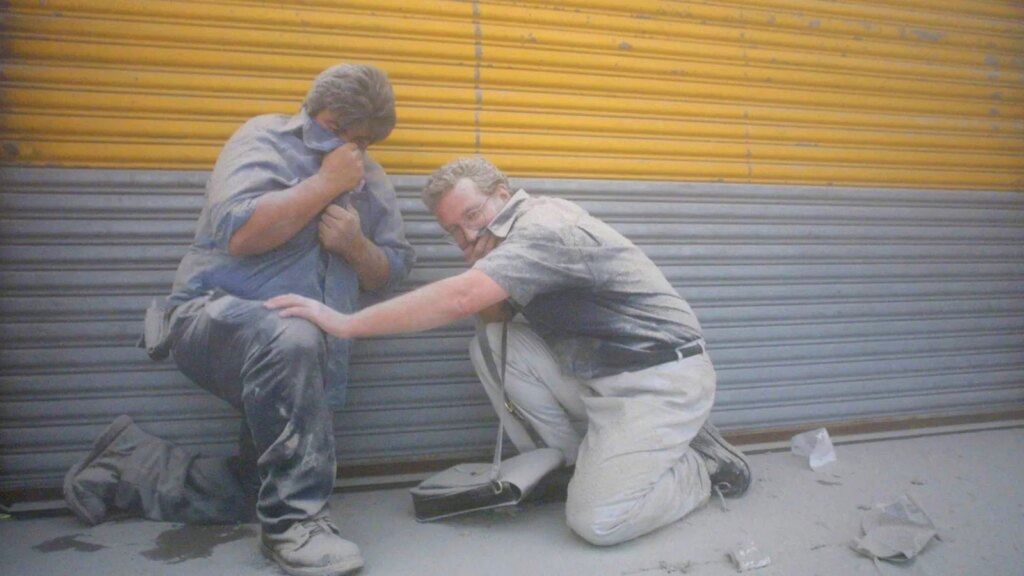
After a police officer attempted to shoo me away, I secured my bike and fought against the thronging workers fleeing the chaos. I reached an entrance to the North Tower, where terrified employees lined the stairwell, some injured and bloodied. In those moments, the serene weather morphed into a dark and chaotic dust storm.
The low rumble of the South Tower collapsing transformed into an ear-splitting roar, as chunks of metal cascaded from the sky. Following the frantic directions of an FBI agent, I darted into a subway entrance just as the pulverized structure fell, leaving me convinced that I would be buried alive.
Related Content
Slowly, the turmoil subsided, and the suffocating darkness began to lift. A choking dust filled my mouth and ears, coating my hair and clothing. I made my way to what was then New York University Downtown Hospital, where staff handed out wet paper towels to those covered in soot. A new wave of evacuees flowed in as the North Tower also succumbed to its fate.
In the chaos, questions about national security and governmental protections plagued my mind. Months after the attacks, I would report for both The New York Times and Vanity Fair, seeking answers about the failures of intelligence agencies. However, one persistent question about the Environmental Protection Agency’s actions haunted me: how did the agency conclude the air was safe to breathe just a week after the attacks?
After a long and difficult night, I returned to my boyfriend’s office ten blocks north, where he helped me wash away the remnants of that day. Yet the horrors didn’t end there. As I wrote extensively about the devastation in the following days, I found myself grappling with both physical and psychological aftereffects.
In the days following, each step I took reminded me of the bruises on my body and dreams of collapsing buildings. My cough lingered, producing unsettling dark phlegm that worried me. Unlike many brave first responders who tirelessly dug through the toxic remains, I did not return to “The Pile.” But those who did remained susceptible to severe health issues, including lung disease and cancer.
Trending Stories
At a recent press conference to highlight the new document release, Mayor Mamdani stated, “People got sick because the leaders they trusted lied and told them they were safe to breathe in toxic air.” The documents reveal that, astonishingly, asbestos was still present in air quality tests almost half a mile away from Ground Zero, ten months after the attacks, indicating a long and toxic legacy.
The Mamdani administration has pledged to unveil more documents in the months ahead. While the physical debris from that day may have been cleared, the work of uncovering the truth about the events surrounding 9/11—and the government’s response to its aftermath—continues, 25 years later.