
French animation and visual effects company STIM — known for work on “The Wild Robot,” “The Garfield Movie” and “Coyote vs. Acme” — is launching a new production center in Spain’s Canary Islands as it expands across Europe. The move is expected to create more than 100 jobs as the studio scales its output and capabilities.
New studio and hiring plans
STIM Tenerife is scheduled to begin operating in August and plans to grow to 60 employees by the end of 2026. Recruitment is already under way for high-skilled roles including character modelers, set and prop modelers, look-development artists and supervisors.
The company has selected the Canary Islands Special Zone (ZEC) for the new base, taking advantage of the archipelago’s low-tax regime for qualifying businesses.
Leadership, capacity and creative intent
> “The opening of STIM Tenerife in the Canary Islands marks a strategic stage in STIM’s evolution,” said STIM Tenerife CEO Amélie Houpline. “We have found an environment here that brings together talent, strong development potential and a dynamic creative community.”
> The new base, she added, will allow STIM to increase its production capacity “without compromising the artistic and technical excellence that defines our identity.”
Founded by Félix Ferrand, Jordan Soler and Benoit Gielly, STIM specializes in 3D animation, VFX and digital production for film, TV and advertising. With existing operations in France and Belgium, the company has expanded from a character-focused studio into a full-service production house capable of handling projects from design and pre-production through final delivery.
STIM notably collaborated with DreamWorks Animation on facial and body rigging for several characters in “The Wild Robot.” Other credits include Sony’s “The Garfield Movie,” Warner Bros.’ “Coyote vs. Acme,” FX’s Emmy-winning “Shōgun” and the Annecy-selected Franco-Belgian feature “Girl in the Clouds.”
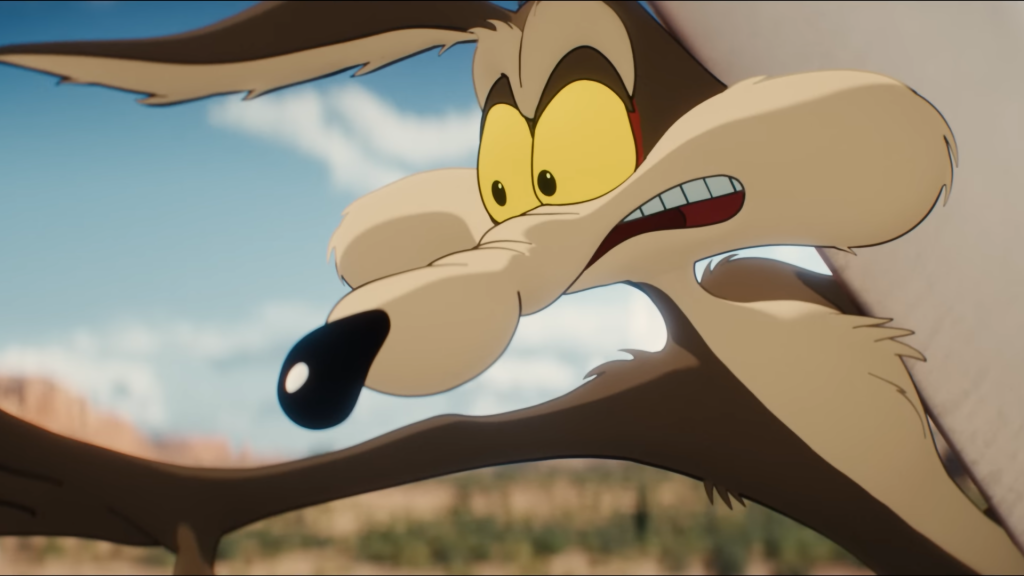
‘Coyote vs. Acme’
“Coyote vs. Acme”
Financing reach and regional impact
The Tenerife operation will expand STIM’s production capacity and support financing structures that span France, Belgium and the Canary Islands. The company said that this footprint could give producers more options when assembling European animation and VFX financing.
> “Our ambition is not limited to producing international projects from the islands,” Houpline said. “We want to build a studio with a long-term future, generate highly qualified employment and contribute to the development of the Canary Islands ecosystem.”
STIM’s arrival comes as the archipelago continues to scale its animation, VFX and digital-arts sector. According to figures provided by the ZEC, the Canary Islands now host more than 30 specialist companies and close to 2,000 professionals — a marked increase from a comparatively small industry less than a decade ago.

ZEC President Pablo Hernández
ZEC President Pablo Hernández
The Canary Islands now host studios such as Fortiche (the team behind “Arcane”), Atlantis Animation, 3 Doubles Producciones, Tomavision, Gigglebug, Amuse Studios and Ánima Kitchent.
Recent growth in the region has included Surfing Giant Studios’ Tenerife operation and DNEG’s investment in Ánima Kitchent, backed by the Spanish government’s SETT program, as part of a broader effort to scale the sector.
> “A few years ago, there was practically no animation industry in the Canary Islands,” said ZEC President Pablo Hernández. “Today, we have dozens of studios, close to 2,000 professionals and projects for some of the world’s largest entertainment companies.”
> STIM’s arrival, he added, shows that the archipelago “has ceased to be a promise and has become an established reality within the international animation industry.”
> Hernández said the significance of the latest investments goes beyond attracting individual companies or productions. “We are seeing the creation of a genuine industrial ecosystem, with local talent, specialist training and companies capable of leading global productions,” he said. “We have moved from attracting specific projects to attracting permanent centers for decision-making, production and creative development.”
> “The next phase, according to Hernández, will involve strengthening local intellectual property, developing original content and attracting larger-scale international investment.”
Industry projections cited by the ZEC suggest the Canary Islands could reach between 3,000 and 4,000 specialized animation and digital-arts jobs in the coming years.