British actress Naomi Watts recently reflected on the shifting landscape for women in Hollywood, especially those over 50, while attending the San Sebastián Film Festival to receive this year’s Donostia Award. Her comments followed a week after Sarah Paulson expressed concerns in Variety regarding the limited film offers she faced after her acclaimed role as Marcia Clark in “The People v. O.J. Simpson: American Crime Story.” “Things have changed,” Watts remarked, emphasizing a positive evolution in the industry.
Women Over 50 in Film and Television
Watts entered the industry later than most, landing a breakout role in David Lynch’s “Mulholland Drive” at 31. “I was told at the beginning that I better get my skates on because it all finishes at the age of 40. And here we are today. I’m in my late 50s,” she noted, celebrating the recent visibility of women in prominent roles over 50 at the Emmy Awards, where nominees such as Rhea Seehorn, Jean Smart, and Allison Janney shone in strong categories. “That’s heartening to see,” she added.
Watts is grateful to be part of a narrative shift, stating, “Women are consumers of film and TV, and their stories should be reflected. That narrative had to be shifted. And I am grateful to be a small part of that shift.”
The Housewife: A New Film and Important Themes
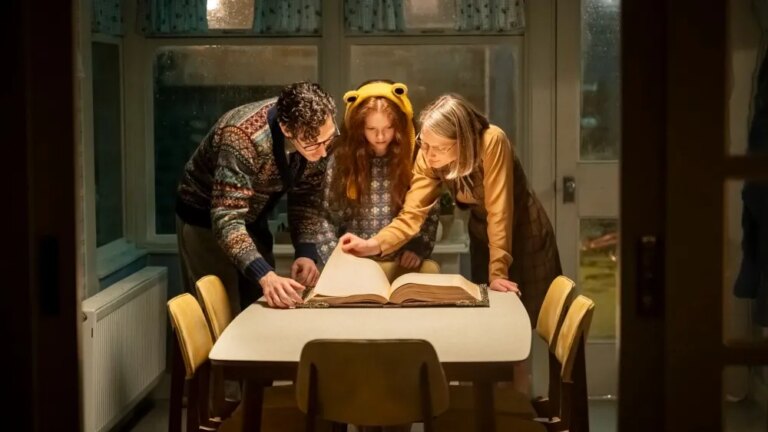
At the festival, Watts also promoted “The Housewife,” directed by Ben Shirinian. This Donostia Award Screening film is based on a true story set in 1964, featuring Watts alongside Tye Sheridan, Luke Evans, Michael Imperioli, and Lena Olin. It follows a young journalist who investigates a potential Nazi officer living incognito in New York, forming a friendship with the officer’s captivating wife.
In light of the film’s themes and historical context, Watts addressed global issues, drawing parallels between the story’s backdrop and current conflicts, including the war in Palestine. “It’s a very, very scary time what is going on in the world globally,” she said. “We must be vigilant, we must pay attention, and not let that happen again. Hopefully, this film sparks a dialogue.”
Commitment to Representation
Watts emphasized the essential role of storytelling, particularly in challenging times. She expressed pride in supporting minority communities, stating, “I’m proud to be a part of the LGBTQ community. Minorities are being attacked right now, and it’s frightful and unacceptable. My heart is with these communities, particularly my family. I’ll do whatever I can to stick up for minorities.”
A Personal Connection to the Immigration Narrative
As an immigrant herself, Watts relates closely to her character Hermine in “The Housewife,” who navigates life in America in the post-World War II period. Watts remarked, “I moved to America with hopes and dreams, all of which I have already surpassed. Her story was about trying to find a new place and erase the past, which she was able to do for a period of time.”
Discussing the U.S. political climate, Watts acknowledged its complexities and uncertainties, saying, “I have faith that things will work out in time.”
Portraying Complex Characters
Watts described her role as “very complicated,” admitting she felt a “huge amount of fear” taking on the harrowing true story. “This character is like nothing I’ve ever played. I’m at an age now when some might joke I’m in my villain era, but this is an extreme one and not a joke. I felt compelled to play this story,” she explained.
Reflecting on her earlier work with Lynch in “Mulholland Drive,” Watts noted the psychological depth in both characters, highlighting the dualities they embody. She stated, “Mulholland Drive was nothing but fun,” reminiscing about the joy of her time on set with Lynch, who passed away last year. “I’m forever indebted to David Lynch; he is in my heart forever.”
As the San Sebastián Film Festival proceeds until September 26, Watts remains committed to her craft and advocacy for diversity in storytelling, eager to explore new challenges and deeper narratives.