Cinematographer Adam Pietkiewicz has recently been navigating the unpredictable terrain of both the Baltic Sea and the filmmaking world. After spending days at sea with his crew, they’ve docked in an undisclosed location in northeastern Poland, preparing for Pietkiewicz’s upcoming appearance at the Toronto International Film Festival. There, he will accept the Variety TIFF Artisan Award for his remarkable work on the feature film “Angh,” which depicts the story of the last surviving chief of a village in India near the Burma border during the 1960s. Although Pietkiewicz has an extensive background in short films, this marks only his second feature project.
A Moment of Honor
“Receiving this award means the world to me,” Pietkiewicz expressed during a Zoom call. “I couldn’t believe it because so many past honorees are filmmakers I look up to, so being included alongside them is a big honor.” The award, he emphasizes, is not just for him but also for the people of Nagaland, a region he believes deserves more recognition: “They deserve to be seen and heard because this region is not well recognized around the world.”
The Story of ‘Angh’
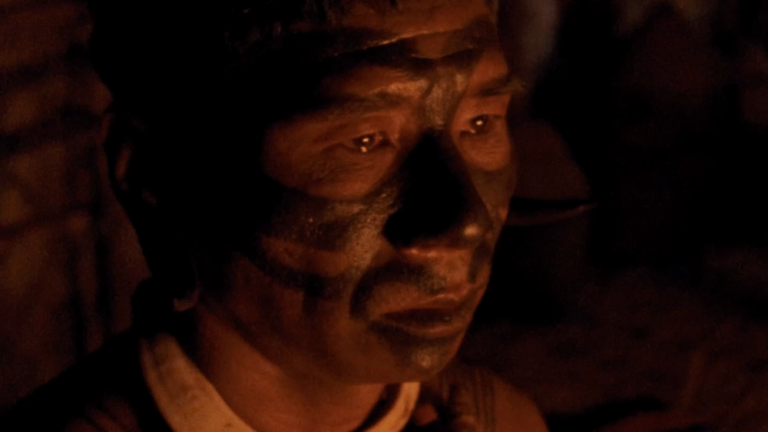
Directed by Theja Rio, “Angh” follows a small family of the Konyak Naga community in the 1960s, the last inhabitants of their once-thriving village in Nagaland. Their commitment to their traditional culture faces a significant challenge with the arrival of a Christian missionary from the United States. Pietkiewicz and Rio’s partnership originated during their film school days, and when Rio decided to expand his short film of the same name, Pietkiewicz was quick to join in.
Capturing the Past on Film
“Angh” was filmed on 16mm, a format that Pietkiewicz is well-acquainted with, though it was under Rio’s insistence that they chose this medium. Pietkiewicz shares, “He wanted to capture the rough and raw environment of the story.” Utilizing Arri cameras and Ultra Prime lenses, he mixed different film stocks, including Kodak’s VISION3 250D and VISION3 500T, to achieve a aesthetic that was fitting for the film’s narrative. “We both knew this format was a great idea for this kind of story. It perfectly reproduced color and added to the grainy look of the film.”
Navigating Nighttime Challenges
Shooting nighttime sequences posed a notable challenge for Pietkiewicz, particularly due to inconsistent electricity in Nagaland. “Firelight wasn’t enough; it didn’t give me enough exposure on my light meter during tests,” he explained. To combat this, he collaborated with Anghlong Konyak, the actor portraying the village chief. They designed custom fire torches topped with a special flammable liquid, allowing them to achieve sufficient exposure for the actors’ faces during these crucial scenes.
A Minimalist Approach to Storytelling
Pietkiewicz and Rio advocate for simple, minimalist filmmaking, often employing only a few camera setups per scene. Notably, the dramatic sequence involving the village’s burning was captured entirely in-camera, without the addition of VFX or CGI. Despite their minimalist approach in front of the camera, they maintained a thorough behind-the-scenes process, which involved creating a detailed guidebook dubbed the “Book of Angh,” meticulously planning every single scene.