Francesco Carrozzini, an acclaimed director based in New York, is set to showcase his innovative documentary “Be Brave” at the illustrious Venice Film Festival. The film offers an 85-minute exploration of Renzo Rosso, the visionary founder of the Diesel fashion brand. Carrozzini describes his work as a groundbreaking use of artificial intelligence (AI) that seamlessly blends emotion with storytelling.
A Visionary Underdog’s Journey
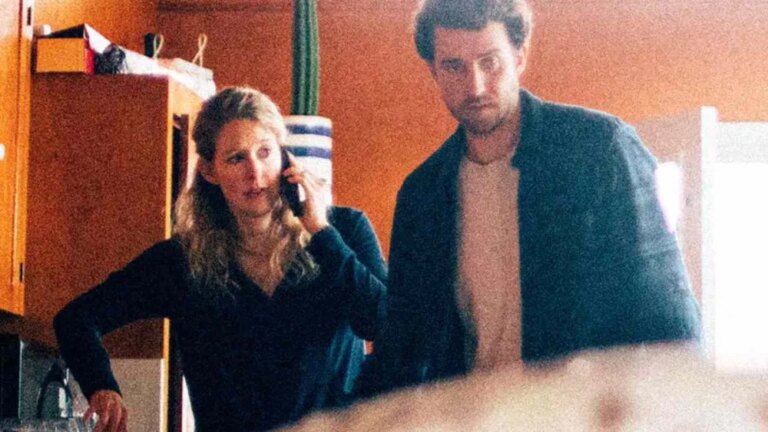
“Be Brave” chronicles Rosso’s remarkable ascent from poverty to fashion mogul, portraying him as a determined underdog who defied the odds. In a unique twist, Carrozzini did not film any live footage of Rosso; instead, he employed AI to recreate moments from Rosso’s life, capturing various stages of his journey.
AI as a Creative Tool
Alberto Barbera, Venice Film Festival’s chief, emphasized the film’s pioneering use of AI, declaring, “I want to put this [film] forward as an invitation for everyone to think about how AI as a tool can open up new creative possibilities for filmmakers.” “Be Brave” stands out as one of the first AI-driven features showcased at a major film festival.
A Reflection on the Evolution of AI
Carrozzini’s previous work includes “Franca: Chaos and Creation,” a documentary about his late mother, former editor of Italian Vogue, and the 2022 feature “The Hanging Sun.” Reflecting on the rapid advancements in AI during the production of “Be Brave,” he remarked, “In the year-and-a-half that Carrozzini spent making ‘Be Brave,’ AI has changed to a point where what we were doing in the beginning had to be redone.” Despite the challenges, he finds the transformative nature of AI exhilarating.
Exploring the Creative Process
In an interview with Variety, Carrozzini discussed his motivations for using AI in this project. Initially hesitant, he was persuaded by producer Lorenzo Mieli to explore a new, innovative film format. The lack of intimate archival footage of Rosso further drove the decision to use AI. Carrozzini explained, “The idea became: first of all, we can recreate those from scratch; though we were worried about them not being believable.”
Building a Scripted Narrative
Carrozzini and his team crafted a fully scripted film, employing a familiar documentary device that involves the filmmaker’s search for the subject—in this case, Rosso. He cautioned, however, that while the documentary employs AI to tell a compelling story, it does not serve as an exhaustive thesis on the technology. “This is a reflection on AI in storytelling and entertainment. It’s not a reflection on AI tout court,” he asserted.
A Complex Workflow
The use of AI added significant complexity to the production. Carrozzini noted that trial and error was integral to finding a workable process, as AI often provides only a version of what is requested. “The workflow,” he stated, “was a nightmare, especially in the beginning, until we found our footing.”
Bringing Renzo Rosso to Life
The challenge of portraying Rosso involved sourcing images and voices that aligned with his life story at different ages. Capturing not just his likeness but also his behavior posed a significant hurdle. “Getting the voice perfect is one thing, but it’s the behavior that was really challenging,” Carrozzini explained.
Creating a Narrative Environment
On the question of constructing a believable world, Carrozzini mentioned the challenges of using AI to cast characters and design settings. “Instead of casting and scouting,” he said, “you do it with AI, which is very frustrating at first.”
The Human Element
As the film merges AI with real-life stories, Carrozzini emphasized the importance of emotional connection. “I want to say no,” he remarked when asked if viewers need to discern AI from reality in the film, stressing that the film’s objective is to entertain and resonate with audiences.
Addressing Empathy in AI-Focused Storytelling
Concerned that AI might diminish the empathic quality of cinema, Carrozzini explained his approach, noting the documentary format allows for an authentic emotional experience while still utilizing AI. “If this was that beautiful documentary ‘Free Solo,’ it would be a very different thing because we would be pretending that something that never happened had happened,” he stated.
Future Aspirations
When asked about directing a fictional film using AI, Carrozzini acknowledged challenges in creating genuine empathy without human actors. “Once you know that it’s not human… after five minutes you know that you’re not going to get on board,” he noted, implying a preference for human storytelling. Nevertheless, he aims to explore AI’s potential within the constraints of emotional narratives, asserting, “We tried to apply a form of AI that can still live within a space of emotion and storytelling.”
This interview has been edited and condensed for clarity.