At this year’s Creative Investors’ Conference held during the San Sebastián Film Festival, one of the key discussions centered around the possibility of a U.S. federal tax credit for film production and its potential implications on the thriving European production market. Lorenzo de Maio from De Maio Entertainment shared his thoughts during a panel titled “Europe’s Current Challenges and Opportunities.” He expressed skepticism about any detrimental impact that such a U.S. measure might have on Europe’s flourishing film landscape.
New Opportunities for U.S. Filmmaking
“I’m Italian but live in Los Angeles, and [the tax credit] is one of the few things uniting Republicans and Democrats,” de Maio quipped, highlighting the bipartisan appeal of the proposed tax initiative. He emphasized that a stackable federal credit, combined with existing state incentives, could revitalize the U.S. film industry, which has experienced a decline in production capabilities.
“There’s a lot of capacity in the world, so the U.S. is falling a little behind, honestly,” he added. “Imagine if [a country like] Spain didn’t have incentives… It’s time for the U.S. to have it. It’s not controversial and will help rebuild some of the craftspeople that have left the business. Supporting the system fosters new filmmakers, storytellers, and cultural opportunities for co-productions, helping to revive an ecosystem that has diminished over time.”
The Role of U.S. Equity in European Film
During the conference, co-organized with CCA Media Finance, de Maio also discussed another trend: the influx of U.S. private equity stepping in to fill the void left by dwindling pre-sales. He noted, “There are definitely new sources of equity coming in,” which creates opportunities to finance projects flexibly. “With most of our companies, we will look at equity or debt; we can cash flow. What works for the project is usually the right answer.”
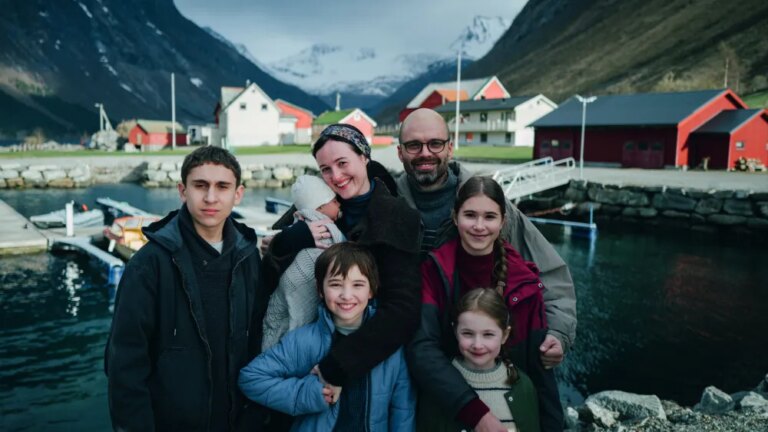
Pauline Lamy from Why Not Productions echoed de Maio’s sentiments, noting that U.S. investment in the European market is a relatively new phenomenon for her company. “Because we cannot presell a lot of films because of their language, having that type of money is really helping us make films at a bigger scale,” she explained. This mixed financing model has proven essential for their projects, such as ‘Fjord’ and ‘Emilia Pérez.’
Co-Production Models in Focus
Lamy highlighted the successful co-production model behind Cristian Mungiu’s Palme d’Or-winning project, which involved collaboration among Romania, France, Norway, Sweden, Denmark, and Finland. “We are an independent cinema company and filmmaker-driven, so we try to support filmmakers throughout all their projects,” she detailed. However, Lamy acknowledged that they are careful not to push directors into different languages solely for wider appeal, emphasizing that such decisions should stem from the project and the director’s vision.
De Maio pointed out that “60% of European movies only open in their own territory,” suggesting that not all films warrant forced co-productions. He argued, “It is not about conquering the market but how we honor the DNA of the market.” He cited Pablo Larraín’s Chile-Italy co-production ‘Maria’ as an example of a natural partnership based on genuine narrative connections rather than artificial constraints.
Understanding Audience Dynamics
As distribution challenges mount, producers are increasingly being advised to focus on their target audience from the project’s inception. “There is an audience that loves movies, a younger audience, too, and they are open to different authentic voices,” noted Ron Halpern of StudioCanal, highlighting the changing landscape of audience engagement.
De Maio remarked on how films like ‘Obsession’ and ‘Backrooms’ have shifted Hollywood’s conversation regarding audience engagement, particularly noting the significance of loyalty among viewers. “Distributors need to bring the movie to the audience, and what’s happened with Curry [Barker] and Kane [Parsons] is that they brought their own audiences,” he said. “I think 75% of the audience for ‘Obsession’ was 18 to 34. That’s insane.”
Halpern further emphasized the importance of identifying the audience early in the project development process. He cited the upcoming film ‘We Live in Time’ as an example, explaining that Florence Pugh’s inclusion was intended to attract a TikTok audience, demonstrating how audience considerations can shape casting decisions. “If you can’t figure out your audience, then your film better be extraordinarily good,” he concluded.