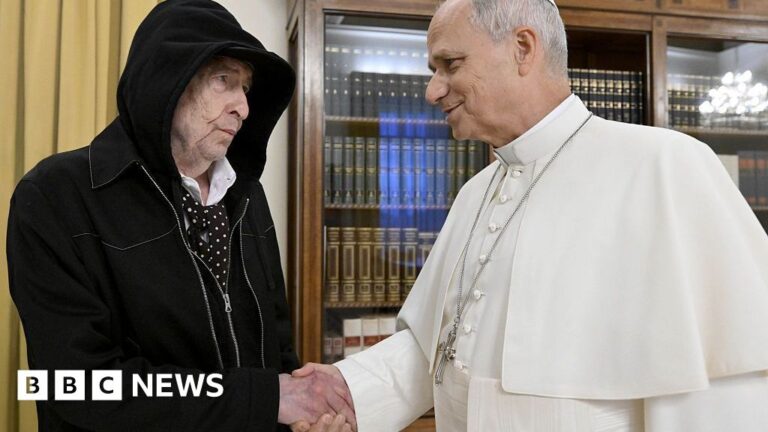
In a remarkable meeting at the Vatican, iconic US singer-songwriter Bob Dylan had an audience with Pope Leo XIV. This historic occasion brought together two influential figures from very different realms: the world of music and the papacy. Dylan, who has long been celebrated for his profound lyrics and cultural impact, met the Pope in a setting filled with symbolism and significance.
Momentous Encounter in the Heart of Vatican City
The meeting took place in Vatican City, a spiritual center known for its rich history and art. Bob Dylan, recognized not only for his music but also for his poetic abilities, engaged in a dialogue with Pope Leo XIV that blended elements of artistic creativity and spiritual reflection. According to reports from CNN, this gathering was not just a meeting of personal significance but also resonated deeply within the spheres of art and faith.
Fashion Choices and Cultural Significance
A notable aspect of Dylan’s visit was his striking fashion choice. He appeared dressed in a manner reminiscent of fellow artist Timothée Chalamet, drawing attention not only for his music but also for his updated aesthetic. This intriguing detail was highlighted by GQ, showcasing how Dylan continues to evolve not only as an artist but also as a cultural figure.
In Reflection of Artistic and Spiritual Exchange
The dialogue between Dylan and Pope Leo XIV is seen as a rare opportunity for a crossover between two forms of expression – the modern, often rebellious spirit of rock music and the traditional, unwavering values of the Catholic Church. The New York Times reported on the discussions, highlighting the mutual respect and curiosity that characterized their interaction.
A Symbolic Exchange of Ideas
As Bob Dylan continues to inspire generations through his music, this meeting with Pope Leo XIV has opened up conversations about the intersectionality of faith, art, and culture. It underscores the timeless relevance of both figures in today’s world and serves as a testament to the enduring power of music and spirituality to bridge divides.