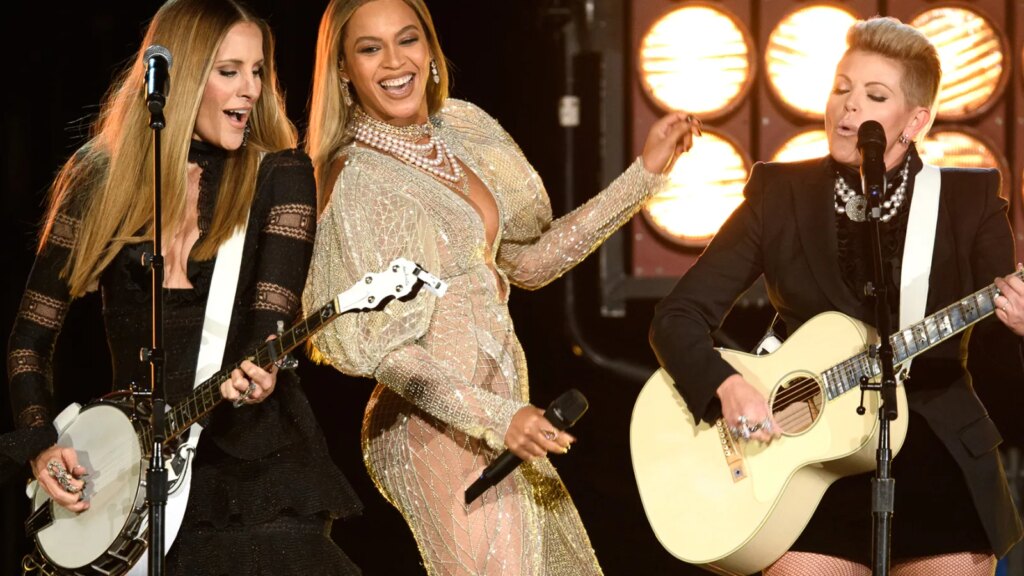
This month marks the 10th anniversary of a performance that forever altered the landscape of country music and its relationship with artists from other genres. At the 50th CMA Awards, Beyoncé took the stage with the Chicks, performing her song “Daddy Lessons,” which featured an interpolation of the Chicks’ “Long Time Gone.” The performance was underscored by a lively New Orleans second-line style band, showcasing an unforgettable blend of musical styles from the album Lemonade.
Lasting Impact of a Historic Performance
Ten years later, the ramifications of this groundbreaking performance continue to resonate within the country music industry and beyond. Beyoncé, the most awarded musician in Grammy history, left an indelible mark on a genre that had previously marginalized her. The performance was electrifying, but its significance was amplified by two critical backstory elements: the Recording Academy was preparing to deem “Daddy Lessons” ineligible for country Grammy nominations, and the Chicks had not appeared on the CMA broadcast since their exclusion from the country music scene in 2003. As they embraced their Texan roots with banjo and fiddle in hand, the collaboration was a stirring tribute to the genre, even as it highlighted the conflict surrounding inclusion and identity in country music.
An Artist’s Reclamation and Response
Beyoncé’s introduction of the now Grammy-winning Act II: Cowboy Carter was a bold statement in the wake of that performance. She asserted on Instagram that Cowboy Carter “ain’t a Country album. This is a ‘Beyoncé’ album,” a provocative response to a genre that had been reluctant to embrace her contributions. Her declaration begs the question: why engage with a genre that seemingly rejects her?
The Controversy and Its Underpinnings
The aftermath of the CMA performance sparked controversy, epitomized by country singer Alan Jackson reportedly walking out, while cameras captured a mix of indifference and disapproval in the audience. Critics argued that Beyoncé’s performance, which featured a song touching on sensitive themes including the Second Amendment, did not reflect true country aesthetics. Yet, the genre had repeatedly welcomed collaborations with white pop artists. Just one year prior, Justin Timberlake had teamed up with Chris Stapleton for a memorable CMA moment, contrasting sharply with the backlash against Beyoncé.
In an insightful essay titled “Another Country,” author and musician Karen Pittelman points out that the issue went far deeper than race. She states, “The problem was not even that Beyoncé is Black, or at least, not only that Beyoncé is Black,” emphasizing that her alignment with the Black Lives Matter movement following the release of Lemonade had significant implications for her positioning within the genre. “There was no place in country music’s construction of pro-establishment whiteness for Beyoncé’s vision,” she notes, highlighting the deeply entrenched issues in the industry.
The Evolution of Roots in Contemporary Country
Beyoncé’s influence, however, extends beyond that singular performance. Five years later, her song “Texas Hold ‘Em” found little acceptance on country radio, despite its commercial success on the Billboard Hot 100. Nevertheless, its allure persists; in 2026, a country song with Texas in the title achieved unprecedented popularity, signaling a shift in the musical landscape. Yet, the country music industry has largely overlooked Beyoncé’s role in introducing its sounds to broader audiences, paving the way for artists like Ella Langley.
Ultimately, Beyoncé made one thing clear at the CMAs: she was choosin’ Texas. Yet, much like the Chicks before her, the country music industry did not reciprocate that choice.