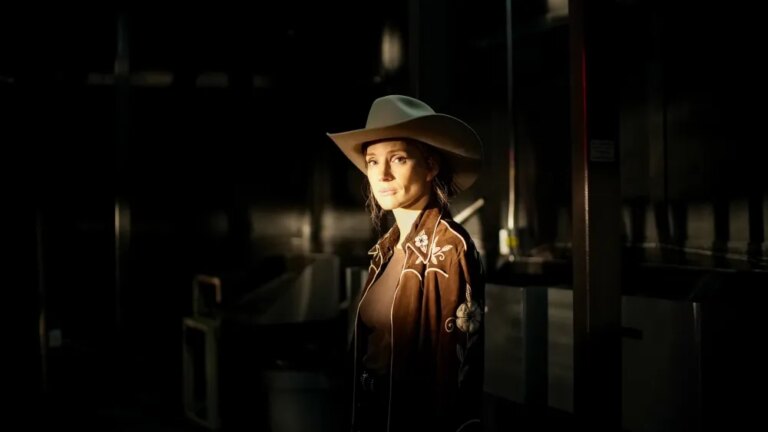
Mid-October marked a significant milestone for Estonia’s film industry with the opening of the long-anticipated Ida Hub, a next-generation film studio complex nestled in the eastern region of the country. This facility, which industry guests can explore during the Black Nights Film Festival in Tallinn on November 21-22, represents a pivotal step towards revitalizing Estonia’s cinematic landscape.
Edith Sepp, head of the Estonian Film Institute, emphasized that the Ida Hub, alongside the forthcoming Tallinnfilm Studios, which is slated for completion by 2028, signals a “whole new era of filmmaking” for Estonia. The country, having waited long to rebuild its cinematic infrastructure from the remnants of the Soviet era, saw its film industry gain global recognition when Christopher Nolan’s “Tenet” was filmed there in 2019.
The Baltics—Estonia, Latvia, and Lithuania—have witnessed a surge in demand for filming over the past decade, driven by attractive filming incentives, a professional crew base, and diverse shooting locations. This increased visibility on the global stage complements the rise of Estonian, Latvian, and Lithuanian films at major festivals, including Sundance, Cannes, and Venice. Industry outlet Variety has explored the current filming incentives, notable productions, and the challenges faced by each of these countries.
Estonia: Infrastructure Boost
The new Ida Hub in Ida-Viru County, a $18.2 million initiative partially funded by EU support, is designed to position Estonia as a vital production hub within the Baltic region. This facility includes cutting-edge filming options such as large sound stages—1,200 square meters (12,917 square feet) and 2,000 square meters (21,528 square feet)—and also offers training for future professionals, along with a technology-driven startup incubator.
Teet Kuusmik of the Ida-Viru Investment Agency, one of the partners managing the complex, foresees significant economic and professional opportunities for the region. “Our vision is to establish Ida-Viru as a recognised and trusted production hub in the Baltic region,” he stated, highlighting ongoing discussions for a TV production slated for December and three larger film projects in negotiation.
Looking further ahead, the Tallinnfilm Studios, set for 2028, will feature three purpose-built sound stages totaling 2,630 square meters (28,309 square feet), along with SFX prop rooms and offices. Sepp describes these studios as essential to creating an entire ecosystem that generates investment, jobs, and new opportunities for local filmmakers.
Another key development that has invigorated the Estonian film sector is the increase in the country’s cash rebate from 30% to 40% effective in April. This change resulted in immediate applications totalling €5.8 million ($6.4 million) to the Film Estonia program, with an additional €6.4 million ($7 million) reported in the subsequent months, reflecting growing interest from filmmakers.
Public Funding Challenges
Despite this progress, Sepp and producer Esko Rips of Nafta Films express concerns about the insufficient budget to satisfy soaring demand. Rips pointed out that while decisions on rebate applications are prompt, the limited annual budget raises challenges in securing funds for larger projects, especially given rising crew costs in Estonia compared to neighboring countries.
As the state budget for 2027 is being finalized, Sepp is advocating for an increase of Film Estonia’s annual budget to €10 million ($11 million), emphasizing the necessity for ongoing economic growth despite the pressures stemming from the war in Ukraine.
Latvia: Film Hub for International Projects
Meanwhile, Latvia aims to strengthen its position following the international success of its animated film “Flow,” which won an Oscar in 2025. The country is actively courting foreign investment to offset a small domestic market and limited public funding. Recently, a delegation of film industry representatives traveled to Los Angeles to engage with major U.S. studios, showcasing Latvia’s competitive financial incentives.
Rips noted that Latvia’s cash rebate can be combined with the Riga Film Fund’s own incentives, providing up to 50% support for local production costs. The world-class Cinevilla backlot and Riga Film Studios also remain attractive attributes for foreign productions. Notably, Rips chose Latvia to shoot “Woman Unknown” due to its superior financial advantages and historical settings that matched the film’s WWII backdrop.
Demand for Latvian cash rebates has surged, with LIAA reporting payouts exceeding €3.1 million ($3.4 million) in 2025 and an expected rise to €6.9 million ($7.6 million) next year. High-profile films partially shot in Latvia include “Wild, Wild East” and “Minotaur,” both of which have garnered attention in international film circles.
Lithuania: Reaping the Rewards of Increased Production
Lithuania experienced its highest volume of international projects to date in 2025, driven by a 30% local tax incentive scheme, which facilitated a considerable investment of €25 million ($27.7 million) across various productions. The largest grants from this scheme were awarded to major international series, including Sony Pictures Television’s “Star City.”
In total, foreign productions in Lithuania accounted for nearly €56 million ($62.1 million) in spending, setting a record. Moreover, 21 co-productions also benefitted from the tax incentive, allowing Lithuanian filmmakers to engage with larger financing structures.
However, Saladžius, head of production at the Lithuanian Film Centre, pointed out that further investment in infrastructure is critical to sustain growth. The government is currently backing plans for a large-scale film studio in Vilnius, an important step to enhance Lithuania’s competitiveness in the global market.
As Lithuania continues to blossom in the film sector, recent projects supported by the Vilnius Film Fund illustrate the potential for international collaborations. The city’s architectural versatility has proven pivotal for projects like “Chernobyl” and other international ventures, which employed local talent and showcased Lithuania’s capabilities on the world stage.